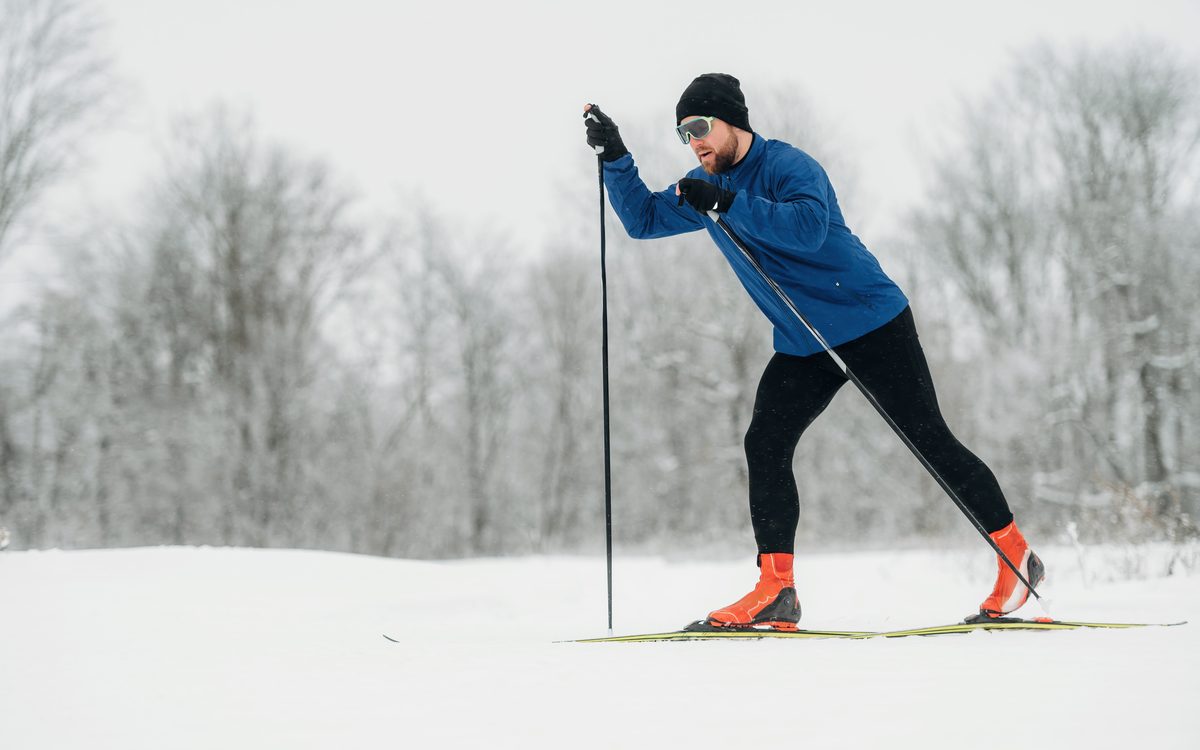
The jump is over, the numbers flash up, and there are twenty minutes before the start. A good jump means a head start and a good chase; a bad one means starting far back and having to pass people. Either way the same athlete has to switch from a quick, precise skill to a long, painful effort. Mental training in Nordic combined is the practice of attention, emotion and decision-making skills that help an athlete do that switch, and do it under pressure.
Quick answer: Mental skills such as pre-performance routines, focused attention, imagery and pacing by effort can be practised like physical skills, and none of them guarantees a result. A published sport science position statement says pressure can help or hurt performance and recommends practised routines and strategies. Anxiety, depression, disordered eating or burnout are health matters: see a qualified professional (in the US, call or text the 988 Lifeline for a crisis).
Confidence and motivation
A study of 332 college skiers (Wu and colleagues, 2025) found that a coaching climate focused on learning and effort was linked to better mental toughness, while a climate focused on beating others was linked to worse. It was a questionnaire study, not a trial, and it covered skiing events broadly, not Nordic combined. The practical point is a general one: judge a day by what you controlled (the take-off, the pacing, the plan) and not only the result. Confidence grows from real preparation.
Goal setting
We found no Nordic combined study on goal setting, so this is general coaching practice. Many coaches split goals into the outcome (a place), the performance (a time or distance) and the process (the cue you will use at the take-off and in the final climb). Process goals are the ones you can control on the day.
Focus between two skills
The sport has two attention styles. The jump is short, precise and technical; the race is long, uncomfortable and tactical. A case study of an Olympic champion (Rasdal and colleagues, 2018) reports that his preparation included systematic mental training to enhance skill acquisition alongside a large increase in annual imitation jumps. It is one athlete. Typical coaching practice is to give each half its own simple cues, and to have a reset between them (a deep breath, a drink, loosening the shoulders) so that a poor jump does not travel into the race.
Imagery and routines
A 2025 multilevel meta-analysis of 86 studies and 3,593 athletes (Liu and colleagues) found imagery practice improved performance, and that adding one or two other psychological skills worked better than imagery alone. It suggested about ten minutes, three times a week, for roughly a hundred days gave the strongest gains, but these were mostly tennis and soccer athletes, not skiers, so treat the dosage as an idea only. A pre-jump routine, the same breath, cue and look at the take-off every time, is a standard tool; the Exercise and Sports Science Australia position statement on performance under pressure (Schweickle and colleagues, 2026) lists pre-performance routines, implicit attentional strategies, psychological skills training and mindfulness-based approaches among the strategies with evidence behind them.
Pressure and setbacks
The same statement says pressure can have both facilitative and debilitative effects and that practising under pressure, for instance simulated competition, prepares athletes for it. After a bad jump the practical question is what you can still control: the chase. After a crash or injury the question is different; see our injuries page, and let medical staff lead.
Tactics and pacing in the race
Pacing matters in the race half. A 2025 review of pacing in cross-country skiing, biathlon and Nordic combined (Losnegard and colleagues) concluded that heart rate, lactate and speed should supplement, not replace, perceived effort, and that the ability to self-regulate effort should be developed in adolescents. The jump sets the start gaps, so the chase is often tactical: whether to work with a group, when to save energy and when to commit. These are general descriptions, not study findings; tactics are decided with a coach.
Preparing for competition
Rehearse the whole day: weather options, gear changes between jump and race, warm-up timing and nutrition. For logistics, see the skiing game-day page and our rules page for the format. Practise the switch from jump to race in training, not for the first time at a competition.
Young athletes
The IOC 2026 mental health consensus (Reardon and colleagues) notes that elite adolescent athletes are relatively understudied. Keep it fun, supportive and focused on learning, and tell juniors that nerves are normal.
Mental performance is not the same as mental health
Mental skills training is about performance. Anxiety, depression, disordered eating, burnout and sleep problems are health matters. The 2026 IOC consensus statement (Reardon and colleagues) says mental health symptoms and disorders are common among elite athletes, can have sport-related causes and can affect performance, and that with appropriate support and treatment many athletes can continue to train and compete. If you or a teammate are struggling, talk to a doctor, a licensed mental health professional or your sports medicine team. In the US, call or text 988 (the 988 Lifeline) in a crisis. Weight pressure in this sport is a particular concern; see our nutrition page. We did not find an NCAA mental-health page we could verify.
Frequently asked questions
Can mental training fix a bad jump?
No technique guarantees a result. Practised routines and focus can help you perform your skill more consistently, according to the sport science statement above.
Does imagery work for Nordic combined?
The imagery meta-analysis covered mainly other sports. It suggests imagery can help, especially combined with other skills. We found no Nordic combined trial.
How do I handle nerves on the hill?
A consistent routine, slow breathing and a single cue are common coaching tools. Nerves are normal; if anxiety interferes with daily life or sleep, see a professional.
How should I race after a bad jump?
Focus on what is in your control, the pacing and the next lap. Perceived effort is a useful guide (Losnegard and colleagues).
Who can I talk to about stress or eating concerns?
A doctor, a licensed psychologist or counsellor, or your sports medicine team. In the US, the 988 Lifeline is available for crisis support.
Sources
- Schweickle et al. 2026, ESSA position statement on performance under pressure
- Reardon et al. 2026, IOC consensus statement on mental health in elite athletes
- Losnegard et al. 2025, pacing demands in competitive Nordic skiing
- Wu et al. 2025, motivation and mental toughness in college skiers
- Liu et al. 2025, imagery practice meta-analysis
- Rasdal et al. 2018, Olympic champion case study
- 988 Suicide and Crisis Lifeline
General information for education only, not medical advice. It does not replace a sports medicine doctor, physical therapist, athletic trainer, dietitian or qualified coach who knows you. See our editorial policy for how we write and source our pages.
Keep exploring: the Nordic combined hub, the skiing hub, ski jumping and every sport on our sports hub.