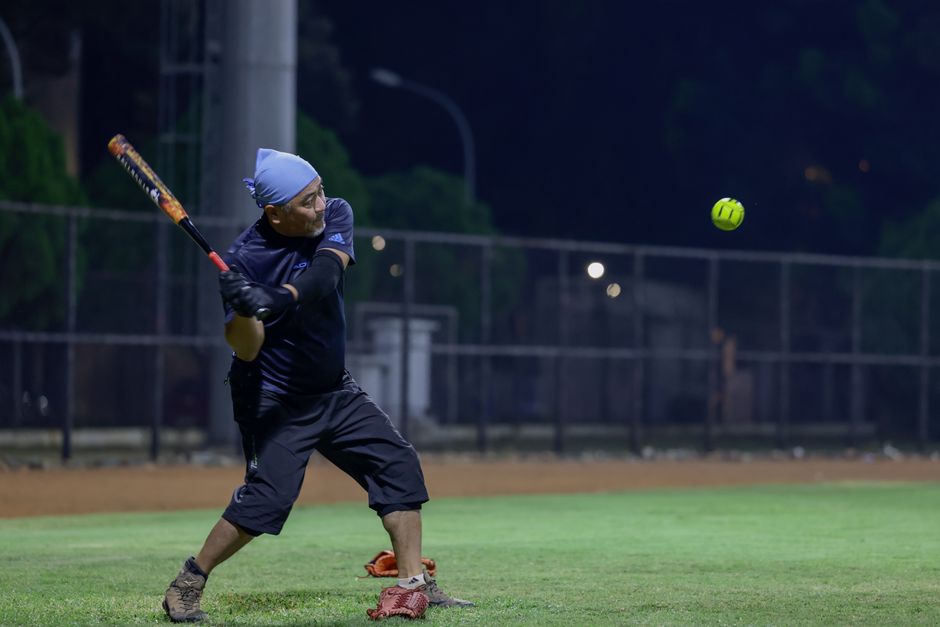
Bottom of the last inning, tying run on third, and the count is full. The batter steps out, rolls her shoulders, finds the same spot on the bat she always touches and steps back in. In fastpitch the ball arrives fast and from close range, in slow-pitch it floats in and invites a big swing, and both leave plenty of quiet seconds to think. Softball mental training means practicing the skills between your ears (routines, focus, confidence, handling a slump, staying steady in the circle) the same way you practice a swing or a drop ball. This page is about mental performance for hitters, pitchers, fielders and coaches. Mental performance is not the same as mental health; see the section below.
Quick answer: Mental skills are habits you can practice: a short, repeatable routine before every pitch or at-bat, simple imagery, goals you control, and a plan for what you do after a strikeout or a walk. Research on these tools is promising but mixed, very little of it is on softball itself, and none of it guarantees better results. If worry, low mood, or trouble eating or sleeping lasts more than a couple of weeks or gets in the way of daily life, see a doctor, licensed psychologist or other qualified professional, and in a crisis call or text 988 (US).
What the research can and cannot say
Honest note first: published studies on the mind game of softball are thin. Most of what follows comes from research on athletes in general, with the few softball and baseball-and-softball studies named where they fit. Where something is common coaching practice instead of a studied method, we say so.
Confidence: built from reps you can point to
Sport psychologists often describe confidence as self-efficacy: your belief that you can do a specific thing, like lay off a rise ball or hit your spot with a changeup. It tends to grow from evidence such as good practice at-bats, bullpens where you hit your targets, and video of your own best swings. That is a general idea, not a softball-only finding. A simple habit: after each game, write down one thing you did well, even after an 0-for-4. A 2025 interview study of 19 former female NCAA athletes across sports (Kernan and colleagues, International Journal of Environmental Research and Public Health) found that the relationship with the coach was central to performance and motivation, and could be either a source of support or of stress. Coaches can build confidence by noticing process wins, not only results.
Focus: one pitch at a time
Softball asks you to switch attention on and off between pitches. Many coaches teach a reset cue (a breath, a glove tap, a word like “next”) that tells your head the last pitch is over. That is common coaching practice, not a studied formula. On the seeing side, a 2026 study of 15 baseball and softball batters (Clutter and Fogt, Vision) found that eye movements on an approaching pitch differed between a task with a partial swing and one that only asked for a prediction. It is a small lab study with no training advice attached.
At-bat and circle routines
A pre-performance routine is a short, fixed sequence that gets you ready and shuts out noise. A 2026 position statement from Exercise and Sports Science Australia on performance under pressure (Schweickle and colleagues, Sports Medicine) lists pre-performance routines among the evidence-based strategies, alongside psychological skills training and mindfulness-based approaches. It is not specific to softball and promises no result.
- Hitter’s routine: two or three repeatable steps you can finish in the time you have, for example step out, breath, one swing thought, step in. Use it in every practice round, not only games, so it feels normal when the crowd is loud.
- Pitcher’s routine: the same steps from the circle between pitches, for example reset, breath, pick the target, then go. A routine points your attention at what you control: your target and your next pitch.
- Slow-pitch: the pace is slower, so the routine can be too, but it still helps to end on a single swing thought. Our slow-pitch softball page covers the format.
- Between innings: a reset cue in the dugout, then a drink and a quick plan for the next at-bat or inning.
Goal setting and motivation
Coaches often split goals into three kinds: outcome (win the tournament), performance (raise on-base percentage this month) and process (take my routine every at-bat, throw strike one). Process goals are fully in your control, so they still count when a hard-hit ball finds a glove. The split is common coaching practice, not a single study’s finding. Results do still matter in a game: a 2025 machine-learning analysis of 81 Chinese national women’s softball games (Li and colleagues, Frontiers in Sports and Active Living) found that on-base percentage and batting average raised the chance of winning, while more earned runs and hits allowed raised the chance of losing.
Motivation matters too. A 2026 systematic review of 14 studies on slumps and burnout in competitive athletes (Rajpoot and colleagues, Sports) found that burnout and controlled motivation, meaning playing mainly because of pressure from others, predicted performance decline and dropout, while higher resilience and mental toughness were linked to less burnout. It covered athletes generally, not only softball.
Visualization and imagery
Imagery means rehearsing a skill in your mind with as many senses as you can: the sound of the pitch, the feel of the grip, the pop of the glove. We did not find a softball-specific study showing that imagery improves hitting or pitching, so treat it as an add-on to real reps, never a replacement.
- A common suggestion from coaches: 3 to 5 minutes on the bus or before bed, seeing yourself take your routine and then see the pitch well. This is a coaching habit, not a studied dose.
Handling pressure, and pitching under it
Pressure in the circle can show up as a rushed delivery, a tight grip or sudden wildness. The ESSA position statement says pressure can help or hurt depending on the athlete, and lists pressure training (practicing under game-like stress) among its strategies. For pitchers that can mean a bullpen with a count and a score in mind, or a teammate calling a “game situation.” We found no softball pitcher-specific pressure-training study.
A little nervous energy is normal. A 2025 study of eight Australian softball umpires at two national championships (Houison and colleagues, Sports) found that higher pre-game tension scores went with better umpiring performance, supporting the idea of an “optimal level” of arousal. It is a tiny sample and about umpires, not players, so read it as an illustration, not a rule.
If something physical changes, do not call it a mental problem. A pitcher whose speed or control drops late in a game may simply be tired or sore. In a 2024 lab study of 21 high school pitchers (Downs Talmage and colleagues, Sports Health), pitch speed was higher in the first inning than in the last and in a doubleheader inning after a 30-minute break. Pain or a change in the arm is a reason to tell a coach and see a sports medicine doctor, physical therapist or athletic trainer; see our softball injuries page.
Slumps and responding to setbacks
The 2026 systematic review above found psychological factors (burnout, motivation, resilience) tied to performance decline. It tested no cure for a batting slump and was not softball-specific. So treat these as sensible habits, not proven fixes:
- Review once, then move on: watch the at-bat, write one process fix, and let it go.
- Check the basics: sleep, food and a sore shoulder or hand can look like a “mental” slump. Our softball recovery page covers the rest.
- Ask for a swing or mechanics check: a coach can tell you whether the problem is the bat path or the head. Our softball training page covers the physical side.
Handling nerves and competitive anxiety
A 2026 network meta-analysis of 46 trials (Li and colleagues, Sports Medicine – Open) compared different psychological interventions for athletes’ competitive anxiety and reported substantial uncertainty about which works best. A slow breath inside your routine is an easy place to start. These tools are for ordinary game-day nerves, not treatment for an anxiety disorder.
Teammates, coaches and the dugout
Softball is a team game even when it feels like a one-on-one between pitcher and batter. Good communication (calling for the pop-up, talking through the infield situation, picking up a teammate after an error) is a skill players can practice. We did not find softball cohesion studies we could confirm, so beyond the coach-relationship interview study above this stays short. One coaching idea: agree on a team reset phrase for after errors.
Tournament weekends
Weekend tournaments pile up games, waiting and travel. A 2025 narrative review of softball pitching workload (Zaremski and colleagues, Sports Health) reported that pitchers report increasing fatigue and pain over a game and a weekend tournament. Mentally, that makes honest communication part of the plan: pitchers who are sore or tired should say so, and coaches should make it safe to. The review also notes more research is needed before specific workload limits can be recommended. The practical rest of the weekend (food, fluids, heat, pitch limits) is in our softball game day guide, which we do not repeat here.
Preparing for competition
Put your plan on a short card: pre-game routine, between-pitch routine, one process goal and your reset cue. For meals, fluids and logistics, see our game day page; for strength and arm care, softball training; for young players, youth softball.
Mental health is not the same as mental performance
Everything above is about skills: routines, focus, goals and handling pressure. Anxiety disorders, depression, disordered eating and burnout are health matters, not mindset problems, and they need a qualified professional such as a doctor, licensed psychologist or counselor, not a better routine. The International Olympic Committee consensus statement on mental health in elite athletes (Reardon and colleagues, British Journal of Sports Medicine, 2026) says these conditions are common in elite athletes, can affect performance, are treatable, and that many athletes keep competing while getting help. In the US, the 988 Suicide & Crisis Lifeline offers free, confidential support by call or text to 988, any time. In immediate danger, call 911. Student-athletes can also ask their school’s athletic department about campus resources.
Softball mental training FAQs
What is a good at-bat routine in softball?
One you can repeat in the same few seconds every time: step out, breath, one swing thought, step in. The ESSA position statement lists pre-performance routines among evidence-based strategies for pressure.
How do I get out of a hitting slump?
There is no proven cure. The 2026 systematic review on slumps and burnout points to motivation, burnout and resilience as factors in performance decline, so rest, sleep and focusing on process over results are sensible places to start. Ask a coach about your swing and a trainer if anything hurts.
How can a pitcher stay calm under pressure?
Many coaches suggest a fixed routine between pitches and bullpens that feel like game situations; the ESSA statement lists both pre-performance routines and pressure training. Nothing guarantees calm, and if arm pain or fatigue is behind the wildness, see a sports medicine doctor or athletic trainer.
Does visualization help softball players?
We did not find a softball study showing that it improves hitting or pitching. Use it as an add-on to real practice, not a replacement.
Is a bad slump a sign of a mental health problem?
Usually a slump is a performance problem. If low mood, constant worry, changes in eating or sleep, or loss of interest in softball last more than a couple of weeks, talk to a doctor or other qualified professional. In a crisis, call or text 988 (US).
Sources
- Schweickle MJ et al. Performance under pressure in sport: ESSA position statement. Sports Medicine, 2026. PMID 42271117
- Rajpoot YS et al. From slump to comeback: psychological determinants of performance decline, burnout, and recovery in competitive athletes, a systematic review. Sports, 2026. PMID 42188542
- Li L et al. Psychological interventions and competitive anxiety: Bayesian network meta-analysis. Sports Medicine – Open, 2026. PMID 41866642
- Kernan AR et al. Coach-athlete relationships and mental health: an exploratory study on former female NCAA student-athletes. Int J Environ Res Public Health, 2025. PMID 41302598
- Clutter M, Fogt N. Gaze tracking of pitched balls in coupled and uncoupled tasks. Vision, 2026. PMID 42646821
- Li H, Cheng G, Zhang T. Key factors and tactical variations in Chinese national women’s softball games: a machine learning-based identification. Front Sports Act Living, 2025. PMID 41357824
- Houison RJ et al. They’re only human! Tension and stress predict performance of softball umpires in national championships. Sports, 2025. PMID 39997966
- Downs Talmage J et al. Effects of increasing pitch count on pitch type ball metrics and release height in high school softball pitchers. Sports Health, 2024. PMID 38149321
- Zaremski JL et al. A narrative review of softball pitching workload and pitch counts in relationship to injury. Sports Health, 2025. PMID 39584797
- Reardon CL et al. IOC consensus statement on mental health in elite athletes. British Journal of Sports Medicine, 2026. PMID 42580854
- 988 Suicide & Crisis Lifeline
General information for education only, not medical advice. It does not replace a doctor, psychologist or other qualified professional. See how we work in our editorial policy. Back to the softball hub.