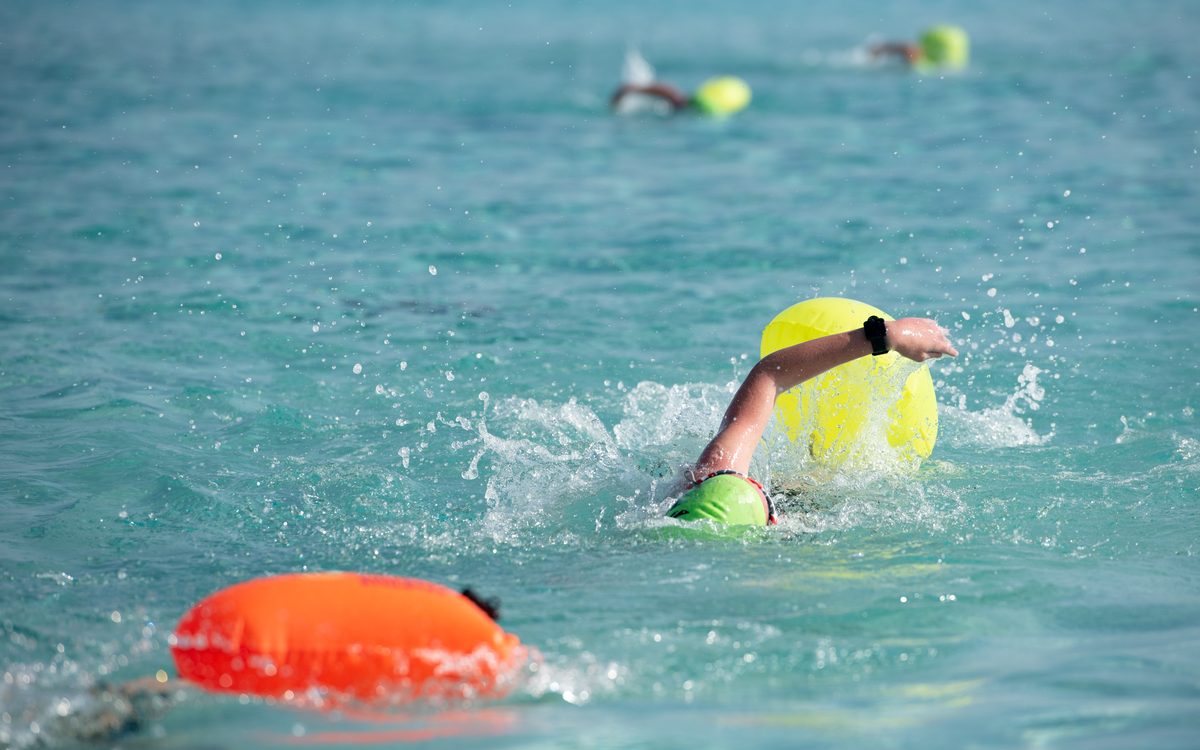
The swim is over, the wetsuit is peeled to the waist, and the car is a short, cold walk away. How you spend the next hour matters in open water in a way it rarely does after a pool set: you may be chilled, salty, hungry and shaky. Open-water swim recovery means warming up safely, refuelling, sleeping well and spreading hard training across the week so the next swim feels good.
Quick answer: The best-supported recovery basics are enough sleep, enough food and fluid, and sensible training load. Evidence for cold-water immersion, massage guns and similar tools is mixed, so treat them as optional comfort rather than essentials. After cold swims, get dry and warm first. Persistent pain, breathing problems or strange symptoms after a swim need a clinician, not more recovery gadgets.
General information, not medical advice. See the open-water swimming hub for the whole picture and the swimming guide for the pool side. Fuelling is on the nutrition page; pool recovery is on swimming recovery.
First hour after a cold swim
This part is practical, common-sense advice rather than a studied protocol. Get out of wet kit, dry off, put on warm layers and a hat, and have a warm drink and food. A 2026 case report of a swimmer who spent 369 minutes with a core temperature below 35 C in 13 to 14 C water found no obvious impairment and no after-drop (a further fall in temperature after leaving the water), but it is one cold-adapted swimmer, so do not take it as a sign that cold is harmless. A 2026 interview study of 30 experienced channel swimmers described that some of the most serious problems, including swimming-induced pulmonary oedema and pneumonia, showed up only after the swim. If you cough, feel breathless or cannot stop shivering, get medical help.
Sleep
The 2021 expert consensus in the British Journal of Sports Medicine on sleep and the athlete says elite athletes are prone to short sleep (under 7 hours a night) and poor quality, and that sleeping under 7 hours a night in the general population is linked with more respiratory infections. The paper also stresses that research on partial sleep restriction is limited. For swimmers who train before work or school, practical steps (general practice) include a regular bedtime, a dark cool room and a short earlier-in-the-day nap if you need one. Early-morning sessions and sleepless nights before races make it harder.
Load management
The IOC consensus statement on load in sport and injury risk (2016) says poor load management is a major risk factor for injury and gives guidelines for prescribing and monitoring training load. In swimmers, a 2023 systematic review found that its best study linked a high acute-to-chronic workload ratio with injury. Common coaching practice is to plan easier weeks every few weeks, avoid adding both distance and intensity together, and keep one rest day. See the training page for a sample week.
Mobility and flexibility
We did not find studies of mobility programmes in open-water swimmers. A common practice for swimmers is gentle shoulder, chest and upper-back mobility after a swim, and trunk and hip mobility on land days. A physical therapist can check whether tight or lax shoulders suit your stroke before you push stretches. Pain that sharpens with movement is a reason to stop and be assessed.
What does the evidence say about recovery methods?
- Cold-water immersion. A 2026 umbrella review (14 reviews) found the most consistent benefit was less reported short-term muscle soreness, but the clinical importance was uncertain and results for objective performance and inflammation markers were inconsistent. Twelve of the 14 reviews were rated critically low confidence. Swimmers already spend time in cold water; adding an ice bath is optional, and a cold swim itself is not a treatment.
- Compression, massage, foam rolling, massage guns. Many athletes use them for comfort; we did not find open-water-specific evidence, so we treat them as comfort tools rather than treatment. See our foam roller and massage gun guides.
- Active recovery. Easy swimming or walking the day after a hard session is common practice; it is not proven better than rest.
- Food and fluid. Refuelling after long swims is covered on the nutrition page.
Soreness or injury?
Muscle soreness is usually both sides, spread across a muscle group and eases within a few days. Warning signs that point to a problem: pain on one side that stays in a spot, pain at rest or at night, pinching in the shoulder at the front of the stroke, numbness or tingling, swelling, or a sense that something is not right. Anything with breathlessness, chest pain or confusion after a swim needs urgent care. See the injuries page.
Recovery after big events
Very long swims can leave you flat and emotional. In the 2026 interview study, channel swimmers described emotional lows after finishing, linked to losing a defining goal rather than to failure. Plan a next small goal, keep some easy movement and talk to someone you trust. If low mood lasts, see a health professional; our mental training page separates performance from mental health.
Open-water swim recovery FAQs
Should I take an ice bath after open-water swimming?
It is optional. The 2026 umbrella review found cold-water immersion most consistently eased reported soreness, with unclear practical importance and mixed results on performance. After a cold swim, warming up is usually the priority.
How much sleep do swimmers need?
The 2021 BJSM consensus notes that habitually sleeping under 7 hours a night is common in elite athletes and is linked with infections in the general population; individual needs vary.
Why do I shiver after I leave the water?
Shivering is the body generating heat after cold exposure. If it is uncontrollable or comes with confusion, treat it as hypothermia and get help.
Is it normal to feel sad after a big swim?
Channel swimmers in a 2026 study described post-swim lows linked to losing their goal. If it lasts or worsens, talk to a health professional.
How many rest days do I need?
There is no published rule for recreational open-water swimmers; common practice is at least one rest day a week and easier weeks in between harder ones.
Sources
- Prolonged stable hypothermia during a 10-hour cold open-water swim, 2026 (PMID 41564305)
- Health, risk and adaptation in extreme open water swimming, 2026 (PMID 43013196)
- Sleep and the athlete: expert consensus, BJSM 2021 (PMID 33144349)
- IOC consensus on load in sport and risk of injury, 2016 (PMID 27535989)
- Shoulder risk factors in competitive swimmers, 2023 (PMID 37515375)
- Cold-water immersion for post-exercise recovery: umbrella review, 2026 (PMID 42909756)
General information for education only, not medical advice. It does not replace a sports medicine doctor, physical therapist, athletic trainer or registered dietitian who knows you. See how we work in our editorial policy.