
This article contains affiliate links: if you buy through them we may earn a commission, at no extra cost to you. Read our affiliate disclosure.
Before the 5 a.m. loop, a walker checks three things: shoes that are not worn out, socks that will not rub at kilometre 15, and a light so the cars can see her. Race walking gear is simple, and what matters is fit, wear and visibility rather than novelty. This page covers shoes, socks, a pacing watch, visibility, sun protection and what is a regulation versus a maker claim, with three product cards.
Quick answer: The main item is shoes that fit: AAOS advises fitting late in the day with about half an inch past the longest toe, and replacing worn shoes. World Athletics sets Athletic Shoe Regulations for competition, so check them if you race at that level. Maker claims about speed or injury protection are not independent standards. See injury prevention for the evidence.
General information, not medical advice. Product details on the cards come from retailer listings and makers, not our testing. Part of the race walking hub. See also track and field gear.
Shoes
AAOS advises athletic shoes that suit your foot type and sport, fitted at the end of the day with your usual socks and about half an inch of room beyond your longest toe, and lists worn-out shoes among bone stress injury risk factors. Race walkers use many styles, from cushioned trainers for long sessions to lighter flats for racing. That is general practice, and we found no independent test of race walking shoes. Because the technique is a heel-first landing with a straight knee, some walkers prefer a flexible shoe with a low heel; ask your coach. Try new shoes on a long easy walk before racing in them.
For competition, the World Athletics Athletic Shoe Regulations (approved 19 March 2026, effective 20 April 2026) set limits by event. As recorded in our track and field gear notes, the sole-thickness limit for track events excludes race walks, but we have not confirmed what applies to road walks, so read the current document before buying racing shoes. Marketing claims such as “carbon plate” or “energy return” are maker claims, not standards.
Socks and blister care
Long sessions mean friction. General practice is moisture-wicking socks that fit without bunching, a seamless toe, and checking your feet after each long walk. The sock card below is a maker listing, not a tested result. If a hot spot develops, deal with it before the blister forms.
Pacing watch
A GPS watch helps you repeat a pace on a loop and keep long sessions easy. The Garmin Forerunner 570 listing mentions GPS, coaching plans and pace and cadence data; none of that is a judge, and a watch cannot tell you whether your knee is straight. Use it for pace and distance, and film yourself for technique.
Visibility and sun
Most walking training is on the road (98% of walkers in the Hanley survey). The Road Runners Club of America suggests facing traffic, wearing reflective or lighted gear and carrying ID. For sun, the CDC suggests broad-spectrum sunscreen of at least SPF 15, reapplied at least every two hours and after sweating, and a hat or sunglasses when you can. In heat, light clothing and a cooling plan matter too; see nutrition and athlete health.
Standards versus maker claims
Only a few things in this list are regulated. World Athletics regulates competition shoes. AAOS gives general fitting advice, and the CDC and RRCA give sun and road-safety guidance. Everything else, from a watch that says it improves your training to a sock that says it prevents blisters, is a maker description. Read listings for what the item is and does, check the size chart, and check the return rules, then judge it on your own long walks. We did not independently test any product on this page.
Inspect before you go
- Shoes: tread, heel counter and midsole breakdown; retire shoes with worn-through soles.
- Socks: thin spots and holes.
- Watch: charged, strap secure.
- Light and vest: charged, visible from front and back.
- Phone and ID: carried, with an emergency contact.
Three picks
These fit the points above, based on their listings, and we do not claim any product prevents injury. The Garmin Forerunner 570 is a pacing watch, the Balega Hidden Comfort is a cushioned no-show sock and the noxgear Tracer2 is a light-up vest for dark mornings. We do not list shoes because models change and fit is personal.

Garmin Forerunner 570
- GPS, AMOLED, 42 or 47 mm
- Garmin Coach plans
- Pace and cadence for walk intervals
$449.99 at Amazon, as of Nov 17, 2026 01:07 UTC
Check price on Amazon
Balega Hidden Comfort No-Show Socks
- Drynamix wicking yarn
- Cushioned, seamless toe
- Heel tab
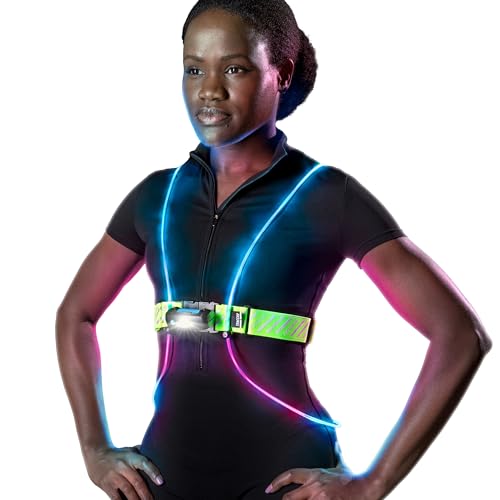
noxgear Tracer2 Light-Up Vest
- LED fiber optics + reflective
- Up to 20 h, USB-C
- IP67
Race walking gear FAQs
Do I need special race walking shoes?
Not necessarily. AAOS stresses fit and condition. Many walkers use ordinary trainers or light flats; ask a coach. Competition shoes must meet World Athletics regulations.
How often should I replace shoes?
AAOS says to replace worn shoes but gives no mileage. Check tread, heel counter and cushioning, and replace when they break down.
Can a watch tell me if my knee is straight?
No. A watch gives pace, distance and cadence. Film yourself or ask a walk-trained coach about technique.
Do I need reflective gear?
If you train near traffic in low light, the RRCA suggests reflective or lighted gear and facing traffic.
Are maker claims reliable?
Treat them as claims. Standards come from bodies such as World Athletics; we found no independent tests of race walking shoes.
Sources
- AAOS OrthoInfo, Athletic shoes
- World Athletics, Athletic Shoe Regulations (approved 19 March 2026, effective 20 April 2026)
- RRCA runner safety tips
- CDC, sun safety
- Athletics Weekly, Injury study: Walk this way (Hanley and colleagues, Leeds Beckett, New Studies in Athletics)
- AAOS OrthoInfo, Stress fractures
- Amazon listing, Garmin Forerunner 570
- Amazon listing, Balega Hidden Comfort
- Amazon listing, noxgear Tracer2
General information for education only, not medical advice. It does not replace a visit with a sports medicine doctor, physical therapist or athletic trainer. See how we write and check our pages in our editorial policy.