This article contains affiliate links: if you buy through them we may earn a commission, at no extra cost to you. Read our affiliate disclosure.
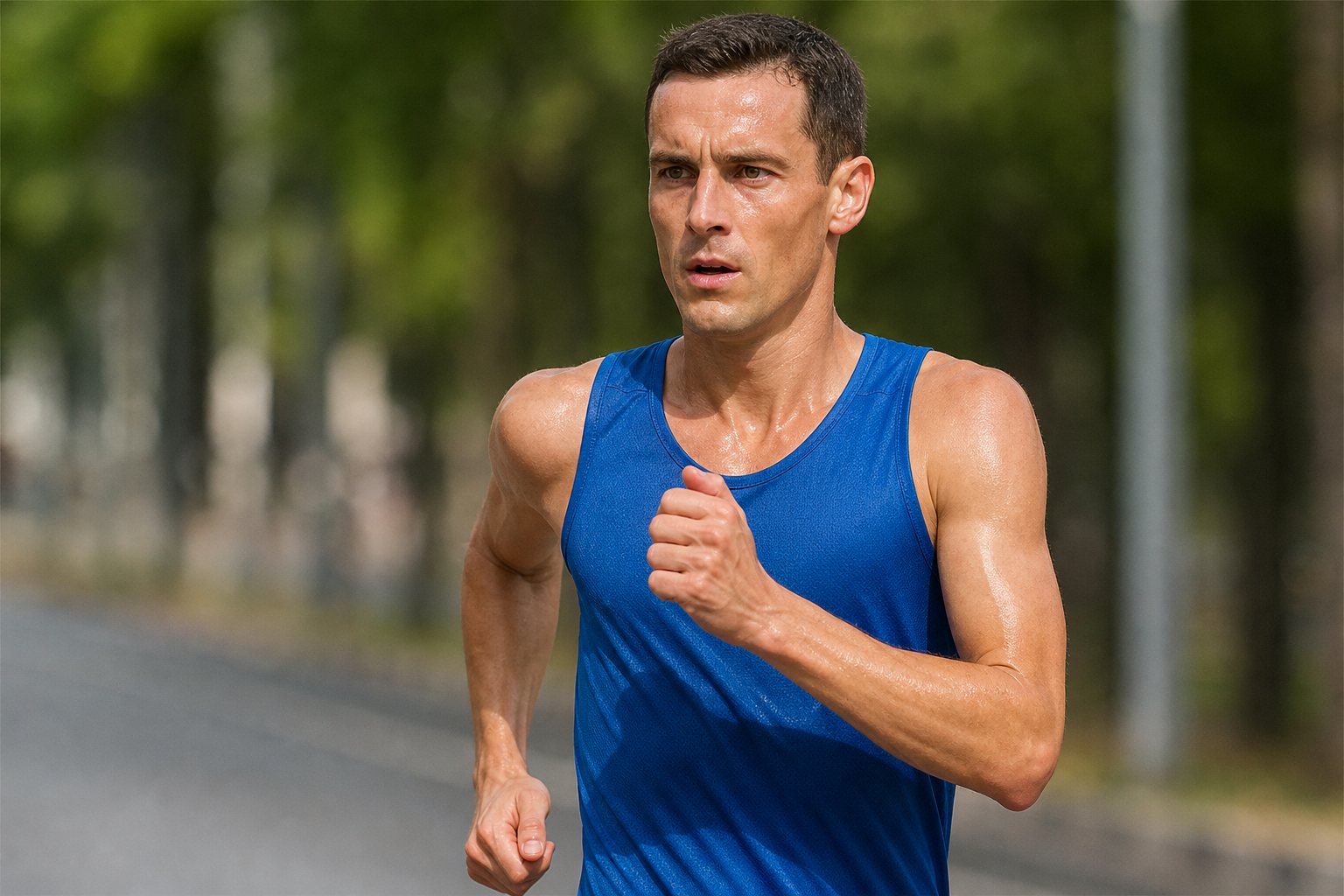
On a looped road course, judges stand at the side and watch hips, knees and feet. If one of them sees a walker’s foot leave the ground, or a knee bend when it should be straight, a red card goes to the chief judge. Enough red cards from different judges and the race can be over, even if the finish line is in sight. Race walking, also called racewalking or the race walk, is the athletics event where you go as fast as you can without ever running.
Race Walking guides: what do you need?
New to race walking? Start with the first card. Everything here is general education, not medical advice.
History & Origins of Race Walking
Race walking is a distance event with one defining rule: a walker must always keep contact with the ground and the supporting leg must be straight as it passes under the body. It grew out of Victorian-era walking contests in Britain, and its early history includes professional pedestrianism; we leave out origin details we could not tie to an official page.
Walking races joined the Olympics at London 1908. The men’s 20 km walk debuted at Melbourne 1956, and women first raced at the Games in 1992 over 10 km, moving to 20 km at Sydney 2000 (World Athletics history of race walking, Olympics.com). Sources differ on the very earliest Olympic walking race, so we do not give a firm 1904 distance.
- 1908: Walking races are a stand-alone Olympic event in London.
- 1932: Women’s walking is first recorded in Czechoslovakia, per World Athletics.
- 1956: The men’s 20 km walk debuts at the Melbourne Olympics.
- 1992: Women’s walk debuts at the Olympics, over 10 km.
- 2000: The women’s walk moves to 20 km at Sydney.
Legends of the Sport
Athletes from different eras, listed without ranking. Check World Athletics for current records. This is not an endorsement of AthleteRx by any athlete.
- Ugo Frigerio (Italy): won Olympic walking gold medals in 1920 and 1924.
- Jefferson Pérez (Ecuador): won the 20 km walk at the 1996 Olympics.
- Robert Korzeniowski (Poland): won four Olympic golds in the 20 km and 50 km walks, 1996 to 2004.
- Yohann Diniz (France): a long-time 50 km walk specialist and world-record holder.
- Liu Hong (China): the 2012 Olympic women’s 20 km walk champion.
Official results and records
We do not copy results tables here. For current champions and records, go to the official sources:
- World Athletics: 20 km race walk
- World Athletics records and all-time lists
- Olympics.com athletics results
How we keep this current: we re-check facts after each major championship. Spot an error? See our editorial policy.
Race walking at a glance
| What it is | A foot race on foot, judged by eye: one foot must appear to be in contact with the ground at all times, and the supporting leg must straighten as it passes under the body. |
|---|---|
| How it is won | First to finish without being disqualified. |
| Who takes part | Youth, open and masters walkers; USATF offers race walking at Youth, Open, All-Comers and Masters levels (as listed on Wikipedia citing USATF). |
| Where | Roads and tracks, on loops so judges see each walker many times. Indoor races are 3000 m and 5000 m. |
| Governing body | World Athletics worldwide; USATF in the US. |
| Season | Indoor and outdoor track seasons, plus road racing year-round. |
How race walking works
Two rules define the sport. Under the long-standing World Athletics (formerly IAAF) definition, race walking is a progression of steps with no visible (to the human eye) loss of contact with the ground, and the advancing leg must be straightened from first contact with the ground until the vertical upright position. Break the first rule and you have “run”; break the second and you have a “bent knee.”
Judges patrol the course. If a judge is unsure, a yellow paddle can warn the walker; a judge who is sure sends a red card to the chief judge. No judge can give a walker more than one red card in a race, and three red cards from three different judges send the walker to a penalty zone, a timed stop whose length depends on the event. A fourth red card means disqualification under the current World Athletics rules (reported by Athletics Weekly and national federations; check the rulebook for your event). Races use loops or tracks so every judge sees every walker repeatedly.
The judging has been studied. In a study of 85 judges, those who watched walkers rarely spotted loss of contact when the flight time was under 0.033 seconds (fewer than 12.5% did), while flights of 0.060 seconds or more were seen by nearly all. Level III judges, the highest panel, were the most accurate at identifying bent knees.
Distances and technique
The Olympic race walks have been 20 km (men and women) and, until the 2020 Games, a men’s 50 km. Walkers keep their arms low and bent, take short, quick steps and rotate the hips so the pelvis travels forward rather than bobbing up and down. Because the stride is shorter than a runner’s, a fast walker needs a quick cadence. World Athletics has announced a shift from 20 km to a half marathon walk and from 35 km to a marathon walk from 2026 (see the Olympic section for what that means for the Games).
Who race walks, and at what level
Youth and school. High school meets often include a race walk, with more relaxed rules; the 1500 m is the most common, with 3 km, 5 km and 10 km races also held (as described on Wikipedia, citing a US high school race walking site). Rules differ by state, so ask your coach or meet director.
Club and masters. USATF lists Youth, Open, All-Comers and Masters race walking. Walking clubs run local road races and teach technique.
International. World Athletics runs the World Athletics Race Walking Tour (since 2003, according to Wikipedia) and a Race Walking Team Championships; its 2028 edition is reported to be an Olympic qualifier.
Olympic status, by edition
- Through Tokyo 2020: men’s walks at nearly every Games since 1908, women’s from 1992 (per Wikipedia; confirm dates with the IOC), and a men’s 50 km that ended after 2020.
- Paris 2024: 20 km men and women plus a new marathon race walk mixed relay.
- LA28: reports on the LA28 athletics programme list a men’s and a women’s half marathon race walk, with no 20 km and no mixed relay. World Athletics says LA28 athletics runs 15 to 30 July 2028. Courses are still to be announced. Check the official programme for the current Games before you plan anything.
For the Paralympic track and field programme, see Para athletics.
Physical demands
Race walking is endurance work done at high effort with a very specific movement pattern. A 2026 case study of a female Olympic champion 20 km walker followed her preparation for Paris 2024: she covered 3,719.2 km in race-walking training between December 2023 and July 2024, about 82% of it at low intensity, 9% moderate and 9% high, a “pyramid” pattern like many distance runners use. The hips, glutes and calves work through a long, controlled push-off, and the ankles and hips need to be mobile for the hip rotation. Weather matters too: a 2022 analysis of 1,258 endurance races, including 20 km and 50 km walks, examined how temperature, humidity, wind and solar load relate to performance.
Health and safety for race walkers
This is general information, not medical advice. If something hurts and keeps hurting, see a sports medicine doctor, physical therapist or athletic trainer.
Injury patterns. We did not find a published injury surveillance study specific to race walkers to quote, so we will not give you numbers. For distance athletes in general, an NCAA track and field study (Hopkins and colleagues, 2022) found that distance events had mostly lower-leg and overuse injuries, and runners’ injury reviews list the knee, shin and Achilles regions. Race walkers training high weekly volume on hard surfaces face similar overuse risks, so build volume gradually and take pain seriously.
Heat. The National Athletic Trainers’ Association advises acclimatizing to heat over 7 to 14 days and cooling heat stroke victims rapidly, ideally with cold-water immersion, while calling emergency services. A 2026 study of 4,938 athletes in 80 World Athletics races (long track, marathon, race walking, cross-country and trail) looked at heat stroke, drop-outs and medical encounters in elite competition.
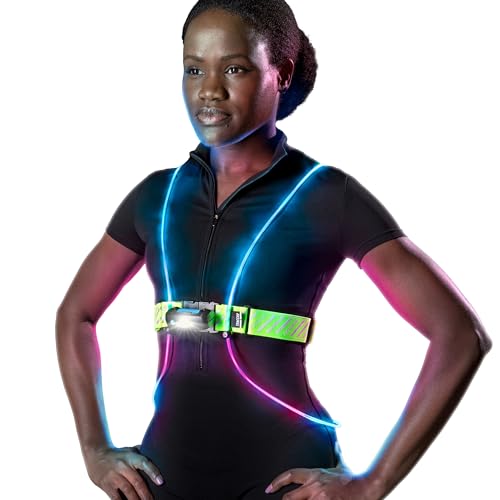
Roads and falls. Most walking training is on the road. The Road Runners Club of America suggests facing traffic, wearing reflective or lighted gear and carrying ID. If you fall and hit your head, follow the CDC HEADS UP guidance: recognize the signs, remove the person from activity and have a health care provider decide when it is safe to return.
Training, recovery and nutrition pointers
- Technique first: learn it from a coach or club; videoing yourself shows the knee and the hips. See track and field training.
- Fuel: in a 2021 study, elite race walkers who followed a low-carbohydrate, high-fat diet for five days had a higher oxygen cost of walking and their 10,000 m race performance was impaired by about 6%, while the high-carbohydrate group’s was unchanged. In a 2023 study of 3 weeks, the ketogenic group covered less total distance in training. These are small studies of elite walkers; talk to a sports dietitian before changing how you eat. See nutrition and supplements.
- Recover: sleep, easy days and mobility. See recovery and our foam rollers guide.
Gear for race walking
You need very little. Shoes are the main item: the AAOS suggests fitting athletic shoes late in the day, with your own socks, and with about half an inch of room past your longest toe. Many walkers use light, flexible trainers or flats; try them on a long walk before you race in them. Add moisture-managing socks, a watch for pacing, and a reflective vest if you train before sunrise.

Garmin Forerunner 570
- GPS, AMOLED, 42 or 47 mm
- Garmin Coach plans
- Pace and cadence for walk intervals
$449.99 at Amazon, as of Nov 17, 2026 01:07 UTC
Check price on Amazon
Balega Hidden Comfort No-Show Socks
- Drynamix wicking yarn
- Cushioned, seamless toe
- Heel tab
noxgear Tracer2 Light-Up Vest
- LED fiber optics + reflective
- Up to 20 h, USB-C
- 7 oz, IP67
Related sports and disciplines
Parent: Track and field. Neighbors: running, the marathon, hiking and Para athletics.
Race walking FAQs
What is the difference between race walking and running?
In running there is a moment when both feet are off the ground. In race walking one foot must appear to be in contact with the ground at all times, and the supporting leg must be straight as the body passes over it.
How do judges tell if a walker has lost contact?
By eye only. Research shows that judges rarely spot flights shorter than about 0.033 seconds, but they see longer ones reliably. Three red cards from three judges usually send a walker to a penalty zone, and a fourth means disqualification (check the rules for your event).
Is race walking in the Olympics?
Yes, at Paris 2024 there were 20 km walks and a mixed marathon walk relay. For LA28, reports list a half marathon walk for men and for women. Check the official programme for the current Games.
Is race walking easier on the body than running?
We did not find a study that answers this, so we will not claim it. Race walking has its own overuse risks, and at competitive volume it is demanding.
How do I get started?
Look for a USATF club or a high school or masters group with a coach who knows the technique, and start with short walks. Learn the rules before you worry about speed.
Sources
- Bissas et al. 2019, assessment of IAAF racewalk judges’ ability to detect illegal technique, Frontiers in Sports and Active Living
- World Athletics, LA28 athletics schedule and LA28 medal event programme
- Racewalking (Wikipedia, secondary) and Athletics at the 2028 Summer Olympics (Wikipedia, secondary)
- Lancashire Walking Club, Los Angeles 2028: only the half marathon walk (April 2025)
- Olympic champion 20 km race walker case study (2026)
- Ketogenic diet and race walk performance (2021) and ketogenic diet and training quality in elite racewalkers (2023)
- Weather effects on endurance running performance, 1,258 races (2022) and thermal indices and heat-related risk in elite athletics (2026)
- Hopkins et al. 2022, NCAA track and field injuries
- NATA exertional heat illness position statement
- CDC HEADS UP, concussion response
- RRCA runner safety tips
- AAOS OrthoInfo, Athletic shoes
Keep exploring: the track and field hub, running, foam rollers, our recovery tools guide, and every other sport on our sports hub.