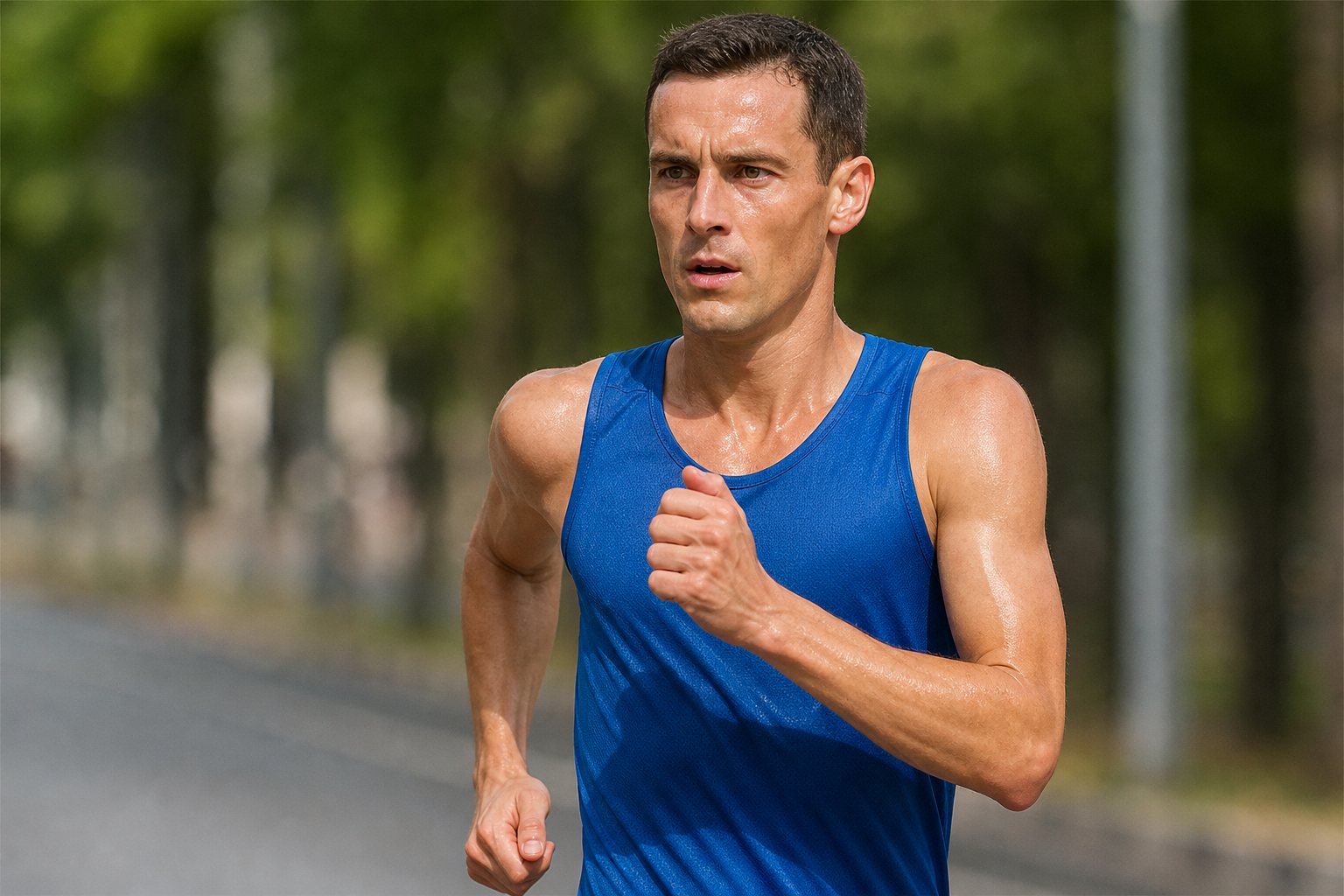
A hard 20 km session on Saturday, and by Monday the shin is tender along the inner edge. Is it a niggle, shin splints or something in the bone? Race walkers cover high weekly distance on hard roads with a very specific stride, so overuse injuries are the main story. This page covers what has been measured, general rehabilitation principles from AAOS, concussion after a fall, and when to get help.
Quick answer: A survey of 112 international race walkers found 59% of men and 66% of women injured at least once in the previous year, with hamstrings, knee, foot, shin and ankle most often affected and nearly half of injuries disrupting training for over three weeks. Rest, a gradual return and a professional diagnosis matter more than any quick fix. See a sports medicine doctor, physical therapist or athletic trainer if pain persists.
General information, not medical advice. We do not diagnose or clear anyone to return. For avoiding problems see injury prevention; part of the race walking hub.
What the surveys found
The main study is a questionnaire survey by Hanley and colleagues (Leeds Beckett, New Studies in Athletics), answered by 71 men and 41 women from 28 nations at international events in 2012 to 2014 (as summarised by Athletics Weekly). 59% of men and 66% of women reported at least one injury in the past year, and nearly half of injuries disrupted training for more than three weeks. The most affected sites were, in order, the hamstrings, knee, foot, shin and ankle, with the pelvis and back also frequent. Francis and colleagues surveyed 400 recreational and competitive racewalkers in 1998 and reported that most injuries were in the lower body and that risk rose with weekly volume (from the abstract summary we found). Both are self-reports, so they show patterns, not precise rates. For comparison, an NCAA track and field surveillance study (Hopkins and colleagues, 2022) covers college athletes in general, and does not report race walking separately in the parts we read.
Common problems and general rehab principles
The following comes from AAOS patient pages, which describe the general approach and are not a treatment plan for you.
- Hamstring strains. AAOS describes pulls, partial tears and complete tears; mild ones usually heal readily, a complete tear can take months. Care can include rest, ice, compression and a physical therapy programme that begins with flexibility and then adds strengthening, with return to sport only when a doctor approves.
- Shin splints. Pain along the inner shin, usually from overuse or a sudden jump in activity. AAOS describes rest, low-impact exercise, ice, supportive shoes and a gradual return, and says to see a doctor if it does not improve, because stress fractures and other conditions can look similar.
- Bone stress injuries. AAOS says these start as a stress reaction and can become a stress fracture, with pain at a specific spot on the bone that worsens with activity. Causes include sudden training increases, fatigue, low energy intake, low vitamin D, worn shoes and hard surfaces. Imaging may be needed, and AAOS notes most take at least three weeks to heal. See a doctor promptly.
- Knee, foot and ankle overuse. The survey lists them often. We found no race-walk-specific rehabilitation research, so the general principle is to reduce the load that provokes pain, keep fit with low-impact work if allowed, and return in steps with professional guidance.
Why these sites?
The Hanley authors linked the injury sites to the stride. The straight knee at landing and the forward swing of the leg load the hamstrings; holding the toes up for ground clearance may load the shin muscles; and the repeated, long-distance leg action may explain knee, ankle and foot problems. The pelvis and back may suffer from impact and the exaggerated hip and trunk movement. These are the authors’ explanations, not proven causes. It also means technique, not just distance, can be part of a rehab conversation, so ask a clinician who understands the sport.
Coming back, in general terms
AAOS describes returning from shin splints only after being pain-free for at least two weeks, then restarting with less frequency, duration and intensity and increasing slowly. For hamstring strains it says return to sport only when a doctor approves, since going back too early raises the risk of lasting damage. For stress fractures it says return should be gradual, with rest days and cross-training, and usually after clearance by a doctor. Treat those as the pattern, not a schedule for you. Your clinician sets the steps.
Concussion after a fall
Falls on roads and tracks happen. CDC HEADS UP says to recognise the signs, remove the person from activity and have a health care provider decide when it is safe to return. Do not decide yourself.
Heat illness
Exertional heat stroke is an emergency. The IOC heat consensus (2023) describes it as preventable and treatable with the proper risk mitigation and medical response; NATA advises rapid cooling, ideally cold-water immersion, with emergency services called.
When to see a professional
- Sharp or sudden pain in the back of the thigh, or you cannot bear weight (AAOS, hamstring).
- Pain at one spot on a bone, pain at rest or at night, or swelling (AAOS, stress fractures).
- Shin pain that does not ease with rest.
- Any head impact with symptoms, dizziness or confusion.
- Pain that changes how you walk. A changed stride can move the load somewhere else.
No source we read gives a universal recovery time, and we will not give one. Return depends on the injury, the person and a clinician’s assessment. See recovery for everyday load and sleep.
Race walking injuries FAQs
What injuries do race walkers get most?
In the Hanley survey: hamstrings, knee, foot, shin and ankle.
Are race walking injuries less common than running injuries?
We found no study that compares them directly, so we do not claim it.
Is shin pain always shin splints?
No. AAOS says stress fractures, tendinitis and other conditions can feel similar, which is why persistent shin pain needs a professional.
How long does a hamstring strain take?
It varies by severity. AAOS says mild ones heal readily and complete tears can take months; a clinician gives the plan.
Can I keep training while injured?
Sometimes with low-impact work. AAOS suggests swimming or cycling during rest from some injuries. Ask your clinician what is safe.
Sources
- Athletics Weekly, Injury study: Walk this way (Hanley and colleagues, Leeds Beckett, New Studies in Athletics)
- Leeds Beckett repository, Hanley et al., training and injury profiles of international race walkers
- Francis et al. 1998, injuries in the sport of racewalking, Journal of Athletic Training (PMC1320398; abstract not opened, via search summary)
- Hopkins et al. 2022, NCAA track and field injuries (PubMed 35111863)
- AAOS OrthoInfo, Hamstring muscle injuries
- AAOS OrthoInfo, Shin splints
- AAOS OrthoInfo, Stress fractures
- CDC HEADS UP, concussion response
- IOC consensus statement on sport events in the heat, Racinais et al. 2023 (PubMed 36150754)
- NATA exertional heat illness position statement (PubMed 26381473)
General information for education only, not medical advice. It does not replace a visit with a sports medicine doctor, physical therapist or athletic trainer. See how we write and check our pages in our editorial policy.