This article contains affiliate links: if you buy through them we may earn a commission, at no extra cost to you. Read our affiliate disclosure.
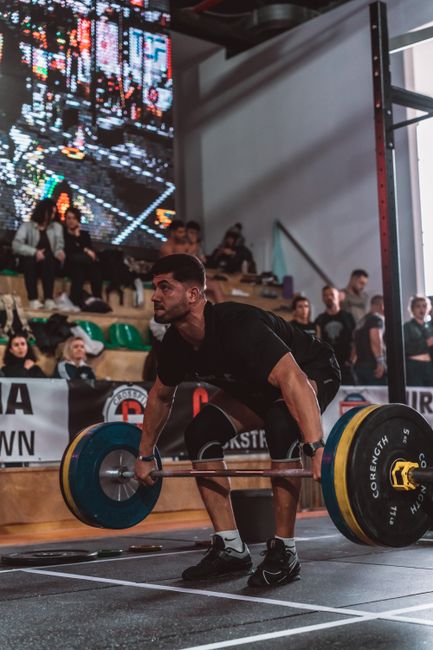
It is Tuesday night at a barbell club, and the lifter on platform two has just missed a heavy clean. The bar slides forward, she lets go, steps back, and the bumper plates bounce twice and settle. Nobody gasps. Her coach says “good bail” and loads the bar again. That quiet moment is weightlifting injury prevention: the coaching, the planning and the habits that lower the chance a lifter gets hurt on the platform or in the gym. It lowers risk; it can’t remove it.
Quick answer: Most injuries in elite lifters are overuse strains and tendinitis, so the best habits are steady coaching, gradual increases in load, a planned deload, a platform with bumper plates, and knowing how to miss a lift. Gear can add comfort but isn’t proven prevention. See a sports medicine doctor, physical therapist or athletic trainer if pain lingers, a joint swells, or you feel numbness, weakness or a pop.
General information, not medical advice. This page is about lowering risk. For what each injury looks like, how common it is and the warning signs, see our weightlifting injuries guide. For the sport itself, start at the Olympic weightlifting hub.
What the numbers say about risk
Prevention works best when it targets the real problem. A 2017 systematic review in the British Journal of Sports Medicine (Aasa and colleagues) put weightlifting at 2.4 to 3.3 injuries per 1,000 training hours, similar to other non-contact sports, while noting that most of the studies were low quality. In six years of records from the US Olympic Training Centers, strains and tendinitis made up 68.9% of injuries to elite lifters, and the authors described the pattern as mainly overuse, not traumatic (Calhoon and Fry, Journal of Athletic Training, 1999). A 2024 updated review (Tung and colleagues) listed the knee, lower back, shoulder, and hands and fingers as the usual sites. So prevention is mostly about how much, how often and how well you lift, plus the rarer accident with a dropped bar.
Warm up with the lift
Football and handball have named, researched warm-up programs. We did not find a published, weightlifting-specific injury prevention warm-up from the IWF or a medical body, so we won’t pretend one exists. What lifters and coaches commonly do is a few minutes of easy general movement, mobility for the ankles, hips, upper back and shoulders, then the dowel or empty bar and small steps up in load. That’s common coaching practice, not a tested protocol. Resistance bands and a foam roller are popular for this part; see weightlifting gear. The meet-day version, with warm-up room timing, is on our meet day page.
Technique and coaching
The snatch and the clean and jerk are fast, and small errors are hard to feel from inside the lift. A coach who watches you, even once a month, and video from the side and from 45 degrees catch the bar drifting forward or the back rounding in the pull before they turn into pain. In the US, USA Weightlifting offers a Level 1 coaching course, one sign a coach has learned the basics. Technique work also means learning the sport’s own standards, which are covered on our training page.
Bailing safely
The NSCA’s strength and conditioning textbook treats the snatch and clean as lifts that are not spotted: the lifter learns to miss instead, pushing a snatch forward and stepping back, or letting it go behind and jumping forward, and dumping a missed jerk in front. Practice this with an empty bar or a dowel until it’s automatic, then keep practicing as the weights climb, because the habit has to hold when you’re tired. In the US emergency-room study of weight-training injuries from 1990 to 2007 (Kerr and colleagues), 65.5% happened when weights dropped on the person. A well-practiced bail keeps a missed lift from landing on you.
Load progression and recovery
Since overuse is the main pattern, the biggest lever is not piling on too much too fast. The American Academy of Orthopaedic Surgeons (AAOS) links pain at the front of the knee to overuse and sudden jumps in training. No source we found gives a safe weekly percentage increase for lifters, so use your coach’s plan and these sourced guides instead:
- Plan in phases. A 2017 meta-analysis of 18 studies (Williams and colleagues) found periodized resistance training gave bigger one-rep max gains than non-periodized training.
- Deload. In a 2024 survey of 246 strength and physique athletes (Rogerson and colleagues), every athlete deloaded, typically for about 6 days every 5 to 6 weeks, cutting volume and intensity and keeping the same exercises. Many also deloaded when joints started to ache.
- Avoid sudden swings before a meet. In a study of 21 elite lifters, those who did well at a 2016 Olympic qualifier had steadier loads over the last 21 days (Coyne and colleagues); the authors suggested limiting changes in that window. Taper survey figures are on our training page.
- Treat rest as training. Sleep, food and days off are covered in recovery for weightlifters.
Protecting the shoulders, knees, low back and wrists
Strength outside the competition lifts, such as pulls, squats, rows, pressing, core work and mobility, is the usual coaching answer for weak links. Our training page lists how lifters organize that work. What each joint tends to need:
- Shoulder. AAOS describes impingement and rotator cuff tendinitis as pain at the front and side of the shoulder, worse overhead and sometimes at night. Lifters who feel it often change the overhead volume early, and a PT can guide strengthening.
- Knee. In the training center records, 85% of knee injuries were tendinitis. AAOS says patellofemoral pain is linked to weak or imbalanced thigh and hip muscles and is often managed with strengthening under a PT.
- Low back. About three in four back injuries in the elite records were strains. Watching bar position and form late in a session is coaching advice, not a measured rule. AAOS says most low back pain settles within a few weeks.
- Wrists and hands. The front rack and the catch of a jerk bend the wrist back under load. Hands and fingers show up on injury lists for weightlifting, and the IWF allows tape on the fingers and thumbs as long as it doesn’t extend past the fingertips.
- Pelvic floor. The 2024 review found leaking urine during heavy lifts in about half of female barbell athletes (9.3% of men). A pelvic floor physical therapist can help.
The platform, the bar and the room
Because dropping the bar is part of the sport, where you lift matters. Use rubber bumper plates on a platform or thick rubber flooring, collars every time, and keep people from walking behind or in front of a lifter. The IWF requires a clear area of 100 cm around a competition platform, a stretcher or backboard near it, and a doctor’s table at the athletes’ entrance and in the warm-up area (IWF Technical and Competition Rules). Squats are different: set rack safeties just below your bottom position or use spotters, as the NSCA advises for lifts with the bar on the back or in the front rack. At home, the American Academy of Pediatrics notes most youth resistance training injuries seen in US emergency rooms involve home gym equipment and unsafe behavior without supervision. A home gym section covers the equipment.
For long sessions in a hot room, the National Athletic Trainers’ Association says to drink to thirst when you don’t know your sweat rate, and not to overdrink. If anyone might have a concussion after a bar or a fall, the CDC’s HEADS UP guidance applies: remove them from training, and have a health care provider check them before they return. The 2024 NEISS analysis of barbell head and neck injuries found cuts were the most common.

CAP 2-inch Olympic Bumper Plate Set
- Low-bounce rubber
- Chromed steel hub, 2 in hole
- Sets from 100 to 370 lb
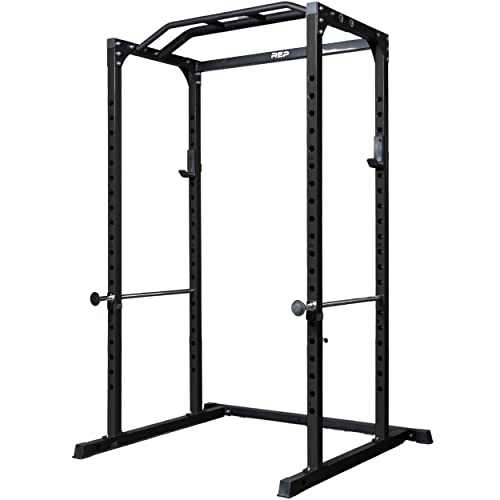
REP Fitness PR-1100 Power Rack
- Two full-length safety bars
- Rated 700 lb
- Pull-up bar
$379.99 at Amazon, as of Nov 17, 2026 01:07 UTC
Check price on AmazonThese are the kinds of gear that make a missed lift less dangerous, since the plates can be dropped and the rack catches a failed squat. They don’t make bad technique safe.
Belts, sleeves and wraps: honest answers
The IWF sets what is allowed on the platform: a belt is optional, worn outside the singlet and no wider than 12 cm; knee sleeves must be one-piece elastic or neoprene with no buckles, straps or plastic. Those are verified rules. What isn’t verified in our research is the claim that a belt, sleeve or wrap prevents injury. Makers say their products support you, and lifters say they feel steadier, but we did not find a source showing that any of them lowers injury rates, so we treat them as comfort and bracing aids. Many coaches suggest learning to brace without a belt first. A belt is not a treatment for back pain; if your back hurts, get it checked. Details on fit and rules are on the gear page.
Young lifters
The American Academy of Pediatrics’ 2020 clinical report says children and teens can strengthen with low injury rates when training is well supervised and focused on technique. It says weightlifting movements can be included safely with light loads and quality instruction, progressing from a dowel to an unloaded bar to a loaded bar. It also asks that lifting count toward total training time. In a 2021 survey of top US weightlifters, those who specialized in the sport by 16 reported more injuries before age 21 (Bush and colleagues). More on youth weightlifting.
What prevention can’t do
Good coaching, sensible loading and a safe platform reduce risk, but none of them guarantee a lifter stays healthy. Most injury studies in this sport are small, and many describe what happened, not what prevented it. Rapid weight cutting before a weigh-in is its own health matter, covered in making weight safely, and nutrition questions belong on the nutrition page.
When to see a professional
- Right away: a pop at the knee and you can’t straighten it, a joint that looks out of place after a miss, a bar to the head or neck, back pain with leg weakness or loss of bladder or bowel control.
- Soon: a joint that swells, numbness or tingling, night pain in a shoulder, or pain that keeps changing your training for more than a couple of weeks.
A sports medicine physician diagnoses, a physical therapist guides rehab and the return to heavy loads, and a certified athletic trainer is often the first contact on school and college teams. Injury detail and warning signs are on our injuries page.
Weightlifting injury prevention: FAQs
How do I prevent injuries in Olympic weightlifting?
Get coached, add load gradually, schedule deloads, lift on a platform with bumper plates, and practice missing lifts safely. Pay attention to small aches early, since most injuries in elite lifters are overuse strains and tendinitis.
Does a lifting belt prevent back injuries?
We found no source showing that it does. Lifters use belts for a firmer feeling when bracing on heavy cleans, jerks and squats. If your back hurts, see a sports medicine doctor or PT instead of relying on a belt.
How do I bail a snatch or clean safely?
Strength-coaching guidance says to let go: push a snatch forward and step back, or let it go behind and jump forward, and dump a missed jerk in front, on a platform with bumpers. Learn it first with an empty bar or a dowel, with a coach watching.
How often should I deload?
One 2024 survey of 246 strength and physique athletes found a typical deload of about 6 days every 5 to 6 weeks. That’s a description of what athletes do, not a rule, so ask your coach what fits your training.
Is Olympic weightlifting safe for teenagers?
The American Academy of Pediatrics says teens can lift with low injury rates when training is supervised, technique comes first and loads start light. Ask a doctor first if your teen has a heart condition, seizures or uncontrolled high blood pressure.
Sources
- Aasa et al. 2017, injuries among weightlifters and powerlifters, British Journal of Sports Medicine
- Tung et al. 2024, injuries in weightlifting and powerlifting, BMJ Open Sport and Exercise Medicine
- Calhoon and Fry 1999, injury rates of elite weightlifters, Journal of Athletic Training
- Kerr et al. 2010, weight training injuries in US emergency departments
- Sharma et al. 2024, barbell weightlifting head and neck injuries, OTO Open
- Williams et al. 2017, periodized resistance training meta-analysis
- Rogerson et al. 2024, deloading practices in strength and physique sports
- Coyne, Newton and Haff 2021, training load in the taper of elite weightlifters
- Bush et al. 2021, sport specialization in elite US weightlifters
- AAP clinical report, Resistance Training for Children and Adolescents, 2020
- IWF Technical and Competition Rules and Regulations 2024
- AAOS OrthoInfo, low back pain
- AAOS OrthoInfo, shoulder impingement and rotator cuff tendinitis
- AAOS OrthoInfo, patellofemoral pain syndrome
- NSCA Essentials of Strength Training and Conditioning, spotting chapter (study-guide summary)
- NATA position statement, fluid replacement for athletes
- CDC HEADS UP, signs and symptoms of concussion
- USA Weightlifting Level 1 coaches course
General information for education only, not medical advice. It does not replace a visit with a doctor, physical therapist or athletic trainer. See how we write and check our pages in our editorial policy.