This article contains affiliate links: if you buy through them we may earn a commission, at no extra cost to you. Read our affiliate disclosure.
It is the second hour of a Friday night session. The lights are low, the music is loud, and a skater who is new to the rink has just let go of the wall. Her friend, who has skated for years, has her pads on and gets back up fast after the first tumble. Roller skating injury prevention is the set of habits that aim to lower the chance of a skater getting hurt: learning to fall, wearing the right protection, keeping skates that fit, choosing safer places to skate and building up gradually. These habits can lower the odds. They cannot promise anything.
Quick answer: Almost all roller skating injuries come from falls, and the wrist takes the most. The American Academy of Orthopaedic Surgeons (AAOS) advises a helmet, wrist guards, and knee and elbow pads, put on before the skates, plus learning to stop before you skate in traffic or on a crowded path. Skates should fit with the heel held firmly. Learn to fall low and roll rather than catching yourself on stiff arms, and avoid wet pavement, potholes and glass. See a sports medicine doctor, physical therapist or athletic trainer if a wrist or ankle stays swollen or sore, and get emergency care right away after any head injury with danger signs.
General information, not medical advice. This page is about lowering risk. For what each injury looks like and when to get it checked, see our roller skating injuries guide. Back to the roller skating hub.
What actually needs preventing
The pattern is clear. In a US study of more than 1.2 million children treated for skating injuries, 83% were hurt in a fall (Knox and colleagues, Pediatrics, 2006). In 20 years of US emergency department data, fractures were the most common roller-skating injury type, and about half of all roller-skating injuries were to the shoulder, arm, elbow or wrist (Dhodapkar and colleagues, Orthopaedic Journal of Sports Medicine, 2023). So most prevention is about two things: fewer falls, and falling better and with protection when they happen.
Learning to fall
The AAOS and the Pediatric Orthopaedic Society (POSNA) position statement on in-line skating and skateboarding tells skaters to learn to fall: crouch down, land on the fleshy parts of the body, roll with the fall and relax instead of going stiff. The reason is the wrist: in the 20-year US data, 68% of roller-skating fractures were in the upper body, and at one US children’s trauma center, 63% of skating fractures were in the forearm (Dhodapkar 2023; Zalavras and colleagues, American Journal of Sports Medicine, 2005).
Many coaches add a simple cue: fall forward onto your pads, knees first, rather than reaching back. That is common coaching advice, not something a governing body has published, so treat it as a teaching habit and ask your instructor. At a busy rink, getting up and moving to the wall or the inside quickly keeps other skaters from running into you. Falling drills you can practice step by step are on our roller skating training page.
Warm-up
AAOS says to perform warm-up exercises before and after skating. A review of warm-up studies found warm-up improved performance in 79% of the measures studied, with little evidence of harm (Fradkin and colleagues, Journal of Strength and Conditioning Research, 2010). Note that this is about performance, not injury rates. We found no named, tested roller skating warm-up program like soccer’s FIFA 11+. What skaters usually do is a few minutes of easy movement, ankle and hip mobility, and slow laps before picking up speed. How to warm up before a meet is in our competition day guide.
Technique: stop first, then go faster
AAOS says to learn the basic skills of skating, especially how to stop properly, before skating in traffic or on a crowded path. The American Academy of Pediatrics (AAP) likewise lists knowing how to turn, control speed and stop. Lessons help beginners most, and it is easier to learn at a session with an instructor than alone on a hill. Do not take a race skate onto a path until you have a reliable stop.
Building up gradually
The International Olympic Committee (IOC) consensus statement on load and injury says that rapid changes in training load are a major injury risk factor (Soligard and colleagues, British Journal of Sports Medicine, 2016). It gives no skating-specific number. For artistic skaters, a 2026 survey of 50 competitive skaters found every skater had at least one injury, with jumping the most common moment (40%) and spins next (20%). That study is small and self-reported, so the practical message is modest: add jump and race volume a little at a time, and get a sore ankle or knee checked early.
Rest also counts. The AAP clinical report on sport specialization recommends at least 1 to 2 days off per week from the main sport for young athletes (Brenner, 2016).
Strength, balance and conditioning
There is no roller-skating injury-prevention trial that we know of. What exists is related. A small randomized trial in 30 boys aged 11 to 14 on a school skating team found that 4 weeks of balance, agility and speed work improved speed and agility tests more than regular PE (Sehgal and colleagues, 2023); it measured performance, not injuries. The National Athletic Trainers’ Association (NATA) says the strongest risk factor for an ankle sprain is a previous sprain, and recommends a balance program of at least 3 months afterward. Across sports, programs aimed at the ACL roughly halve ACL injuries overall (Webster and Hewett, Journal of Orthopaedic Research, 2018), but none of those trials was in roller skaters. Exercises are in our training guide; after a fall, see recovery.
Wrist guards, pads and helmets
This is where the evidence is strongest. In a study led by CDC authors of injured in-line skaters, those without wrist guards had about 10 times the odds of a wrist injury, and those without elbow pads about 9.5 times the odds of an elbow injury (Schieber and colleagues, New England Journal of Medicine, 1996). The AAP says wrist guards can reduce injuries by almost 90%, elbow pads by 80% and knee pads by 30%. AAOS says to put gear on before the skates and make sure pads fit and do not slip.
Helmets and concussion. Head injuries are a smaller share of recreational roller-skating injuries (4.4% in the children’s study, compared with 13.3% for ice skating), but researchers still recommend a helmet for all recreational skating. The US Consumer Product Safety Commission (CPSC) says a CPSC-compliant bicycle helmet works for recreational roller and in-line skating, and recommends a skateboard helmet certified to ASTM F1492 for aggressive or trick skating. World Skate’s speed rules require a certified hard helmet, fastened the whole time on the course. A helmet that is cracked or crushed should be replaced, and AAOS’s skateboarding advice is to replace a helmet at least every 5 years or after damage. What a helmet cannot promise is that a skater will not get a concussion. The CDC says a skater with a suspected concussion stops for the day and returns only when a health care provider clears them; the signs and danger signs are on our injuries page.

Triple Eight Saver Series Wristsavers
- Splints on top and bottom
- 3 adjustable straps
- Sizes JR to L
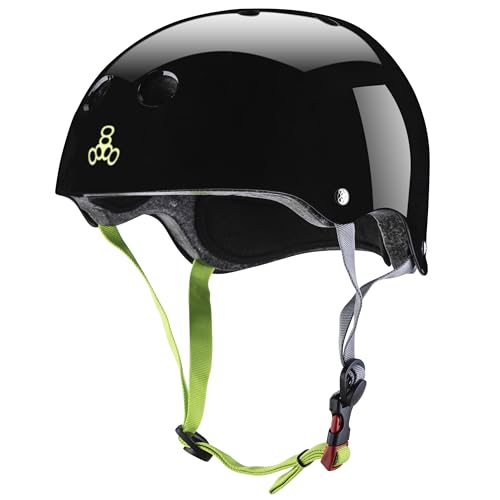
Triple Eight Dual Certified Helmet
- CPSC bike + ASTM F1492 per maker
- EPS liner, adjustable fit

Triple Eight Saver Series Pad Set
- EVA foam, polycarbonate caps
- Sizes Junior to Large
$49.98 at Amazon, as of Nov 17, 2026 02:07 UTC
Check price on AmazonThese are examples of gear that exists, not a promise of protection; the certifications above are the maker’s description of the helmet. Sizing and fit notes are in our roller skating gear guide.
Skate fit and upkeep
AAOS says to be certain the heel does not move up and down in the boot, which helps avoid blisters and keeps the ankle steady. For upkeep, most skaters check that the axle nuts are snug, the toe stops or brakes are not worn down, and the wheels spin freely and are not worn flat before a session. No published standard sets how often, so this is common practice, not a sourced rule.
Rinks, paths and weather
AAOS says to avoid wet or icy surfaces, potholes, glass and crowded walkways, and to follow traffic rules outdoors. It adds that skating may not seem strenuous, but it is easy to get overheated or dehydrated in hot, humid weather. The AAP advice for in-line skaters includes skating on the right and passing on the left, avoiding streets in crowded areas and never grabbing onto a moving vehicle (skitching). NATA says easing into hot-weather exercise over 7 to 14 days helps the body adapt, and its lightning safety statement tells outdoor athletes to have a plan to get indoors. Follow the posted rules at your own rink.
Young skaters
In the children’s study, skaters aged 6 and under had a greater share of head and face injuries, which is one more reason for a helmet on little skaters. The AAP says resistance training is safe for young people when supervised and focused on technique, with gains from 2 to 3 sessions a week for at least 8 weeks. Age groups and club options are on our youth roller skating page.
What prevention cannot do
Gear and habits lower the odds; they do not remove them. Skaters with wrist guards still break wrists, and well-fitted helmets do not guarantee against a concussion. The numbers above come from observational studies, which show a link, not proof.
When to see a professional
- Right away: any concussion danger sign, a bone that looks bent, numbness, a deep cut, or a skater who was knocked out.
- Within a day or two: a wrist or ankle that stays swollen or sore. AAOS warns that a broken scaphoid in the wrist can be mistaken for a sprain.
- Soon: an ankle that keeps rolling, pain that keeps coming back, or a knee that feels unstable.
A sports medicine doctor diagnoses; a physical therapist or certified athletic trainer guides rehab and the return to skating.
Roller skating injury prevention: FAQs
How do I stop falling on roller skates?
Everyone falls at first. AAOS says to learn the basics, especially stopping, before skating in traffic or on a crowded path, and lessons help beginners most.
How do you fall safely on roller skates?
AAOS and POSNA advise crouching, landing on the fleshy parts of the body, rolling with the fall and relaxing. Avoid catching yourself on stiff arms, since the wrist is the most commonly broken part.
Do I need wrist guards to roller skate?
AAOS recommends them, along with a helmet and knee and elbow pads. In a study of injured in-line skaters, those without wrist guards had about 10 times the odds of a wrist injury.
Which helmet is right for rink and park skating?
CPSC says a CPSC-compliant bike helmet works for recreational roller skating, and a skateboard helmet certified to ASTM F1492 is for aggressive or trick skating. Check the fit, and replace a damaged helmet.
Is outdoor skating riskier than the rink?
We did not find a study that compares them. AAOS lists the outdoor hazards: wet or icy pavement, potholes, glass, crowds and traffic. A crowded rink session has its own risks.
Should a skater with a possible concussion keep skating?
No. The CDC says a person with a suspected concussion stops for the day and does not return until a health care provider says it is okay.
Sources
- AAOS OrthoInfo, roller skating injury prevention
- AAOS and POSNA position statement, in-line skating and skateboarding safety
- AAOS OrthoInfo, scaphoid fracture of the wrist
- AAOS OrthoInfo, skateboarding safety (helmet replacement)
- Dhodapkar et al., skating injuries in the US 2002 to 2021, Orthopaedic Journal of Sports Medicine, 2023
- Knox et al., pediatric skating injuries, Pediatrics, 2006
- Zalavras et al., forearm fractures in skating and snowboarding, American Journal of Sports Medicine, 2005
- Schieber et al., in-line skating injuries and protective equipment, New England Journal of Medicine, 1996
- AAP HealthyChildren, skateboarding and in-line skating safety
- CPSC, which helmet for which activity
- World Skate Speed Rulebook 2025
- CDC HEADS UP, concussion signs and symptoms
- Blanco-Martinez et al., injuries in competitive artistic skaters, Healthcare, 2026
- Fradkin et al., warm-up and performance, 2010
- IOC consensus statement on load in sport and risk of injury, 2016
- AAP clinical report, sport specialization, Brenner 2016
- Sehgal et al., balance and agility training in young skaters, 2023
- Webster and Hewett, ACL injury prevention programs, 2018
- AAP clinical report, resistance training for children and adolescents, 2020
- NATA position statement, ankle sprains, 2013
- NATA position statement, exertional heat illnesses, 2015
- NATA position statement, lightning safety, 2013
General information for education only, not medical advice. It does not replace a visit with a doctor, physical therapist or athletic trainer. See how we write and check our pages in our editorial policy.