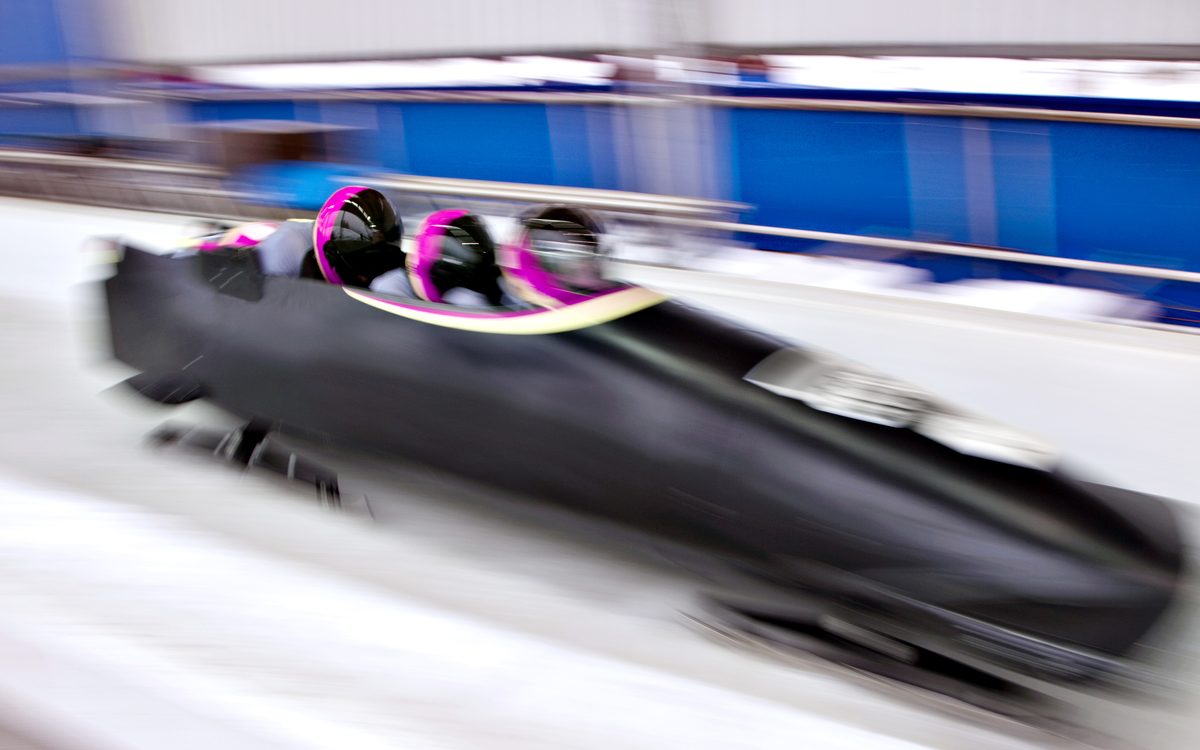
A crash at the bottom of the track, the sled upside down, and a crew that gets up slowly. Or no crash at all: a push athlete who feels a pull in the back of the thigh on the second step of a start, or a driver with a foggy headache after a rough day of training runs. Bobsleigh injuries come in these two kinds, sudden crash injuries and the slower wear and strain of heavy sprinting and lifting. This page sets out what surveillance studies report, what concussion care looks like, and when to see a professional.
Quick answer: Surveillance studies of Olympic athletes put bobsleigh among the higher-risk winter sports. At Sochi 2014, 18.1% of bobsledders were injured, and across four recent Winter Games the most common injury sites were the knees, spine and back, and wrist and hand, with contusions most common. Concussion and “sled head” are the main concerns. This page does not diagnose or clear anyone to return: see a sports medicine doctor, physical therapist or athletic trainer, and call 911 for danger signs after a head injury.
General information, not medical advice. How to lower risk is on the injury prevention page; see also the recovery page and the bobsleigh hub. Related sports: skeleton and luge.
How common are injuries?
- Olympic Winter Games, four editions combined: a 2023 systematic review and meta-analysis counted 1,304 injuries among 11,197 registered athletes. Freestyle skiing, snowboarding, alpine skiing, bobsleigh and ice hockey had the highest rates. The most common sites were the knee, the thoracic and lumbar spine and back, and the wrist and hand. Contusions, hematomas and bruises were most common, followed by strains and sprains.
- Sochi 2014: according to the Frontiers in Neurology review, 18.1% of bobsledders were injured, and 1.2% of them needed more than 7 days away from sport. At the 2016 Lillehammer Youth Olympics, 13.8% were injured.
- Illness is part of the picture: at PyeongChang 2018, illness incidence was among the highest in bobsleigh (14%), and 70% of illnesses across the Games affected the respiratory system.
- On the track: the Whistler Sliding Centre study of more than 43,200 runs found an overall injury rate of 0.5% of runs, with lacerations, abrasions and contusions making up 52% of injuries. Injuries were more frequent and severe lower on the track, and the most severe event was a fatality caused by track ejection.
- Youth: among 101 Team USA athletes at the 2024 Winter Youth Olympics, bobsled had the highest injury rate (166.7 per 1,000 athlete-days) but from a very small group, so the numbers have wide uncertainty.
A 2022 review of injuries in skating and sledding sports describes acute trauma as involving mainly the head, spine, and upper and lower limbs, and says overuse injuries are a major burden for elite athletes. Push athletes also sprint at full effort; sprint strains are common in any sport, though we did not find a bobsleigh-specific number.
Concussion and “sled head”
The Frontiers review summarised nine studies and found concussions affected 13 to 18% of sledding athletes, with significant variance between events, which suggests the ice track plays a role. In the 2010 Olympics table the review compiled, five of the 20 bobsleigh injuries were concussions. Athletes use “sled head” for a symptom burden (such as headache and fogginess) after bumpy or repeated runs. The authors say it is unclear whether sled head is a concussion, a form of repeated smaller impacts or neck strain.
A 2024 study of 12 elite World Cup bobsleigh athletes (3 pilots and 9 push athletes) used instrumented mouthguards and recorded 1,900 head acceleration events over 48 training and 53 competition days. It found no differences in impacts per run between sexes, training versus competition or pilot versus push athletes. The long-term effects of this exposure are not yet known.
What to do after a head injury
The CDC’s HEADS UP guidance is to recognise and remove: anyone with a possible concussion stops activity and is seen by a healthcare provider, and a provider decides when return is safe. Signs to watch include headache, dizziness, nausea, confusion and sensitivity to light or noise. Call 911 for repeated vomiting, a seizure, a headache that gets worse, slurred speech, increasing confusion or loss of consciousness. Do not return to sliding on the same day, and do not use this page to judge your own recovery.
Rehabilitation: general principles only
We cannot give a recovery time for any injury, and a diagnosis or return-to-sport decision belongs to a clinician. What the sources do say: the 2025 clinical commentary on sliding athletes argues for an integrated team of medical, performance and coaching staff, because the demands of the sport differ from other sports. A 2025 narrative overview on motor imagery says imagery practice may help athletes keep up training engagement and reduce fear of reinjury during rehab, but it rates its own evidence at the lowest level. Good rehab usually means a plan from a physical therapist or athletic trainer who sees the injury and knows your sport.
When to see a professional
- Any suspected concussion or head impact with symptoms (same day).
- Neck pain after a crash, especially with arm numbness or weakness.
- Pain that wakes you at night, swelling that does not settle, or a joint that gives way.
- A strain that does not improve in a few days or returns as soon as you sprint again.
- Persistent fatigue, repeated chest infections or illness during the season; the PyeongChang data show illness is common.
Bobsleigh injuries FAQs
What are the most common bobsleigh injuries?
In Olympic surveillance reviewed here, contusions, hematomas and bruises were most common, followed by strains and sprains, most often at the knee, spine and back, and wrist and hand. Concussion is the main long-term concern.
What is sled head?
A term athletes use for a headache and brain fog after rough or repeated runs. Researchers say it is unclear whether it is a concussion, repeated smaller impacts or neck strain.
How common are concussions in bobsleigh?
The Frontiers review found concussions affected 13 to 18% of sledding athletes in the studies it reviewed, but definitions and counting differed between Games.
How long does recovery take?
It depends on the injury and the person, and no universal time exists. A sports medicine doctor, physical therapist or athletic trainer should guide it.
Can I return to the track after a concussion?
Only when a healthcare provider says so. The CDC advises recognising symptoms, removing the athlete from activity and letting a provider decide.
Sources
- Exploring the epidemiology of injuries in Olympic Winter Games athletes, systematic review and meta-analysis (2023)
- McCradden and Cusimano 2018, Front Neurol: concussions in sledding sports and “sled head” (PMC)
- Whistler Sliding Centre injuries, Br J Sports Med 2016
- Injury and illness incidence at PyeongChang 2018, Br J Sports Med 2019
- Team USA injury and illness at the 2024 Winter Youth Olympic Games, Inj Epidemiol 2025
- McPherson and colleagues 2024, J Athl Train: head kinematics in World Cup bobsleigh
- Injuries in skating and sledding winter sports: patterns and imaging findings (2022)
- Interdisciplinary health and performance management of the sliding athlete, Int J Sports Phys Ther 2025
- Motor imagery training as a load-management tool for athletes, Sports Health 2025
- CDC HEADS UP: signs and symptoms of concussion
- CDC HEADS UP: responding to a concussion
General information for education only, not medical advice. It does not replace a sports medicine doctor, physical therapist, athletic trainer, licensed mental health professional or qualified coach. See our editorial policy for how we research and write.