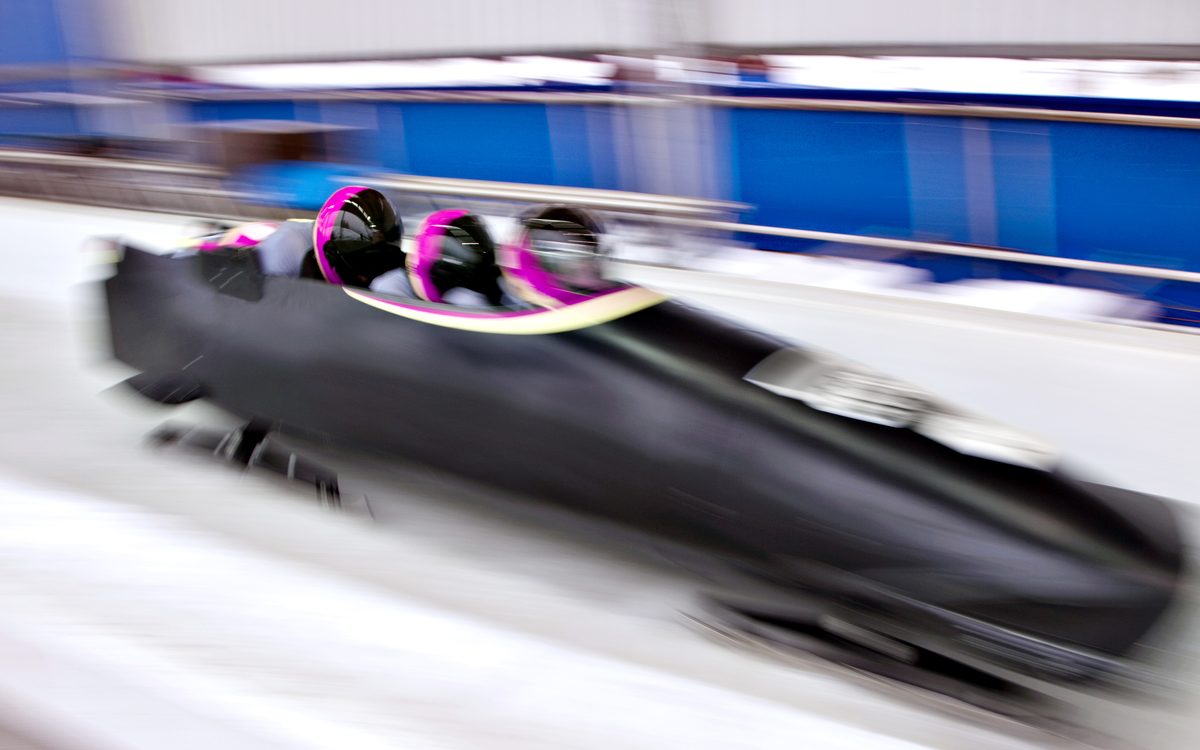
The truck ride back from the track, the legs heavy after a day of starts, and a hotel room that is too bright for a 5 a.m. alarm. Bobsleigh recovery is not one trick. It is the plain, unglamorous mix of sleep, a training load that rises slowly, easy days that are actually easy, some mobility work and honest attention to what hurts. This page covers what the sources say about each, and says openly where the evidence is weak.
Quick answer: Sleep and a sensible training load do the most for recovery, and both are well supported. Foam rolling, massage guns and similar tools are popular, but research shows only small, short-term effects on soreness and performance. Normal soreness fades in a few days and eases with light movement; pain that is sharp, one-sided, getting worse or linked to head or neck symptoms is not normal. See a sports medicine doctor, physical therapist or athletic trainer if in doubt.
General information, not medical advice. For how to build load see training; for head and neck symptoms see injuries; for fuel see nutrition. Hub: bobsleigh.
Sleep comes first
A 2021 expert consensus in the British Journal of Sports Medicine says elite athletes are prone to short sleep (under 7 hours a night) and poor sleep quality, and that sport-specific factors such as training, travel and competition, plus stress and anxiety, drive it. Bobsleigh adds early starts, travel between tracks and nervous evenings before runs. The consensus recommends an individual approach rather than one number for everyone, and a toolbox of sleep education and screening. The CDC recommends at least 7 hours for adults and 8 to 10 for teens.
One small crossover study of eight Chinese Winter Olympic bobsleigh athletes tested heart-rate variability biofeedback 35 minutes before bed on a single night. Sleep efficiency and deep sleep percentage rose and several mood measures improved. It is a very small, one-night study, so it is a hint, not a proven method.
Load management: the main recovery tool
Recovery starts with how hard you train. A 2025 clinical commentary on sliding athletes argues for an integrated team of medical, performance and coaching staff, so load, health and competition are planned together. The sources do not give a numeric formula for bobsleigh. Practical signs of too much, too fast: legs that stay heavy for days, sprint times that slip, a mood that sinks, poor sleep. These are signals to talk with your coach and, if they persist, a clinician.
A 2025 narrative overview of motor imagery (practising a movement in your head) proposes it as a load-management aid when athletes have high loads and little time to recover, or are limited by injury. The authors rate their evidence at the lowest level, so treat it as an extra, not a substitute.
Mobility and flexibility
The push start asks the hips and hamstrings for big range under power, and the ride asks you to stay tucked and braced. Mobility work for hips, hamstrings, calves, thoracic spine and shoulders is a normal part of a sprinter’s routine. The sources we read do not give a bobsleigh mobility programme, and the title of a 2024 review says foam rolling and stretching do not give superior acute flexibility or stiffness improvements compared with other warm-up methods. Use mobility to feel and move well, not as a promise of fewer injuries.
What the evidence says about recovery tools
- Foam rolling: a 2019 meta-analysis of 21 studies found pre-rolling gave small improvements in sprint performance (+0.7%) and flexibility (+4.0%) with negligible effects on jumping and strength, and post-rolling slightly reduced the drop in sprint and strength performance and reduced muscle pain perception. The effects are modest and short-lived.
- Massage guns and other devices: we did not find bobsleigh-specific research, and a device cannot replace sleep or load management. Many athletes use them for comfort.
- Cold-water immersion: many 2026 reviews exist but conclusions depend on the protocol. We did not read enough to recommend it, so we do not.
- Compression, heat, saunas and similar: not covered by sources we read for this page; ask a clinician.
Our gear pages describe these tools as comfort items, not treatment; see the gear page.
Soreness or injury?
Soreness from a hard session is usually dull, spread over a muscle and eases over a few days. Warning signs that need a professional: pain in one spot that is sharp or keeps getting worse, pain at rest or at night, swelling or bruising that does not fit the training, numbness or tingling, and any headache, dizziness, fogginess or neck pain after a run. The CDC says anyone with a possible concussion stops activity and is seen by a healthcare provider. We do not set a recovery time for any injury.
Cold and travel
Tracks are cold, and athletes stand around between runs. The CDC advises layers, keeping dry and knowing the early signs of hypothermia and frostbite. Plan how to rewarm, eat and rehydrate after sessions, and see the nutrition page for fuel and fluids.
Bobsleigh recovery FAQs
How much sleep do bobsleigh athletes need?
The CDC says at least 7 hours for adults and 8 to 10 for teens. The 2021 expert consensus says needs vary and advises an individual approach.
Does foam rolling help recovery?
A little. A 2019 meta-analysis found small effects on soreness and on the drop in sprint and strength after exercise. It is a comfort tool, not a treatment.
Is soreness the same as injury?
No. Soreness is dull, widespread and fades. Sharp, one-spot, worsening pain, swelling, numbness or any head or neck symptom after a run needs a professional.
Should I train through sled head symptoms?
No. Stop and see a healthcare provider. The CDC advises recognising symptoms, removing the athlete from activity and letting a provider decide on return.
Are massage guns worth it?
No bobsleigh research exists on them. Some people like how they feel. They do not replace sleep or sensible training load.
Sources
- Sleep and the athlete: narrative review and 2021 expert consensus recommendations, Br J Sports Med
- CDC: sleep
- Presleep HRV biofeedback in Chinese Winter Olympic bobsleigh athletes, 2022
- Interdisciplinary health and performance management of the sliding athlete, Int J Sports Phys Ther 2025
- Motor imagery training as a load-management tool for athletes, Sports Health 2025
- A meta-analysis of the effects of foam rolling on performance and recovery, Front Physiol 2019
- Foam rolling and stretching vs other warm-up interventions, J Sport Health Sci 2024 (title only)
- CDC HEADS UP: signs and symptoms of concussion
- CDC HEADS UP: responding to a concussion
- CDC: preventing hypothermia and frostbite
General information for education only, not medical advice. It does not replace a sports medicine doctor, physical therapist, athletic trainer, licensed mental health professional or qualified coach. See our editorial policy for how we research and write.