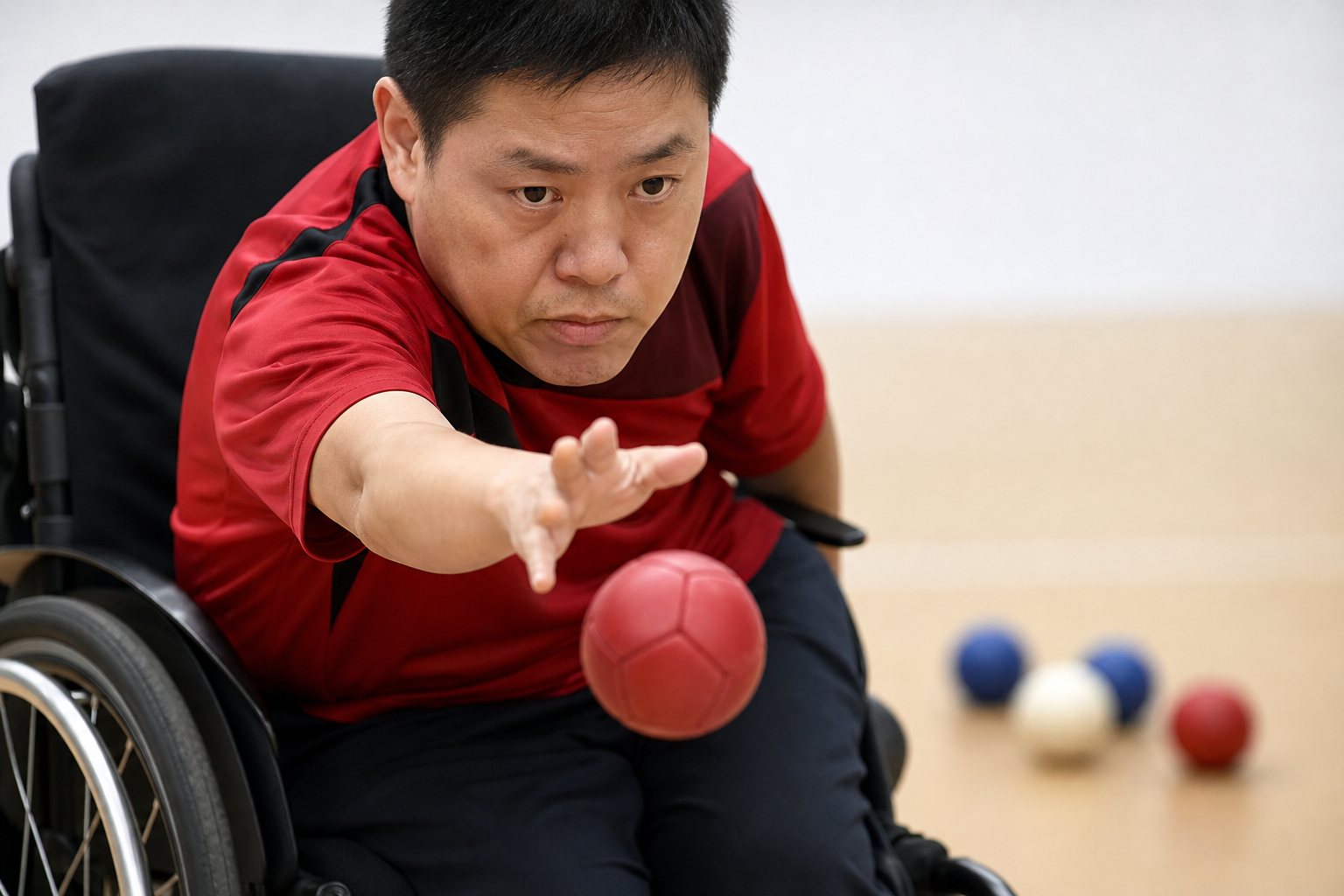
The match is over, the chair is packed into the van, and the player is wide awake at midnight replaying the third end. Boccia recovery is not about ice baths or gadgets; for most players it comes down to sleep, sensible practice loads, looking after the shoulders and skin, and staying comfortable in the heat. This page explains what the sources say, and is honest about how little boccia-specific recovery research there is.
Quick answer: The best-supported recovery basics are the plain ones: regular, enough sleep (the CDC lists 7 or more hours for adults 18 to 60 and 8 to 10 hours for teens), rest days between delivery practice, gentle mobility work approved by your therapist, and attention to skin and temperature. We found no boccia-specific trials of recovery gadgets, so treat claims about them cautiously. See a doctor or therapist if soreness lasts, if pain sharpens or changes your delivery, or if you notice skin damage, new weakness or numbness.
Back to the boccia hub. Related pages: training, injuries and rehabilitation, nutrition and athlete health.
Sleep comes first
Sleep is the cheapest recovery tool, and para athletes are not always well supported with it. A 2026 survey of 60 coaches and healthcare staff preparing elite Paralympic athletes for Tokyo found that they understood the importance of sleep, but only 56% monitored athletes’ sleep, mostly with subjective methods. The main barriers they named were athletes’ lack of adherence and commitment (27%) and lack of training for staff (19%). The takeaway for any boccia athlete is simple: ask about your own sleep, and ask your team to help.
The CDC lists these sleep habits: go to bed and wake at the same time every day; keep the bedroom quiet, relaxing and cool; turn off electronic devices at least 30 minutes before bed; avoid large meals and alcohol before bed; avoid caffeine in the afternoon or evening; and exercise regularly. Some athletes have extra sleep issues, such as pain, spasms, positioning difficulties or night-time care. A doctor can help with those; do not try to solve them with supplements on your own.
At tournaments, travel and unfamiliar rooms make sleep harder. Plan the room, the schedule and any care needs in advance.
Load management: rest is part of training
Boccia has short sessions but a lot of repetition. Plan at least one or two days with no delivery practice each week and add practice time gradually. Our training page gives a general weekly shape. If your delivery gets worse across a week, or you wake up stiffer each day, that is a reason to cut back and talk to your coach or therapist, not a reason to push.
Mobility and flexibility
Mobility work should fit your body. Ask your physical therapist or occupational therapist which stretches, range-of-motion movements and positions help your shoulders, neck, trunk and any limbs you use, and which to avoid. Spasticity, joint limits and spinal cord injuries all change what is safe, and what suits a teammate may not suit you. In a 2026 study of 30 wheelchair para-athletes, boccia players had about 30% upper-limb asymmetry and differences in shoulder strength and range of motion compared with more symmetric sports, which is one reason to have a professional look at both sides.
Skin, seating and temperature
Recovery includes giving the skin a break. A 2026 scoping review found only ten sources on pressure-injury prevention in disability sport and said sport-specific evidence was limited, so follow your own medical team’s skin-check and position-change routine. Temperature matters too: a review of athletes with spinal cord injury notes that those with tetraplegia have a higher heat-illness risk. Cool down gradually after play, keep fluids nearby and tell your team if you feel unwell.
What about recovery gadgets and techniques?
Foam rollers, massage guns, compression, cold water and similar methods are popular. We could not find boccia-specific evidence for any of them, and the para-sport evidence is thin. If you want to try something, ask your clinician first, especially if you have reduced sensation, circulation problems, a pacemaker, spasticity or a spinal cord injury; some methods may not be suitable. Please do not treat a gadget as a substitute for sleep, rest and medical care.
Soreness versus injury
Mild muscle soreness after a harder-than-usual session is common and usually settles. These signs point toward something more, and are worth a professional’s attention:
- Pain that is sharp, one-sided, getting worse, or wakes you at night
- Soreness that is not improving after several days of lighter practice
- New numbness, tingling or weakness, or a sudden change in spasticity
- Skin that stays red, or any break in the skin
- A pounding headache with sweating or flushing in someone with a spinal cord injury: this is an emergency. The Reeve Foundation calls autonomic dysreflexia a medical emergency; follow the athlete’s plan and call 911 in the US if it does not resolve.
Recovery around competition
On tournament days, leave time between matches to sit comfortably, change position as your care team advises, drink, eat and rest your eyes and mind. Between events, take real downtime. A 2026 qualitative study of 19 Team USA Paralympic athletes described balancing sport with work, education and family as a challenge, so protecting rest is part of the plan, not a luxury.
Boccia recovery FAQs
How much sleep do I need?
The CDC lists 7 or more hours for adults aged 18 to 60 and 8 to 10 hours for teens aged 13 to 17. Your own needs may differ; ask your doctor if you are always tired.
Are massage guns or foam rollers worth it?
We found no boccia-specific evidence. They are not harmful for everyone, but they are not suitable for everyone, so ask your clinician first.
How many rest days do I need?
No published rule exists for boccia. Many coaches include at least one or two days without delivery practice each week; your therapist or coach can tailor this.
Is soreness normal?
Mild soreness after unusual effort is common. Pain that is sharp, growing or changes your delivery should be checked.
Does recovery help my skin?
Skin care is part of health for people who sit for long periods. Follow your medical team’s routine and report changes early.
Sources
- CDC: About sleep
- Sleep management in Paralympic sports (PubMed)
- Upper-limb asymmetry in wheelchair para-athletes (PubMed)
- Pressure injury prevention in disability sport: scoping review (PubMed)
- Cooling athletes with a spinal cord injury (PubMed)
- Team USA Paralympic athletes’ experiences: qualitative study (PubMed)
- Christopher and Dana Reeve Foundation: autonomic dysreflexia
General information for education only, not medical advice. It does not replace a doctor, physical therapist, athletic trainer or classifier who knows you. See our editorial policy for how we write and source our pages.