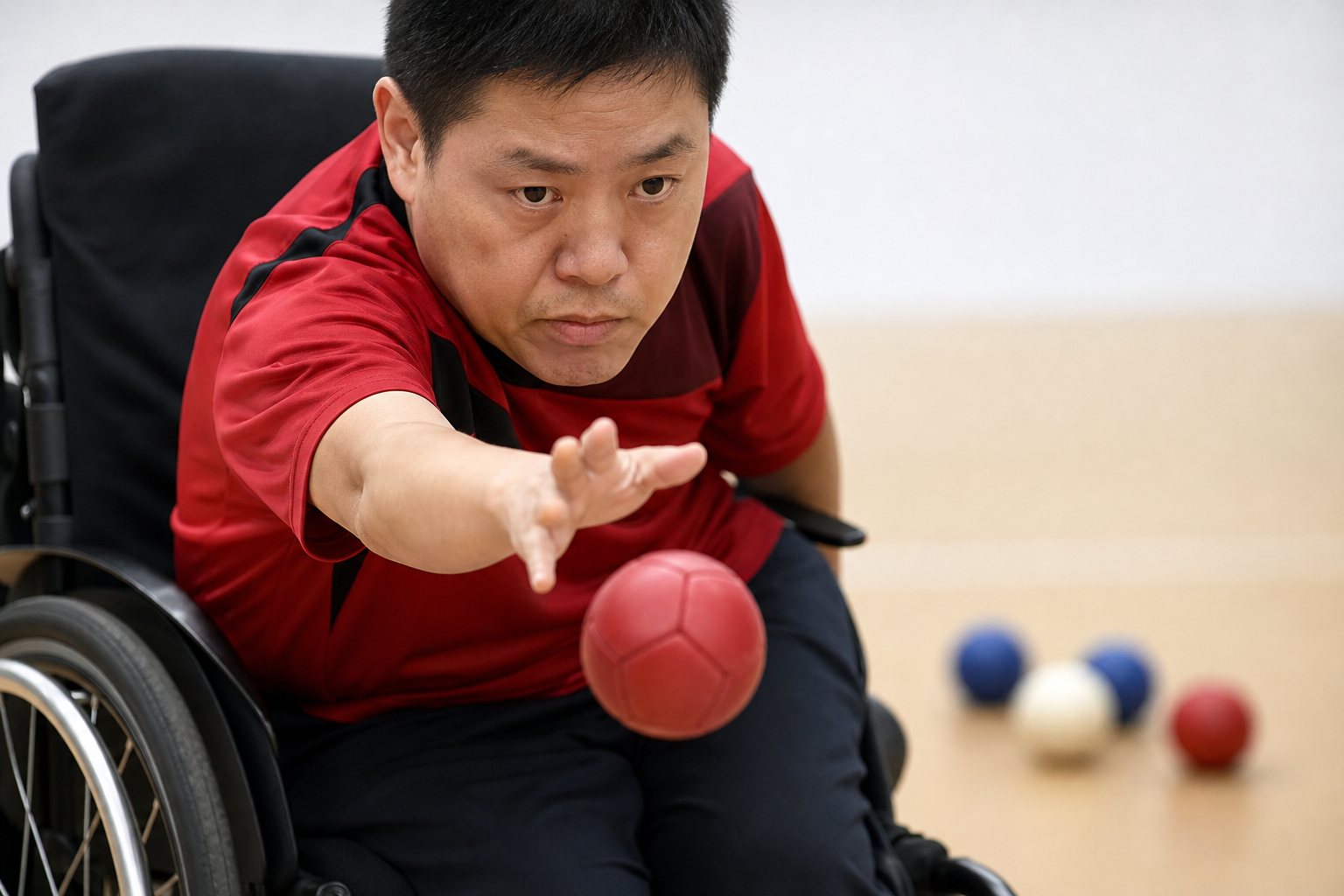
Between matches at a tournament, a boccia player pulls a bottle and a snack out of the bag, because a long day with a timer and a crowd is easy to run on nothing but nerves. Nutrition for boccia is not about big training calories; it is about steady energy, drinking enough, and avoiding the supplement traps. Athlete health also means looking after bones, temperature and, for some athletes, medical needs that change what is safe to eat or drink. This page gives general information and points you to a doctor or dietitian for the personal part.
Quick answer: Boccia is a low-impact sport, so there is no boccia-specific fuel formula. Aim for regular meals, fluids within reach, and a plan from a doctor or registered dietitian if you have a bladder, bowel, swallowing, weight or medication issue. Supplements are optional, not part of the sport. The IOC says only a few supplements (caffeine, creatine, specific buffering agents and nitrate) have good evidence of benefit, that a nutrition assessment should come first, and that some products can lead to anti-doping rule violations. Check with a doctor or dietitian, and prefer third-party tested products. See a clinician for unplanned weight change, constant tiredness, missed periods, or any sign of disordered eating.
Back to the boccia hub. Related: recovery, injury prevention, mental training.
Everyday fuel for a seated precision sport
We found no published energy or carbohydrate targets for boccia, and the USOPC describes the sport as one of coordination, accuracy, concentration and strategy, not power. So the sensible starting point is the general one:
- Regular meals with a mix of carbohydrates, protein and fats, and plenty of vegetables and fruit, planned with a dietitian if you need guidance.
- A snack plan for long days: tournament days can run for hours with gaps between matches. Pack foods you already know sit well.
- Fluids: drink regularly, and keep a bottle where you can reach it (see our gear page). Athletes with swallowing, bladder or bowel concerns should follow their medical team’s advice about timing and amounts, since these things change what is practical.
- Caffeine: if you use it, learn your own reaction in practice, not on match day. It can raise nerves and heart rate, and it is not for everyone; ask a doctor if you have a heart condition or take medication.
Avoid crash diets, which can undermine energy and health.
Heat, hydration and comfort
A review of athletes with spinal cord injury notes that those with tetraplegia have a greater risk of heat illness than those with lower-level injuries, because of reduced sweating and blood-vessel control below the injury. Boccia is played indoors, but halls and travel can be hot. Keep drinks within reach, watch the room temperature and ask your team about cooling. At Paris 2024, Team USA surveillance reported no heat-related illnesses among its Paralympic athletes, though it is a single team in a single summer. In that same study, respiratory illness was the most commonly reported type, so good habits around rest, hygiene and sleep matter too.
Bones and long-term health
A small 2025 study of five world-class BC2 players with cerebral palsy found some had bone mineral density below the range expected for their age. The authors call the findings preliminary. Bone health depends on many things (movement, hormones, medication, nutrition, including calcium and vitamin D). A doctor can advise on testing and whether a supplement is appropriate for you; do not start one on your own.
Relative energy deficiency (RED-S) awareness
The IOC’s 2023 consensus statement on Relative Energy Deficiency in Sport (REDs) describes health and performance problems that can follow low energy availability, meaning too little energy taken in compared with what exercise and daily life use. It notes mental health links and evidence in male as well as female athletes. REDs is mainly discussed for athletes with high training loads, and we found no boccia-specific data. Still, any athlete can under-eat, especially with swallowing, feeding or appetite difficulties or an intentional diet. Warning signs to take to a doctor include unexplained weight loss, constant tiredness, repeated illness, missed periods, or a pre-occupation with food or body shape. This is for a clinician or dietitian to assess; we cannot diagnose it.
Supplements: the cautious rule
Our rule on this site is: check with a doctor or dietitian first, and look for third-party testing for sport. The IOC’s 2018 consensus statement on dietary supplements says supplements can make a minor contribution to a nutrition programme, that only a few have good evidence, that some can harm health or lead to anti-doping rule violations, and that a full nutritional assessment should come before any decision. In practice:
- Look for third-party testing for sport, such as NSF Certified for Sport or Informed Sport/Choice, and say so plainly if a product is not certified.
- Know the anti-doping rules. Athletes who compete under anti-doping rules should check their national anti-doping agency’s tools before using anything, and remember “natural” does not mean permitted.
- Avoid stimulant blends, “fat burners” and proprietary blends, and anything with banned ingredients.
- Tell your doctor about everything you take, since some supplements interact with medications and conditions.
- Do not rely on supplements for health problems. Use medical care for those.
We do not recommend any specific supplement for boccia. Evidence in para athletes is limited, and a general-population result may not apply to you.
Boccia nutrition and health FAQs
What should I eat before a boccia match?
Something familiar that sits well and that you have tried before in practice. A dietitian can give personal advice, especially if you have swallowing, bowel or bladder needs.
Do I need supplements?
No. Supplements are optional, and the IOC says only a few have good evidence. Talk with a doctor or dietitian first.
Is caffeine a good idea before boccia?
It depends on you. Caffeine can add to nerves and heart rate, so test it in practice and ask a doctor if you have a heart condition.
What is RED-S?
Relative Energy Deficiency in Sport, a term for health and performance problems linked to low energy availability, described in the IOC’s 2023 consensus statement. See a clinician if you notice the warning signs above.
How do I stay cool during long matches?
Keep fluids near, watch the room temperature, and ask your medical team about cooling, especially if you have tetraplegia.
Sources
- IOC consensus statement: dietary supplements and the high-performance athlete (PubMed)
- IOC consensus statement on Relative Energy Deficiency in Sport, 2023 (PubMed)
- Cooling athletes with a spinal cord injury (PubMed)
- Injury and illness patterns among Team USA athletes at Paris 2024 (PubMed)
- Health-related parameters in world-class boccia players using DXA (PubMed)
- USOPC: Sport overview, boccia
General information for education only, not medical advice. It does not replace a doctor, physical therapist, athletic trainer or classifier who knows you. See our editorial policy for how we write and source our pages.