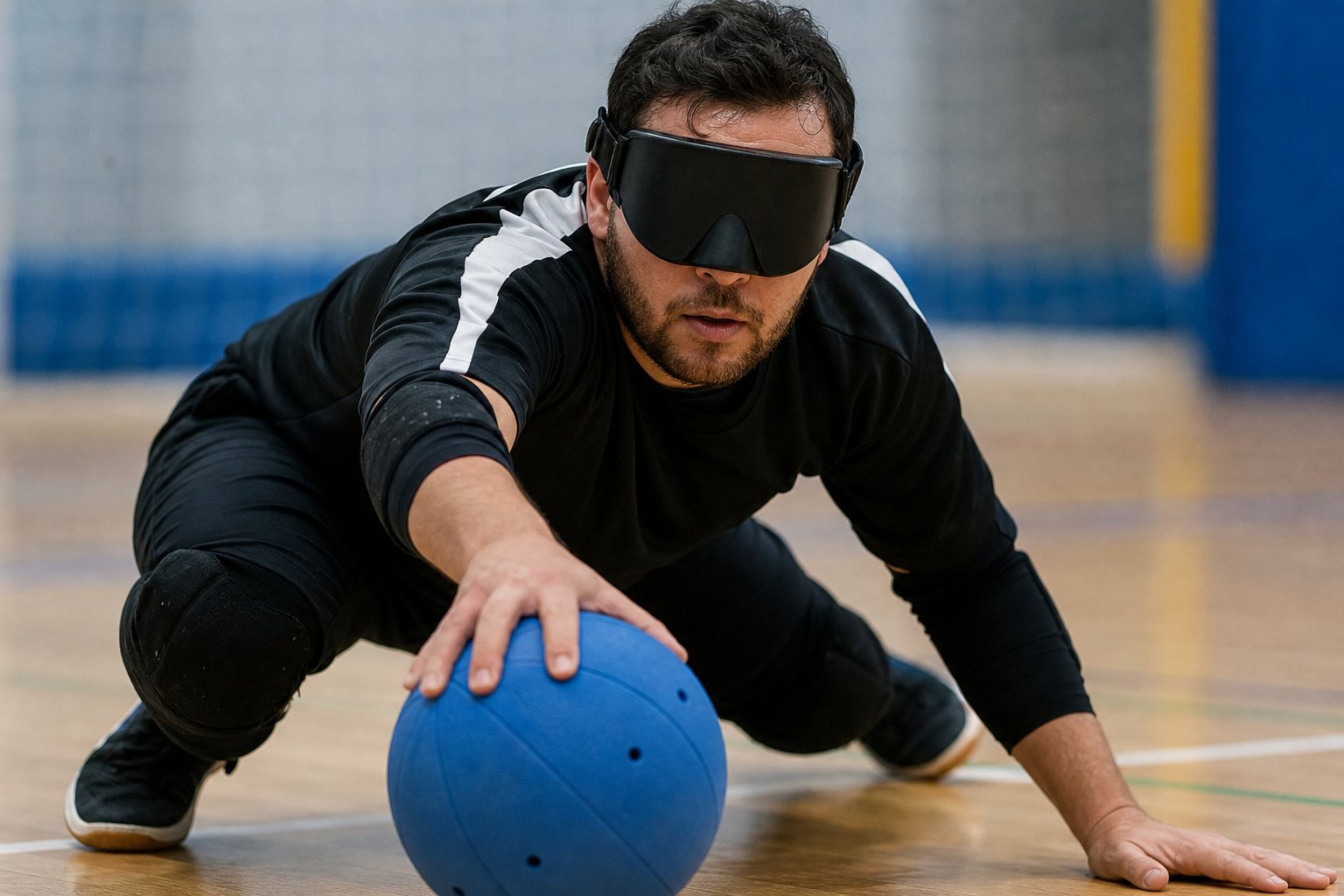
A defender throws herself across the floor to stop a ball that elite throwers send past 40 miles per hour, lands on her forearm and hip, and is back in her stance before the next throw. In a sport where blocking is done with the whole body, goalball injury prevention means the habits around a player, a warm-up, sensible training load, strength, safe courts, fitted padding and honest reporting of pain, that aim to lower the chance of getting hurt. They lower the odds; they cannot promise anything.
Quick answer: The best-supported steps are a proper warm-up, building training and games up gradually, off-court strength and conditioning, a smooth clear court, and padding that fits within the rules. Research on goalball injuries is small and mostly descriptive, so these are sensible habits rather than proven fixes. See a sports medicine doctor, physical therapist or athletic trainer if pain stays in one spot, a joint feels unstable, or after a head blow with symptoms; call emergency services for CDC danger signs.
General information, not medical advice. This page is about lowering risk. What the injuries look like is on our goalball injuries page, so we do not repeat it here. Start at the goalball hub for the whole sport.
Warm up before the first throw
We did not find a published injury-prevention warm-up program that has been tested in goalball players, so there is no named routine to point to. A general review of stretching (Behm and colleagues, 2016) found static stretches held for 60 seconds or more per muscle group lowered performance by about 4.6% when tested straight afterwards, and dynamic stretching slightly raised it, which is why many coaches favour movement-based warm-ups and keep long holds for later. A sensible sequence for this sport, as common practice, covers shoulders, wrists, hips and knees with easy movement, then light throwing and a few practice dives before full-pace play.
Technique: throwing and blocking
In the Rebai study of Paralympic goalball (American Journal of Physical Medicine and Rehabilitation, 2023), interviews with people at the Games named collisions, overuse and poor physical conditioning as causes of injury. A coach can teach the safer way to go to ground, how to cover the ball’s path without leading with a hand or the head, and how to communicate so teammates do not collide. A clean, repeatable throw is also kinder to the shoulder and wrist than forcing speed.
Training load: build up, then rest
The IOC consensus on load and injury (Soligard and colleagues, 2016) says poor load management is a major injury risk factor and calls out rapid changes in training and competition load. Tournament weekends are exactly that kind of jump. Cursiol and colleagues found central fatigue after the second and third of three simulated games in a day (see our training page), so ease in after time off, watch for tired throwing form, and use your allowed substitutions and time-outs.
Strength and conditioning
In a European Championship survey of 43 players (Zwierzchowska and colleagues, 2020), body mass had a moderate effect on how common injuries were, and the authors noted that experience and age changed the pattern of injury. Strength work for the legs, hips, trunk, shoulders and forearms is common practice and matches the sport; Rebai and colleagues also name poor physical conditioning as a cause. Our training page goes into the fitness research.
Court, floor and environment
- Floor and lines. The IBSA rulebook calls for a resilient floor of wood, plastic or synthetic material, with taped lines laid over string for orientation.
- Clear space. Because players cannot see hazards, keep equipment, chairs and bags off the court and away from the sidelines. This is common practice, not a figure from a source.
- Heat and hydration. A review of Paralympic heat issues (Griggs and colleagues, 2020) notes that heat risk depends on the sport, the impairment and the setting; indoor halls can still get warm, so see our nutrition page.
- Skin. In the European survey, skin abrasions, bruises and dislocations were the most common traumas. No study we found tests whether sleeves or pads reduce abrasions, so treat covering clothing as comfort.
Padding, eyeshades and equipment fit
The USOPC lists elbow pads and knee pads among the equipment needed. The IBSA rulebook says clothing, equipment and padding may not extend more than 10 cm from the body, and any padding on the head may not interfere with the eyeshades. Those are verified rules. A maker’s claim that a pad “prevents” injury is not a standard, and we found no goalball-specific pad standard. Pads should be secure, sit where they stay in place when you dive and not restrict the eyeshades; see our gear page.
Opaque eyeshades are part of the game for everyone. If you have an eye condition, ask your eye-care provider before starting any contact or impact sport, and tell your coach what you were told. We did not find a published guideline on this, so it is general caution.
Head blows and concussion
A 2024 narrative review (Teodoro and colleagues, Healthcare) says athletes with vision impairment may be more likely to sustain a concussion than non-disabled athletes and athletes with other impairments, and that incidence data are scarce. The Concussion in Para Sport group (Weiler and colleagues, 2021) says return to sport for para athletes must be decided case by case. CDC HEADS UP advice is that anyone who may have a concussion stops playing and sees a healthcare provider, and a provider decides when to return.
Youth, and what prevention cannot do
We did not find published goalball injury-prevention research specific to children and teens, so we make no youth claims beyond asking a coach to supervise training and keep sessions fun and varied. Prevention cannot remove the risk: a sport built on blocking a hard ball with your body will have bumps, bruises and the occasional bigger injury, and the studies describe injuries, not guarantees. An injury is not a failure of effort. For when and how to get back, see our recovery page.
When to see a professional
- Emergency now: any CDC head-injury danger sign (worsening headache, repeated vomiting, seizure, increasing confusion, one pupil larger than the other), neck pain after a fall, numbness or weakness, or a joint that looks out of place.
- Soon: pain that stays in one place, pain at rest or at night, swelling that does not settle, a wrist or finger that will not take weight, or pain that changes your throw. A sports medicine doctor, physical therapist or athletic trainer can each help.
Goalball injury prevention: FAQs
How can goalball players prevent injuries?
The sources point to warm-ups, gradual training load, strength and conditioning, a safe court and fitted padding, plus honest reporting of pain. None of these guarantees protection, and most goalball injury research is descriptive.
Is goalball dangerous?
It is a contact sport with a heavy ball. A 2020 survey of 43 European Championship players found 44% reported injuries, mostly bumps, scrapes and dislocations of the arms. Serious injuries are possible, so learn the technique with a coach.
What padding do goalball players wear?
The USOPC lists elbow and knee pads. The IBSA rules limit padding to 10 cm from the body and require head padding not to interfere with the eyeshades. We found no pad standard.
Should goalball players wear helmets?
We found no goalball helmet rule or recommendation in the sources we read. The IBSA rulebook only says head padding must not interfere with the eyeshades. Ask your coach and a doctor.
How do I protect my wrists and shoulders?
General sport guidance is a warm-up, gradual training load and strength work, with early advice from a physical therapist if pain does not settle. Our injuries page describes what studies found.
Sources
- Zwierzchowska et al., injuries and traumas in elite goalball players, Int J Environ Res Public Health 2020
- Rebai et al., mechanisms of sports injuries in Paralympic goalball, Am J Phys Med Rehabil 2023
- Soligard et al., IOC consensus on load in sport and risk of injury, Br J Sports Med 2016
- Behm et al., acute effects of muscle stretching on performance, range of motion and injury incidence, 2016
- Griggs et al., heat-related issues for Paralympic athletes at Tokyo 2020, Temperature 2020
- Teodoro et al., concussion incidence in para sport for athletes with vision impairment: narrative review, Healthcare 2024
- Weiler et al., concussion in para sport: position statement of the CIPS Group, Br J Sports Med 2021
- CDC HEADS UP, signs and symptoms
- Patricios et al., consensus statement on concussion in sport, Amsterdam 2022, Br J Sports Med 2023
- IBSA, Goalball Rules and Regulations 2025 (copy hosted by the Japan Goalball Association)
- USOPC, Sport overview: goalball
- Cursiol et al., three simulated goalball games in one day, Adapt Phys Activ Q 2022
General information for education only, not medical advice. It does not replace a visit with a doctor, physical therapist or athletic trainer. See how we write and check our pages in our editorial policy.