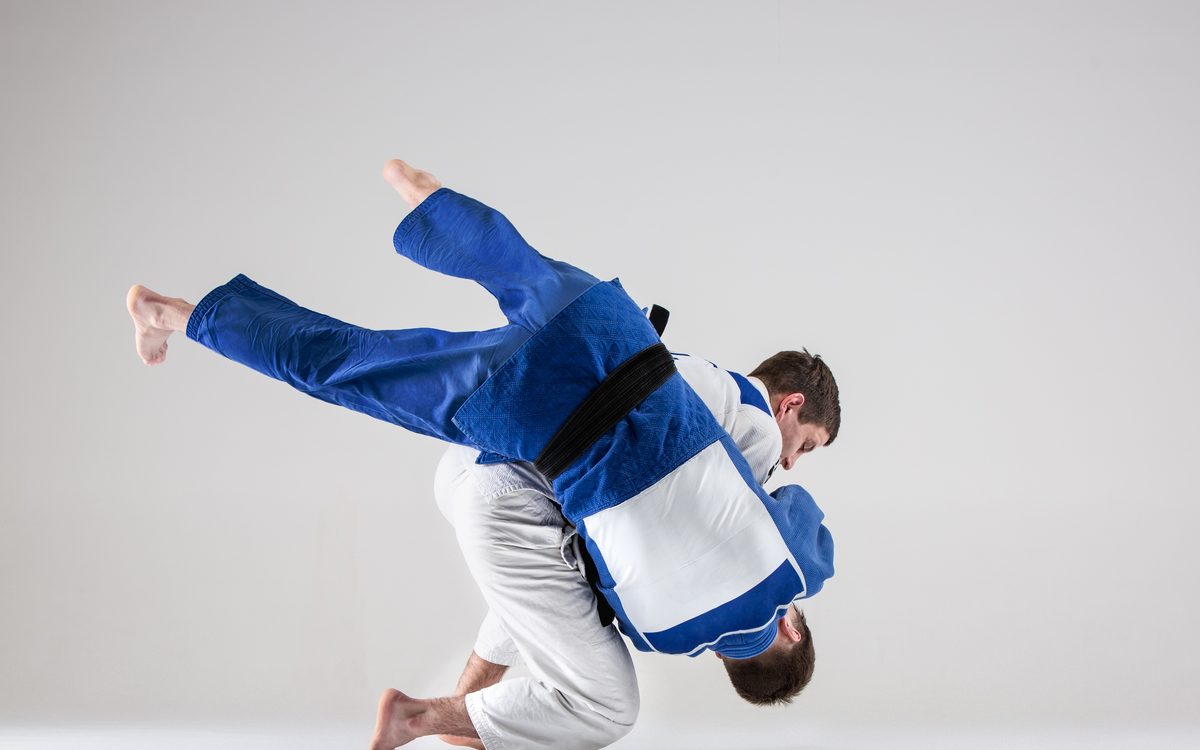
Two minutes into golden score, the arms are heavy and the crowd noise has gone strange. The judoka has been caught in a bad grip twice already, and the only thing left to decide is whether to keep fighting the grip or change the plan. Mental training for judo is the set of skills, focus, confidence, routines, imagery and a way of handling pressure and setbacks, that an athlete practices like any other skill, so the head helps instead of hurting on the mat. It is separate from mental health, which has its own section below. No technique here guarantees a result.
Quick answer: Judo mental training means practicing a few simple skills: one clear focus cue at a time, a pre-contest routine, short sessions of imagery, goals for process and not only for winning, and a calm way to reset after a throw against you. Research on combat athletes is mostly surveys, so it shows associations and not proof that a technique works. Anxiety, depression, disordered eating or burnout are health matters for a qualified professional, and in the US you can call or text 988 in a crisis.
What research on judo and combat athletes shows
The research is encouraging but modest. A 2026 study of 222 young Chinese judo athletes (Frontiers in Public Health) grouped athletes by support and pre-competition anxiety scores and found that the largest group, 63.5%, who combined strong support with a degree of vigilance, had lower depression and higher mental toughness than the others. A 2025 study of 110 karate, taekwondo and judo athletes (Di Corrado and colleagues, Frontiers in Psychology) found that self-efficacy, belief in your ability to do the task, explained part of the link between imagery and stress. Surveys of hundreds of combat athletes in Turkey (Duyan and colleagues, 2026) examined links among motivation, mental toughness and wellbeing, and a survey of 379 Olympic combat athletes (Kacay and colleagues, 2026) examined mindfulness, self-compassion and burnout. These are cross-sectional surveys, so they describe associations in people at one moment and cannot show that training a skill causes better results. We read abstracts only.
For performance under pressure more generally, an expert statement from the Exercise and Sports Science Australia group (Schweickle and colleagues, Sports Medicine, 2026) reviews strategies for competing under pressure. We rely on its abstract-level conclusions and do not claim more.
Confidence and self-belief
Confidence in judo is often built from evidence: a log of throws that worked, drills done well, grips you beat. The self-efficacy finding above fits this idea, though it does not prove that a log helps. Judo has a built-in reminder that mistakes are part of it: everyone is thrown, and a good loser learns from it. A coach can help a young athlete treat a loss as information.
Focus and attention
A contest is four minutes of real time, with grips, scrambles and referee calls, so attention drifts. A common approach is one simple cue per drill or round, such as “hands first” or “hips in”, rather than five. That is common instructor practice, not a result from a judo study. Between exchanges, the pause after a referee call is a natural moment to breathe and re-set the plan.
Goals and motivation
A goal ladder separates three kinds of target: process goals you control (hips under the partner on every entry), performance goals (a personal best in a conditioning test), and outcome goals (a medal or belt). Outcome goals depend on opponents, so keep them small and rely on process goals day to day. Treat belt grading as a result of steady training and not a target to chase, which is advice widely given by instructors rather than a studied method. The Duyan surveys relate intrinsic motivation, enjoying judo for its own sake, to wellbeing, again as an association.
Imagery and visualization
Many judoka picture an entry, the grip fight or the route to a hold-down before a contest. In the Di Corrado study imagery was linked to stress through self-efficacy. We did not find a study giving the size of benefit for judo, so use imagery as a short, optional routine, a few minutes, not a magic step.
A pre-contest routine and handling pressure
- Eat and warm up the same way you rehearsed in practice.
- Choose one cue or breath pattern for stepping on the mat and for the start of each exchange.
- Plan for the likely bad moments in advance: a lost grip, an early shido, a score against you.
- Rehearse golden score in practice: start the clock with a tied score and play it out.
- After a loss, take a few minutes, then ask one question with your coach: what is one thing to fix and one thing that worked?
These steps are common coaching practice. Nerves are normal, and the 2026 youth judo study above suggests that support and some vigilance can go together. Mindfulness and self-compassion, which the Olympic combat sports survey linked to burnout, are skills that some athletes practice, though associations are not proof.
Decision-making and tactics
Judo is tactical: grip strategy, which side to attack, when to push for a score, when a penalty is near. Under the IJF rules, a third shido disqualifies, so knowing your penalty count is part of the plan. Reviewing contests on video with a coach is common practice. For logistics of the day itself, see the rules page and the broader martial arts hub.
Youth considerations
We did not find a study of a mental training program for young judo competitors. A 2026 trial of 120 adolescents aged 13 to 16 compared a 12-week school martial arts program with physical education and a control group (Frontiers in Psychology, quasi-experimental, so groups were not randomly assigned), and reviews of martial arts and youth aggression found no consistent direction of effect. A review of 13 karate studies in children and adolescents said effectiveness conclusions cannot yet be drawn. A sensible approach for parents is a club that praises effort, keeps competition optional at young ages, and welcomes parents watching. That is general guidance, and the American Academy of Pediatrics also advises delaying competition until a child has competence in basics.
Mental health is not the same as mental performance
Performance skills help you compete. Anxiety that will not settle, low mood, loss of interest, panic, thoughts of self-harm, disordered eating and burnout are health matters that deserve a qualified professional such as a doctor, psychologist or counselor, ideally one who knows sport. The IOC consensus statement on mental health in elite athletes (Reardon and colleagues, 2026) covers this area at the elite level. Weight-class sports can raise eating and weight concerns; see nutrition and athlete health. In the US, the 988 Suicide and Crisis Lifeline answers by call or text. The Association for Applied Sport Psychology lists resources on appliedsportpsych.org. If you are in immediate danger, call emergency services.
Frequently asked questions
Does visualization improve judo performance?
Many athletes use it and one 2025 study linked imagery to stress through self-efficacy, but we did not find a study showing how much it helps in judo. Use it as a short optional routine.
How do I stop being nervous before a judo contest?
Nerves are normal. A routine you rehearse in practice, one simple focus cue, steady breathing and a plan for the likely hard moments help many athletes. Persistent anxiety is a health matter to take to a professional.
How should I handle losing a judo contest?
Take a few minutes, then review with your coach: one thing to fix and one thing that worked. Avoid judging yourself by the result alone. Repeated distress after losses is worth discussing with a professional.
Is judo good for a child’s confidence?
Some children enjoy it and feel more confident, but research on martial arts and young people is mixed and not conclusive, and reviews found no consistent effect on aggression. A supportive club matters more than the sport.
Where can I get help if sport is hurting my mental health?
Start with a doctor, psychologist or counselor, ideally one who works with athletes. In the US call or text 988 for crisis support, and call emergency services if you are in immediate danger.
Sources
- Young Chinese judo athletes, latent profiles (PMID 42661691)
- Di Corrado et al., imagery, self-efficacy and stress (PMID 40040664)
- Duyan et al., combat athletes (PMID 42403619)
- Duyan et al., motivation, mental toughness, wellbeing (PMID 42058302)
- Kacay et al., Olympic combat sport athletes (PMID 42755439)
- Adolescent school martial arts study (PMID 42996393)
- Martial arts and youth aggression review (PMID 42539616)
- Karate in children scoping review (PMID 42719739)
- Schweickle et al., ESSA statement on performance under pressure (PMID 42271117)
- IOC consensus, mental health in elite athletes (PMID 42580854)
- 988 Suicide and Crisis Lifeline
- AASP resources
- AAP: Youth Participation and Injury Risk in Martial Arts
General information for education only, not medical advice. It does not replace a sports medicine doctor, physical therapist or athletic trainer who knows you. See how we work in our editorial policy, and return to the judo hub.