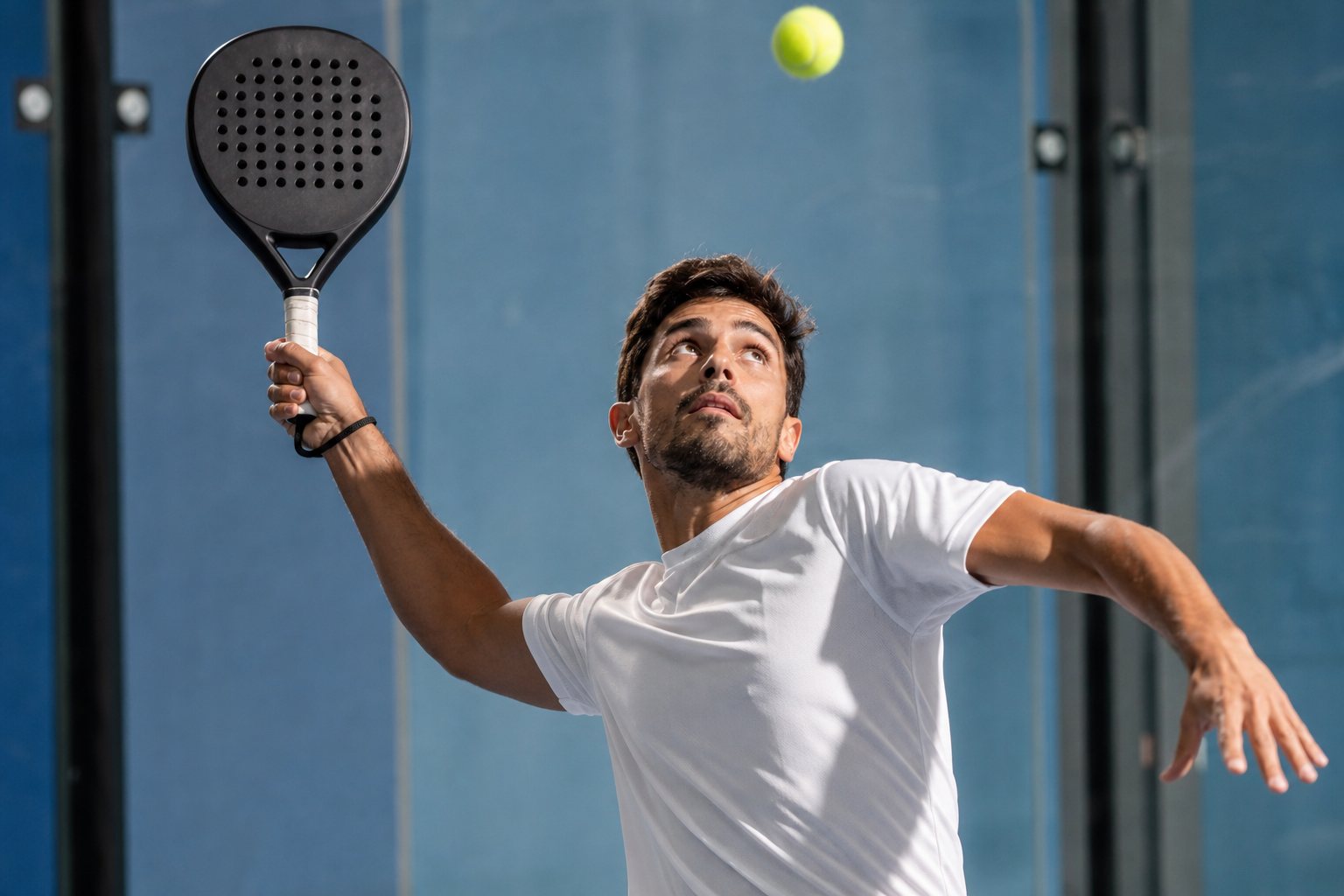
Third set, the court is warm and slick, and you chase a lob toward the back glass, plant your foot to turn and feel your ankle roll. Nobody planned that moment, and no routine removes every risk, but players, coaches and researchers do know a few things that make a bad landing less likely. Padel injury prevention means the habits around the game (warm-up, technique, gradual build-up, strength, court and equipment checks) that aim to lower your chance of getting hurt. It is about odds, never guarantees, and the research is still young.
Quick answer: The best-supported habits are a proper warm-up, building weekly playing time gradually, balance and strength work for the ankles, legs and shoulders, a sound racket and shoes for your court, and eye protection if you want it. Padel-specific prevention trials have not been published that we could find, so treat these as sensible steps, not proven fixes. See a sports medicine doctor, physical therapist or athletic trainer if pain stays in one spot, gets worse, wakes you at night or changes how you move, and get urgent help after a head injury with danger signs.
This page is about lowering risk. What the injuries are and how they are managed is on our padel injuries page, so we do not repeat it here. For the sport as a whole, start at the padel hub.
Warm up before you play
A Saudi survey of 305 players in Madinah (PMID 39997242) listed stress and poor warm-up practice among the factors that raised injury risk, and called for structured warm-ups and strength training. It is a self-reported survey, so it shows an association, not proof. No padel-specific warm-up programme has been tested in a published trial that we found; the closest guidance is general racket-sport advice, such as the American Academy of Orthopaedic Surgeons (AAOS) tennis injury-prevention page. A reasonable pattern is a few minutes of easy movement, then dynamic leg swings, lunges, arm circles and some gentle shots before the first hard rally. Cold muscles and a cold court in winter make this more important.
Technique and court craft
Padel rewards patience. In the Italian sub-elite study (PMID 35886239), 65% of points came from opponents’ unforced errors, which means controlled, repeatable strokes win more often than wild power. Lessons from a certified coach can help with the smash, the bandeja and wall play. The AAOS says that in racket sports, improper stroke technique and improper equipment may be risk factors for tennis elbow, and a pilot study of padel players with lateral elbow pain (PMID 42646895) found less shoulder internal rotation on the sore side, which is why many therapists check the whole arm, not just the elbow.
Build load gradually
The IOC consensus statement on load and injury (Soligard et al. 2016) advises monitoring training load and avoiding large sudden changes. In padel, Portuguese players named fatigue and overload as the most common cause of injury (PMID 41011098), and in 187 Saudi amateurs, playing two or more sessions a week was linked with ankle sprains (PMID 42577126). Practical steps: add court time slowly, avoid several hard days in a row, and stop a session when you notice your footwork getting sloppy.
Strength and balance
- Ankles. The National Athletic Trainers’ Association (NATA) position statement on ankle sprains supports balance and strengthening exercises and bracing or taping after a sprain. In padel ankle sprains, players who did balance and strengthening exercises reported better function afterwards (PMID 42577126). That is not the same as fewer sprains, and the evidence for prevention is limited.
- Legs and trunk. In a small study of 17 competitive men (PMID 42188584), lower Functional Movement Screen scores were linked with past injury, with the in-line lunge standing out. The authors note the predictive value is uncertain.
- Shoulders and forearms. Rotator-cuff and grip exercises are common racket-sport practice. A coach or physical therapist can teach them safely.
Courts, surfaces and the environment
- Court construction. The FIP rulebook requires glass walls to meet tempered or plate glass standards, soldered fences to have protected solder points, court access to be cushioned (at least 2 cm) and at least 6 m of free height. Choose clubs that look after their courts.
- Surface and shoes. One survey of 216 players (PMID 40711113) found muscle and ligament injuries were reported more often on sand courts and tendon, muscle and ligament injuries more often with herringbone soles. The study was cross-sectional, so it cannot say the surface or sole caused them. Ask your club what its courts use and choose shoes made for it.
- Heat. Indoor or glass courts can be hot. The CDC lists heavy sweating, dizziness, nausea and confusion among heat-illness signs; stop, cool down and get help if they appear. NATA’s position statement says to cool first and transport second.
Protective equipment and fit
The wrist cord is not optional in FIP competition: the rulebook calls it obligatory, as protection against accidents. An Italian survey of 583 padel players (PMID 42010296) found 10.3% had had an eye injury and 92% of those were from the ball. The authors asked about protective eyewear, and it is your choice. Some eyewear is sold to meet ASTM F803 for racket sports; that claim comes from the maker, so look for it on the product and ask an eye doctor about prescription lenses. Our padel gear page covers fit and inspection.
Young players
A study of 104 players aged 15 to 20 (PMID 41150491) recorded six acute and 49 overuse injuries, with the knee affected most; injured players also reported worse well-being. It is a one-week recall survey, so treat it as a hint to watch load and wellness in juniors. Coaches of younger children often use smaller courts (10 by 6 m) and lower-pressure balls, per a 2025 scoping review (PMID 40137799).
What prevention cannot do
A 2026 protocol for a scoping review of padel injury prevention (PMID 42430383) states that no comprehensive overview of the evidence exists yet. Warm-ups, strength work and good equipment are reasonable, but none can promise you will not get hurt. If you play through lasting pain, you risk making it worse.
When to see a professional
- Pain that stays in one spot, worsens over days, or wakes you at night.
- Swelling, instability or a joint that gives way after a landing.
- Weak grip or lasting elbow or shoulder pain.
- Any eye injury or a change in vision after being hit by a ball.
- A head injury: use the CDC HEADS UP approach. Stop playing, and let a healthcare provider decide when you can return.
Padel injury prevention FAQs
Is padel safer than tennis?
We could not find a direct comparison. Surveys of padel players report injury rates that depend on level and how they were counted (for example 3.4 per 1,000 hours in a Portuguese survey), so these numbers should not be compared across studies.
Should I wear eye protection?
It is your choice. Ball-to-eye injuries do occur, as the Italian survey shows. An eye doctor or a coach can advise, and the eyewear should fit well and not block your vision.
Does a brace stop ankle sprains?
NATA’s position supports bracing or taping after a previous sprain, but a brace is not a guarantee and padel-specific evidence is limited. A physical therapist can advise.
How much should a beginner play?
No study gives a safe number. Surveys link more weekly sessions with more ankle and upper-body injuries, so start with one or two sessions and add time slowly.
Does warming up really help?
Players in one survey named poor warm-up as a contributor, and general sports-medicine advice supports it. No padel trial has tested a specific routine.
Sources
- Assessing the spread of padel and the prevalence and causes of injuries, Healthcare 2025, PMID 39997242 (PubMed)
- Padel match analysis, Italian sub-elite competitions, PMID 35886239 (PubMed)
- Shoulder-elbow complex in padel players with lateral elbow tendinopathy, PMID 42646895 (PubMed)
- Sport-related injuries in Portuguese padel practitioners, PMID 41011098 (PubMed)
- Ankle sprain in amateur padel players, PMID 42577126 (PubMed)
- Functional Movement Screen and injury history in competitive male padel players, PMID 42188584 (PubMed)
- Injuries in padel players by sport-specific factors, PMID 40711113 (PubMed)
- Ocular injuries in padel, Eye 2026, PMID 42010296 (PubMed)
- Training load, injuries and well-being in youth padel players, PMID 41150491 (PubMed)
- Under-18 padel scoping review, PMID 40137799 (PubMed)
- Translating injury prevention evidence into safer padel (protocol), PLoS One 2026, PMID 42430383 (PubMed)
- Soligard T et al., IOC consensus statement on load in sport and risk of injury, PMID 27535989 (PubMed)
- AAOS OrthoInfo, Tennis Injury Prevention (orthoinfo.org) and Tennis Elbow (orthoinfo.org)
- NATA position statement on ankle sprains (PMC) and on exertional heat illnesses (PMC)
- CDC, signs and symptoms of heat illness (cdc.gov) and HEADS UP response (cdc.gov)
- FIP Rules of Padel 2026 (PDF)
General information for education only, not medical advice. It does not replace a visit with a doctor, physical therapist or athletic trainer. See how we write and check our pages in our editorial policy.