This article contains affiliate links: if you buy through them we may earn a commission, at no extra cost to you. Read our affiliate disclosure.
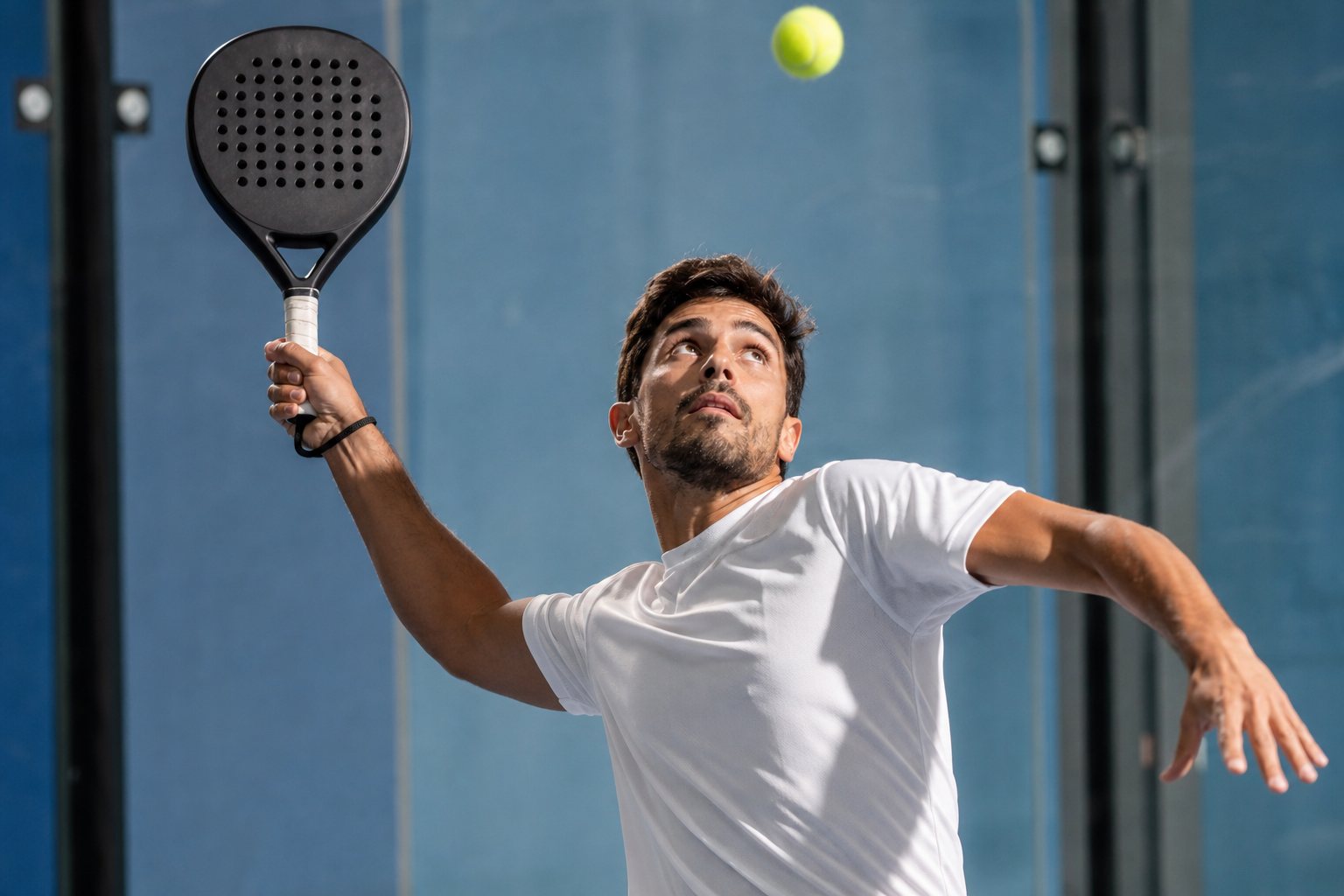
Friday night under the lights: four players in a glass-walled cage the size of a tennis doubles court, a ball that comes off the back wall and sits up where nobody expected it, and a pair at the net that has just won a 30-shot rally by letting the glass do the work. The next night the same people are back, because it is hard to stop at one set. Padel (sometimes written “pádel,” and called “padel tennis” in some places) is a doubles racket sport played on a small enclosed court with walls in play, a solid stringless racket and an underhand serve.
Padel guides: what do you need?
New to padel? Start with the first card. Everything here is general education, not medical advice.
History & Origins of Padel
Padel is a racket sport played in doubles on an enclosed court, and it is commonly said to have been created in Acapulco, Mexico, in 1969 by Enrique Corcuera. We could not open the International Padel Federation history page (it blocked our check), so treat that date and name as commonly cited, not confirmed by us. The sport then spread strongly through Spain and Argentina, and it is now governed internationally by the International Padel Federation (FIP).
Growth is recent and fast in the United States. USA Padel announced on April 13, 2026 that the country passed one million players, citing the 2026 SFIA Topline Participation Report, which tracked padel for the first time in 2025 and counted 1,073,000 players. Just over 1,000 courts were open across 31 states in April 2026 (USA Padel). FIP announced in March 2026 that padel is a medal sport in the European Games programme for Istanbul 2027 (FIP headline; page not opened by us).
- 1969 (commonly cited): Padel created in Acapulco, Mexico.
- 2025: The SFIA tracks padel in the US for the first time: 1,073,000 players.
- April 13, 2026: USA Padel announces one million US players.
- 2027: Padel is scheduled as a medal sport at the European Games in Istanbul (per FIP).
Official results and records
We did not confirm a champions table on an official results page. Please check the organizers directly:
- International Padel Federation (FIP): world championships and rankings.
- USA Padel: US tournaments and membership.
How we keep this current: we re-check facts after each major championship and update this page. Spot an error? See our editorial policy.
This page is padel for beginners and for anyone curious about the fastest-growing racket sport in the US. It covers how the game works, who plays at what level, whether it is in the Olympics, the injuries researchers have recorded, and the gear that matters. It is a cousin of tennis, squash and pickleball, but it is its own game.
Padel at a glance
| What it is | A doubles racket sport (singles is rare) played on an enclosed court with a tennis-style net and walls that stay in play. |
|---|---|
| How it is scored | Tennis scoring: points 15, 30, 40, game; first to six games wins a set (win by two, tie-break at 6-6); best of three sets. The FIP rules allow advantage, “Star Point” or “golden point” at deuce. |
| The court | 10 m wide by 20 m long (about 33 by 66 ft); net 0.88 m at the centre. |
| The racket | Solid, perforated, no strings; maximum 45.5 cm long, 38 mm thick. A wrist cord is mandatory. |
| Where it is played | Clubs with glass-walled courts, indoors and out; the sport started in Mexico in 1969 and is now played in 178 countries and territories (FIP). |
| Governing bodies | International Padel Federation (FIP) worldwide, with about 100 affiliated federations; USA Padel in the United States. |
| Olympic status | Not an Olympic sport as of 2026; see below. |
How padel works
Every point starts with an underhand serve. The server bounces the ball in the service box, then hits it at or below waist level with at least one foot on the ground, sending it diagonally over the net into the opposite service box. A first serve that is a fault gets a second try. After the serve, the pairs hit the ball alternately. The ball must bounce once on your side, and you may then play it directly or let it rebound off your walls or fence first; you cannot hit it before it has bounced on the other side’s floor, and a shot that rebounds into the opponents’ walls before touching their floor is a lost point. If the ball bounces a second time before you return it, the point is gone.
That wall play is what makes padel different. Rallies are longer than in tennis, power matters less than placement, and a good lob or a ball dropped off the back glass can turn a rally. Scoring options at deuce vary by event: the FIP rule book describes classic advantage, a “Star Point” (a deciding point after the third deuce, where the receivers choose the side) and “golden point” (a deciding point at the first deuce).
The ball. FIP specifies a rubber ball 6.35 to 6.77 cm across weighing 56.0 to 59.4 grams. It is a little softer than a tennis ball, which helps it rebound off the walls.
Who plays it and at what level
Recreational. Most padel is social. The Sports and Fitness Industry Association counted about 1,073,000 Americans who played padel in 2025, according to USA Padel, and 238,000 of them played eight or more times. USA Padel said just over 1,000 courts were open across 31 states as of April 2026. Globally, the FIP counts about 38 million players, 85,000 courts and 27,000 clubs.
Youth and college. USA Padel has a junior program, a junior grant for clubs and a US National Junior Team, and it has launched a Collegiate Padel initiative with national championships. Padel is not yet a varsity sport under the NCAA, as far as we could confirm. A 2025 review of studies on under-18 players found coaches use smaller courts (down to 10 by 6 m) and lower-pressure balls to teach younger players.
Competitive and pro. USA Padel sanctions more than 250 tournaments a year, including the US Open Padel Championships, and runs national teams across professional, amateur, 40+ and junior categories. The FIP lists the Premier Padel Tour among its professional tournaments and runs world championships, junior and senior events.
Olympics and multi-sport Games. Padel is not on the Olympic programme. The FIP calls the Games a goal, and USA Padel describes an “Olympic Pathway” aimed at Brisbane 2032; neither is a decision by the IOC, so check the official programme for the current Games. Padel has been in the European Games since Kraków 2023 (23 countries took part) and was confirmed for Istanbul 2027 (16 to 27 June 2027). The FIP also lists it at the Asian Games 2026 in Aichi-Nagoya and the Mediterranean Games 2026 in Taranto.
Physical demands
Researchers describe padel as intermittent: short bursts of high-intensity effort, frequent changes of direction and brief rests. In a study of 52 amateur players across 13 matches, the average match lasted 57 minutes with about 152 points. An Italian analysis of sub-elite matches found that 65% of points came from the opponents’ unforced errors, which explains why patience and consistency beat power at club level. Players need leg strength and agility to move on the court, shoulder and forearm endurance for volleys and smashes, and balance for sudden stops.
Health and safety for padel
This section is general information, not medical advice. If you are hurt, see a sports medicine doctor, physical therapist or athletic trainer. Padel research is young, and most studies are surveys, so treat the numbers as indications, not rates for your club.
Common injuries
- Overall. A Portuguese national survey found 69.2% of players had at least one lifetime padel injury, with about 3.4 injuries per 1,000 hours of play. Tendon injuries (35.6%) and muscle injuries (26.1%) led, and the elbow (18.0%), ankle (16.6%), knee (12.5%) and shoulder (10.5%) were the most affected sites. Fatigue and overload were the most commonly named causes (2025).
- Elbow and shoulder. A 2026 survey of 80 top-100 professional women and 147 amateurs found tendon injuries made up 44% to 48% of upper-body injuries, mostly at the elbow and shoulder. Amateurs reported more injuries per 1,000 hours than professionals (2.69 versus 0.67), and racket shape was the only significant predictor.
- Eyes. An Italian survey of 583 players found 10.3% had had a padel-related eye injury, and 92% of those were from the ball. The only factor linked with injury was playing frequency.
Rules and habits that help
- Use the wrist cord. The FIP rules require a non-elastic cord of up to 35 cm attached to the racket and worn on the wrist for protection against accidents.
- Court design counts. The FIP requires glass courts to meet tempered or plate glass standards and walls with a uniform bounce. Choose clubs that follow these specifications and keep their courts in good condition.
- Think about eye protection. The eye study above suggests ball-to-eye injuries happen, and the researchers asked players about protective eyewear; it is your choice, and a coach or eye doctor can advise.
- Warm up and build volume gradually. Because fatigue and overload were commonly blamed, avoid jumping from one session a week to daily play, and talk to a coach or physical therapist about your technique and racket if elbow or shoulder pain lingers.
- Heat and hydration. Indoor and glass-walled courts can be hot. The CDC lists heavy sweating, dizziness, nausea and confusion as heat-illness signs; stop, cool down and get help if they appear.
Any hard impact, from a fall or a collision with the walls or a partner, can hurt the head. If a player may have hit their head, follow the CDC’s HEADS UP rule: stop playing for the day and let a healthcare provider decide when to return.
Training, recovery and nutrition pointers
Padel lessons with a certified coach are the quickest way to learn wall play and the shoulder-friendly technique for the smash. Off the court, most players work on leg strength, ankle and knee stability, and rotator cuff and forearm strength; the CDC recommends 150 minutes of moderate activity a week for adults plus two days of muscle strengthening. Padel recovery and nutrition needs look similar to tennis; see our tennis training, recovery and nutrition and supplements pages. A guide to ankle braces may help if you have a history of sprains. Talk to a doctor or dietitian before taking supplements.
Gear
- Racket. FIP rackets are limited to 45.5 cm in length and 38 mm in thickness, and are made under the federation’s homologation annex. The study above found amateurs favoured lighter rackets (350 g or less) and pros medium weights; a coach or shop can help you pick the shape and weight that suit your game.
- Balls. Choose balls approved by the FIP for competitions (6.35 to 6.77 cm, 56.0 to 59.4 g).
- Shoes. Court shoes with good lateral support, made for the surface at your club (ask the club what its courts use).
- Eye protection and wrist cord. The cord is required; eyewear is your choice.
Three picks to start: Tourna Clear eye protection (the maker says it meets ASTM F803, a racket-sports standard), a McDavid elbow strap for comfort if you like a snug strap, and OOFOS OOahh slides for after the match.

Tourna Clear Eye Protection
- Polycarbonate lens
- ASTM F803 (maker)
- Anti-fog, anti-scratch
$16.99 at Amazon, as of Nov 17, 2026 01:07 UTC
Check price on Amazon
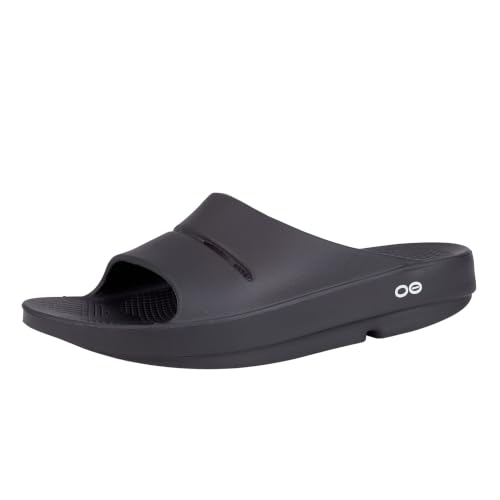
OOFOS OOahh Slide
- OOfoam slide
- APMA Seal of Acceptance
- Machine washable
$59.95 at Amazon, as of Nov 17, 2026 01:07 UTC
Check price on AmazonRelated sports
Parent: tennis. Siblings: pickleball, squash, badminton and table tennis. For tennis-specific injury background, see our tennis injuries page.
Padel FAQs
Is padel the same as pickleball or tennis?
No. Padel uses tennis scoring, a stringless racket and an underhand serve on a 10 by 20 m walled court; pickleball uses a paddle and a perforated plastic ball on a smaller open court, and tennis has no walls. Padel is closer to squash in the way walls are used.
How do you score a padel game?
Like tennis: 15, 30, 40, game, then six games for a set and best of three sets. At deuce the event chooses advantage, the Star Point or a golden point; the FIP rules describe all three.
Is padel an Olympic sport?
Not as of 2026. The FIP and USA Padel talk about the Olympics as a goal, but the IOC has made no decision we could confirm. Padel is in multi-sport Games such as the European Games. Check the official programme for the current Games.
Is padel easy for beginners?
Many beginners enjoy it because the underhand serve and the walls keep the ball in play, but good technique still takes practice. A lesson or a clinic helps you learn wall play and avoid straining your elbow and shoulder.
What are the most common padel injuries?
Surveys point to tendon and muscle problems, mostly at the elbow, ankle, knee and shoulder. Eye injuries from the ball happen less often but can be serious. See a sports medicine doctor or physical therapist for any lasting pain.
How many people play padel?
The FIP says about 38 million people play in 178 countries and territories. In the US, the SFIA’s 2026 report counted about 1.07 million players for 2025.
Sources
- FIP Rules of Padel (review 01.01.2026) and FIP history
- FIP: Olympic Day numbers (June 2026) and FIP: European Games 2027
- USA Padel: one million players and USA Padel: new name
- Studies: Portuguese injuries, 2025; women’s upper-body injuries, 2026; ocular injuries, 2026; physiological responses, 2025; sub-elite match analysis, 2022
- CDC HEADS UP, CDC heat signs and symptoms, CDC activity guidelines
Keep exploring: tennis injuries for shared elbow and shoulder background, our recovery tools guide and the sports hub.