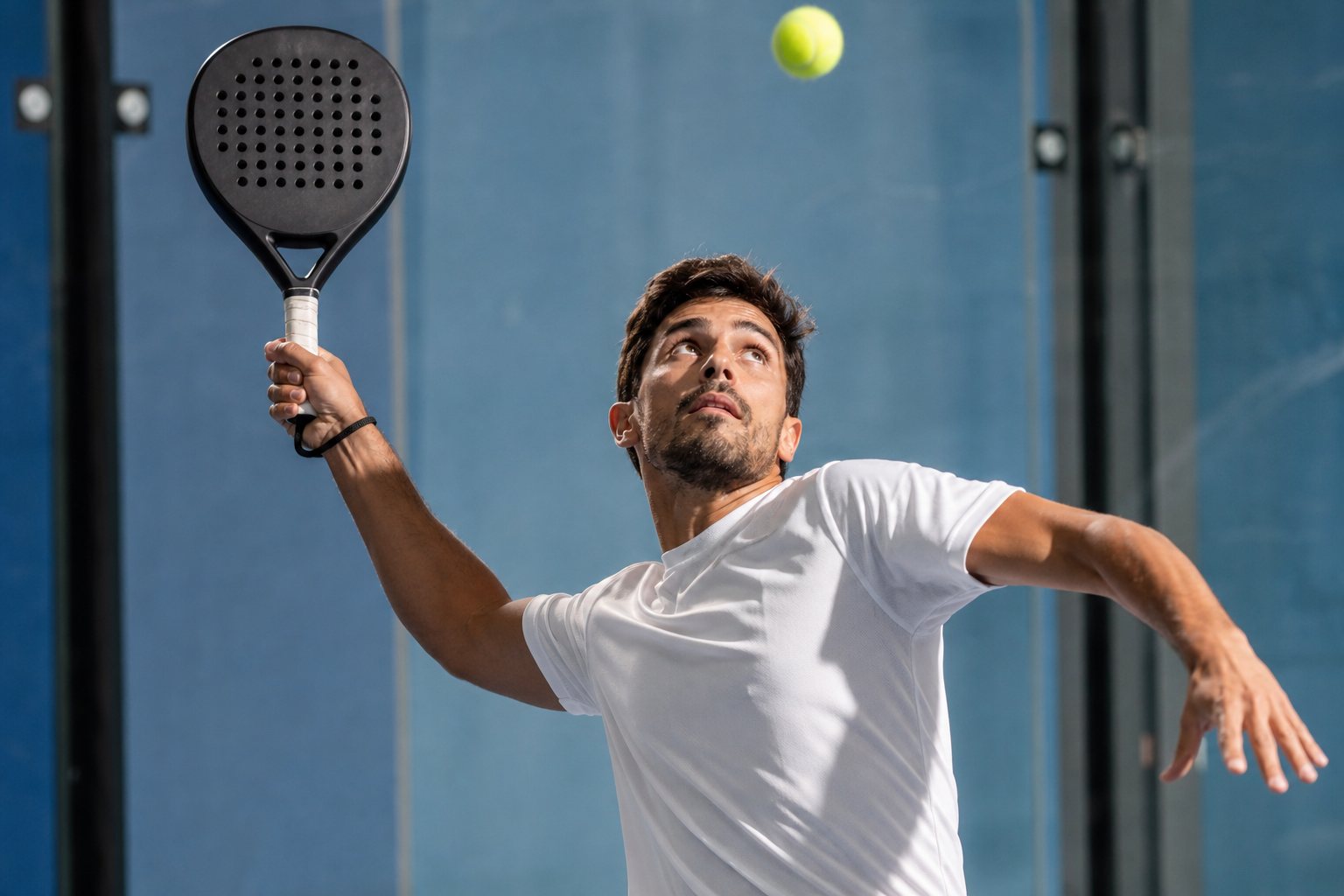
Sunday morning after two long league matches: your thighs feel heavy on the stairs, your shoulder is a little stiff, and you are wondering whether to play again tomorrow. Padel recovery is everything you do between sessions (sleep, food and fluids, easier days, mobility work) so that the next session goes well and small niggles do not grow into injuries. Most recovery products have little padel-specific research behind them, so this page leans on general sports-science sources and says where the evidence is thin.
Quick answer: The basics carry most of the weight: adequate sleep, fluids and food after play, easier days after hard ones, and gentle mobility work. Cold water immersion may ease soreness slightly but can blunt strength gains if used regularly after lifting. Soreness that fades in a couple of days is common; sharp, one-sided, swollen or night pain is not, and is worth showing to a sports medicine doctor, physical therapist or athletic trainer.
What padel does to your legs
Match studies show why you feel it. In 16 trained players who played a 135-minute match (PMID 42831286), maximal knee-extensor strength fell by about 10% by the end, while jumping and explosive force were maintained. In a study of 52 amateur players across 13 matches of about an hour (PMID 40942670), jump height and handgrip did not drop. Together they suggest that a normal social match is a modest load, while long sessions and several matches in a day add up. These studies did not follow players over the following days, so they cannot say how long recovery takes.
Sleep
The CDC says adults need seven or more hours of sleep a night. Evening padel under bright lights can make it harder to wind down, so a short cool-down, a drink and a screen-free half hour are common habits, though no padel study tests them. A 2021 expert consensus on sleep in athletes (Walsh et al., Br J Sports Med) notes that habitually sleeping under seven hours is common in athletes and recommends an individual approach based on how much sleep you feel you need, not a one-size-fits-all number. If you are always tired despite sleeping, or you snore heavily or stop breathing at night, talk to a doctor.
Fluids and food after play
Padel is often played in warm indoor halls. The ACSM, Dietitians of Canada and Academy of Nutrition and Dietetics joint position (PMID 26891166) suggests drinking about 125% to 150% of the fluid you lost when you need to recover quickly, and eating carbohydrate with some protein soon after hard sessions if the next session is within about eight hours. A study of 12 men around age 70 (PMID 39458506) found urine colour pointed to dehydration after a 90-minute session even though they drank about 900 mL during it, and suggested slightly more fluid. For more, see our padel nutrition page.
Load management
- Hard-easy pattern. After a long or intense match, plan a light day (walking, easy cycling, stretching) before the next hard session.
- Watch warning signs. Heavy legs for several days, a drop in motivation, poor sleep or unusual aches are all signs to back off, according to general sports-medicine advice.
- Several matches in a day. Tournaments and round-robins bring this. Bring snacks, fluids and a change of shirt, and stretch lightly between matches.
- Wellness check-ins. In 104 youth players (PMID 41150491), injured players reported worse wellness scores, which is why some coaches ask juniors to log sleep, mood and soreness.
Mobility and flexibility
Padel needs hip, ankle and shoulder mobility for lunges, back-court retrievals and overhead shots. The pilot study of padel players with lateral elbow pain (PMID 42646895) found less shoulder internal rotation on the sore side, so many players include shoulder and thoracic-spine mobility. Gentle stretching feels good and is safe for most people, though no padel study shows it prevents injury. A 2019 meta-analysis of 21 foam-rolling studies (Wiewelhove et al., Front Physiol) found a small flexibility gain from rolling before exercise and a modest drop in perceived muscle pain from rolling afterwards, with a negligible effect on jumping. Our training page covers the strength side.
Recovery methods and what the evidence says
| Method | What we found |
|---|---|
| Cold water immersion | A 2016 meta-analysis of nine trials (PMID 26581833) found it reduced soreness slightly compared with rest, with 10 to 15 °C water and 10 to 15 minutes working best. A trial of 21 men (PMID 26174323) found regular cold water after strength training led to smaller gains in strength and muscle. Avoid it if you have heart or circulation problems unless a doctor agrees. |
| Massage guns, compression boots, foam rollers | Popular with athletes and comfortable for many; no padel-specific trials found. Treat them as comfort tools, not treatment. |
| Compression sleeves and recovery shoes | Many players use them; the maker’s claims are not the same as evidence. No padel-specific research found. |
| Sleep, food, fluids, easy days | Strongest general support, and nothing to buy. |
Soreness or injury?
Delayed-onset soreness is usually a dull ache in the muscles that you worked, felt on both sides, and eases over a few days. Injury pain tends to be sharp, sits on one side or in one joint, comes with swelling or a feeling of instability, or does not improve. The AAOS describes tennis elbow as pain on the outside of the elbow with weak grip and sometimes night pain that builds over weeks. When in doubt, see a professional. Our padel injuries page lists the common patterns.
Padel recovery FAQs
How many rest days do I need?
There is no study-based number for padel. Many players keep at least one day without hard play a week, and take an extra easy day after a long match or tournament. Listen to sleep, mood and soreness.
Should I take an ice bath after padel?
Cold water immersion may ease soreness slightly, but if you lift weights regularly, studies suggest it can blunt strength gains. If you try it, follow safety guidance and check with a doctor if you have heart conditions.
Is stretching before or after better?
Gentle movement before play and stretching after both feel good to many players. No padel study tells us which prevents injury.
Are massage guns worth it?
Many athletes like them for comfort. We found no padel-specific evidence, and they are not a treatment for injuries.
Can I play through soreness?
Mild soreness in both legs usually eases with easy movement. Do not play through sharp, one-sided or swelling pain; get it checked.
Sources
- Neuromuscular alterations of knee extensors during padel match play, Eur J Sport Sci 2026, PMID 42831286 (PubMed)
- Physiological responses and fatigue in padel matches, Sensors 2025, PMID 40942670 (PubMed)
- Hydration habits in male padel athletes over 65, Nutrients 2024, PMID 39458506 (PubMed)
- Training load, injuries and well-being in youth padel players, PMID 41150491 (PubMed)
- Shoulder-elbow complex in padel players with lateral elbow tendinopathy, PMID 42646895 (PubMed)
- ACSM, Academy of Nutrition and Dietetics and Dietitians of Canada, Nutrition and Athletic Performance, PMID 26891166 (PubMed)
- Machado AF et al., cold water immersion and muscle soreness, Sports Med 2016, PMID 26581833 (PubMed)
- Roberts LA et al., cold water immersion and strength-training adaptations, J Physiol 2015, PMID 26174323 (PubMed)
- Walsh NP et al., sleep and the athlete, Br J Sports Med 2021, PMID 33144349 (PubMed)
- Wiewelhove T et al., foam rolling meta-analysis, Front Physiol 2019, PMID 31024339 (PubMed)
- CDC, About Sleep (cdc.gov)
- AAOS OrthoInfo, Tennis Elbow (orthoinfo.org)
General information for education only, not medical advice. It does not replace a visit with a doctor, physical therapist or athletic trainer. See how we write and check our pages in our editorial policy.