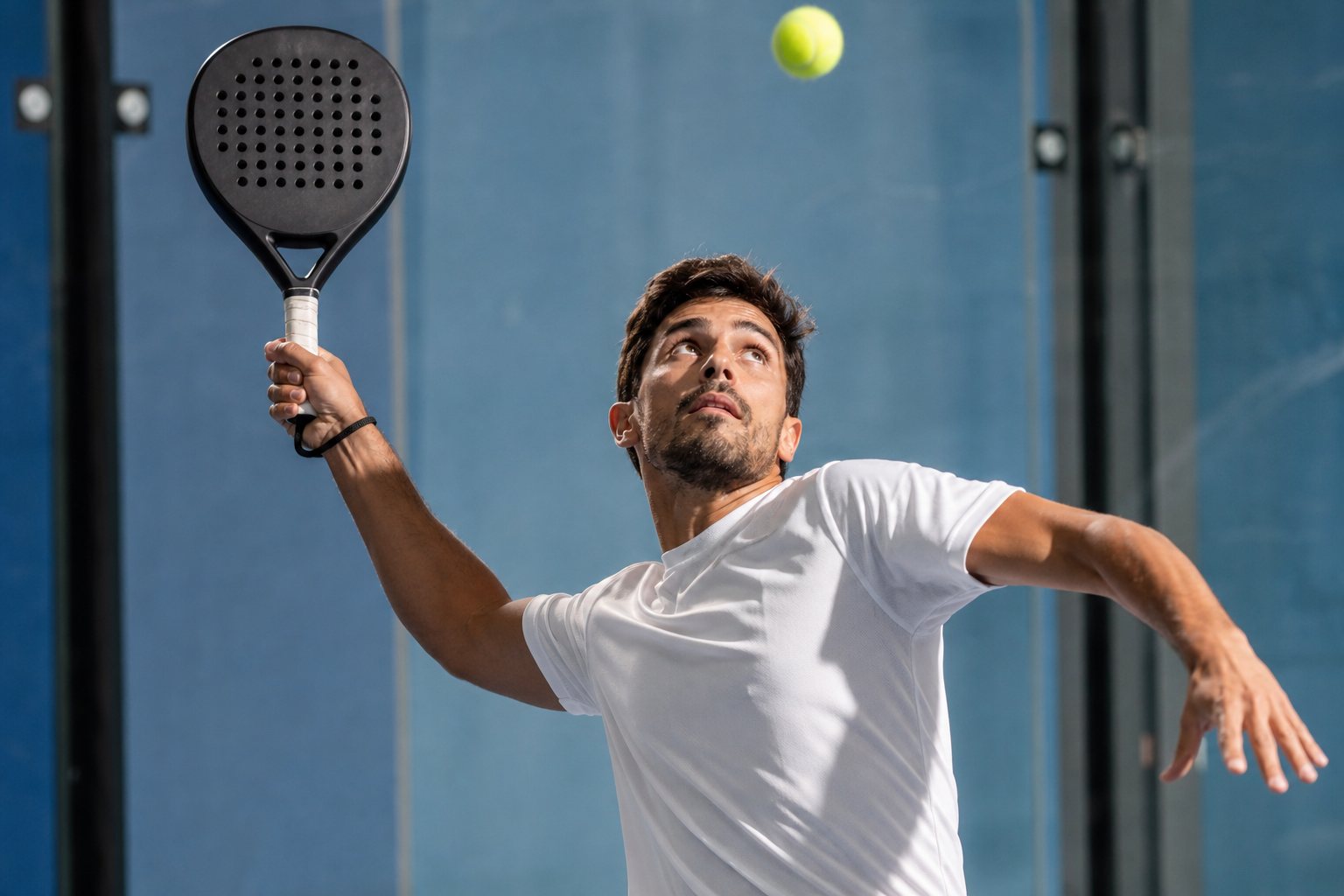
Six o’clock, after work, no time for dinner: you grab a banana, play two hours of padel under warm lights and wonder at 10 p.m. why your legs feel empty. Padel nutrition is mostly everyday eating that fits your training, plus fluids to match how much you sweat. Supplements are a small part of the picture, and this page treats them cautiously, in line with sports-medicine statements and our own supplement rules. It is general information, not personal advice; for a plan, see a registered dietitian.
Quick answer: Most padel players need a normal, balanced diet with carbohydrate to fuel sessions, protein spread through the day and fluids to replace sweat. Few supplements have good evidence, some carry contamination or doping risks, and third-party testing (for example NSF Certified for Sport or Informed Sport) is a sensible minimum if you use one. Talk to a doctor or registered dietitian before supplements, and get help if you notice signs of low energy intake or disordered eating.
Fuelling a padel session
The ACSM, Dietitians of Canada and Academy of Nutrition and Dietetics joint position (PMID 26891166) scales daily carbohydrate to training: 3 to 5 g per kg of body weight for light or skill-based activity and 5 to 7 g per kg for about an hour of moderate exercise a day, with protein of 1.2 to 2.0 g per kg a day across the day for athletes. Typical padel matches among amateurs last about an hour (PMID 40942670), which sits at the lighter end of that range, while tournaments and double sessions sit higher. For sports with stop-start play lasting one to two and a half hours the position suggests 30 to 60 g of carbohydrate per hour, which a banana, sports drink or a few dates can provide. Eat a meal that includes carbohydrate and some protein one to four hours before a long session if you can.
Hydration and heat
Padel courts, especially indoor or glass-walled ones, can be hot, and sweat rates vary. In 12 men aged about 70, urine colour showed dehydration after a 90-minute padel session despite drinking about 900 mL during it (PMID 39458506). Older adults may feel thirst less, as the ACSM position notes. The FIP rules say no liquids or food may be consumed between points and give 90 seconds at changes of ends, so drink at those breaks and between sets, and start the session already hydrated. The CDC lists heavy sweating, dizziness, nausea, confusion and a fast pulse among signs of heat illness: stop, cool down and get help. NATA’s position statement says to cool first and transport second for serious cases. A doctor can advise if you have a heart or kidney condition or take medicines that affect fluids.
Protein, recovery meals and everyday eating
- After play. A meal or snack with carbohydrate and protein within a few hours helps refuel. Plain food such as yoghurt and fruit, a sandwich or rice and beans is enough.
- Spread protein. The ACSM position suggests spreading protein through the day. Older players, who may need more, can ask a dietitian about the PROT-AGE guidance.
- Social nights. Padel is often a late-evening sport followed by a meal out. Alcohol before or during play can affect hydration and sleep; keep it modest and see our recovery page for sleep.
Energy availability and RED-S
Padel is not a weight-class sport, but any athlete who eats too little for the energy they burn can develop low energy availability. The International Olympic Committee’s 2023 consensus statement on Relative Energy Deficiency in Sport (RED-S, PMID 37752011) describes health and performance effects in female and male athletes, including an interplay with mental health, and offers a clinical assessment tool for clinicians. Warning signs include constant fatigue, frequent illness or injury, missed or lost periods, mood changes and preoccupation with food or weight. If these sound familiar, talk with a doctor or registered dietitian. Do not diet alone.
Supplements: what to know first
The IOC consensus statement on supplements (PMID 29540367) says supplements make a minor contribution to a good nutrition programme, that only a few (including caffeine, creatine, buffering agents and nitrate) have good evidence of benefit, and that some may harm health or lead to an anti-doping rule violation. It calls for a nutritional assessment before supplement decisions. Our own rules for athleterx.com are stricter still:
- Third-party testing. Prefer products certified for sport by NSF Certified for Sport or Informed Sport, and treat anything not certified as higher risk.
- No health or performance claims that a label cannot support. Follow the label and ask a doctor or dietitian; we give no dosage advice beyond what a label states.
- Banned-substance awareness. FIP competition falls under the FIP anti-doping rules and the World Anti-Doping Agency Prohibited List, both linked from USA Padel’s Rules and Regulations page. If you compete at a sanctioned event, check every product before you take it.
- Caffeine. It has evidence of benefit, but it is not for everyone. Be careful if you are sensitive, have a heart condition or are pregnant, and check with a doctor.
- Teens. The American Academy of Pediatrics recommends against performance-enhancing substances for adolescents.
Padel nutrition FAQs
What should I eat before padel?
A meal with carbohydrate and some protein one to four hours before is a common recommendation from sports nutrition statements, with a small carbohydrate snack closer to play. Individual comfort varies.
Do I need a sports drink?
For an hour of social padel, water is usually enough. For longer or hotter sessions, a drink with carbohydrate and sodium can help some players. A dietitian can advise.
Is creatine safe for padel players?
The IOC statement lists creatine among supplements with evidence of benefit, mainly for short, repeated efforts. If you are considering it, talk to a doctor or dietitian and choose a third-party-tested product.
How much water should I drink?
It depends on sweat rate and heat. Watch urine colour, drink at changes of ends and between sets, and stop if you feel dizzy or nauseous.
Can I lose weight playing padel?
Exercise helps, but eating too little for your training can harm health and performance. See a registered dietitian rather than cutting food on your own.
Sources
- ACSM, Academy of Nutrition and Dietetics and Dietitians of Canada, Nutrition and Athletic Performance, PMID 26891166 (PubMed)
- Maughan RJ et al., IOC consensus statement: dietary supplements and the high-performance athlete, Br J Sports Med 2018, PMID 29540367 (PubMed)
- Mountjoy M et al., IOC consensus statement on Relative Energy Deficiency in Sport (REDs), Br J Sports Med 2023, PMID 37752011 (PubMed)
- Hydration habits in male padel athletes over 65, Nutrients 2024, PMID 39458506 (PubMed)
- Physiological responses and fatigue in padel matches, Sensors 2025, PMID 40942670 (PubMed)
- FIP Rules of Padel 2026 (PDF)
- USA Padel, Rules and Regulations (FIP anti-doping rules, WADA Prohibited List links) (padelusa.org)
- CDC, signs and symptoms of heat illness (cdc.gov)
- NATA position statement on exertional heat illnesses (PMC)
- PROT-AGE study group, Bauer J et al. 2013, PMID 23867520 (PubMed)
- American Academy of Pediatrics, Performance-Enhancing Substances (healthychildren.org)
General information for education only, not medical advice. It does not replace a visit with a doctor, physical therapist or athletic trainer. See how we write and check our pages in our editorial policy.