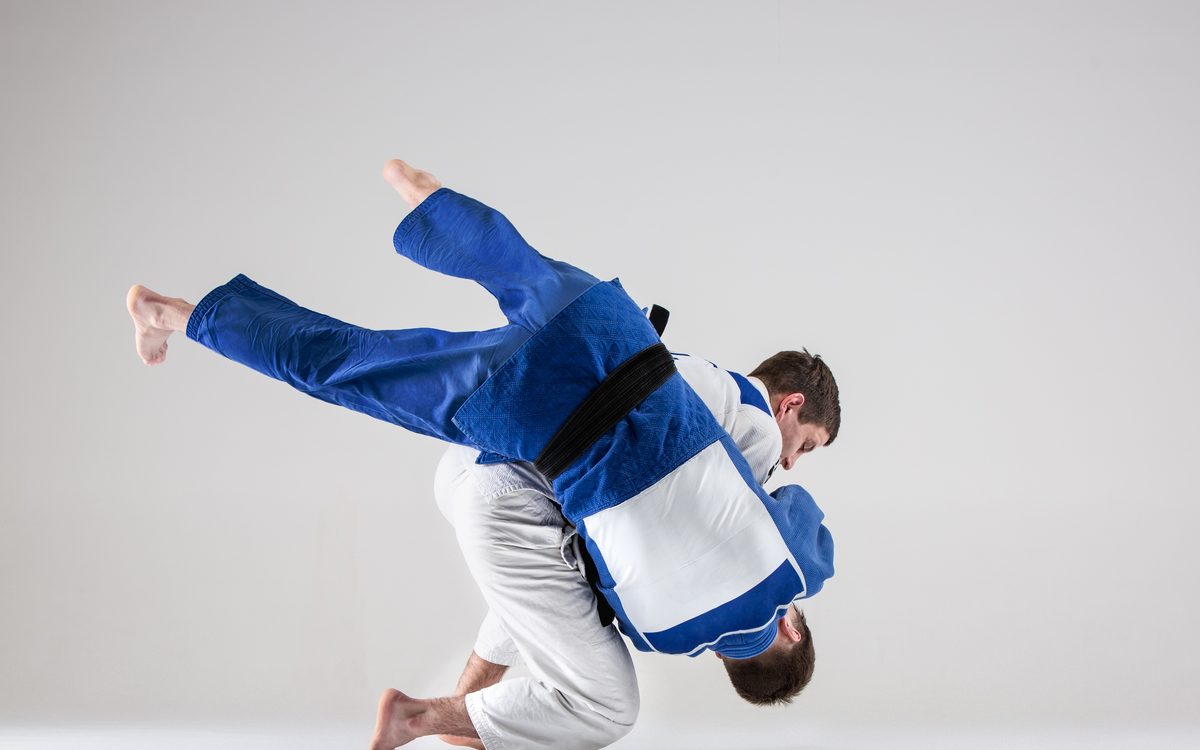
Thursday night randori, the last three minutes of a hard round. The grip that felt easy at the start now burns in the forearms, breathing is ragged, and the partner who has been pulling on the sleeve all session suddenly drives in for a throw. Judo training is the work, in the dojo and outside it, that prepares a body for that moment: technique first, then the strength, endurance and grip to keep technique working when tired. This page is a general guide for recreational and competitive judoka. For the rules, see skills, rules and getting started.
Quick answer: Judo asks for short bursts of power repeated over four-minute contests, strong grip, back and hips, and enough aerobic fitness to recover between exchanges. Most club judoka do well with two or three mat sessions a week, one or two short strength sessions and some mobility work, building up gradually. Only a few numbers here come from studies, and they describe elite athletes, so treat any weekly plan as an example. See a sports medicine doctor, physical therapist or athletic trainer before starting if you have pain, a health condition or are returning from injury.
What judo demands of the body
A review of physiological profiles of elite judo athletes (Franchini and colleagues, Sports Medicine, 2011) found that upper-body anaerobic power was what separated elite from non-elite judoka, and reported aerobic capacity (VO2max) of roughly 50 to 55 mL per kg per minute in men and 40 to 45 in women. In plain words, judo rewards quick, repeated bursts of pulling and pushing, and a decent aerobic engine that lets those bursts come back.
The contest itself is intermittent. Under the International Judo Federation (IJF) rules, a senior contest is four minutes of actual fighting time with the clock stopped between exchanges, and a tied contest goes to golden score with no time limit. A 2022 analysis of international men’s contests from 2010 to 2019 (Frontiers in Psychology) measured average combat time from about 190 to about 305 seconds depending on the rule period, and golden score in about 21% of contests in 2018 and 2019. A tournament day can mean several contests, with at least 10 minutes of rest between them. Training that only builds a single big effort misses much of this.
A week built around the mat
Technique is trained on the mat: uchikomi (repeated entries), throwing drills, ground work and randori. The American Academy of Pediatrics (AAP) clinical report on youth martial arts found some evidence that training more than three hours a week at a young age carried higher injury risk, and noted that more study is needed. For adults we found no source giving a safe weekly number, so this is common practice and not a rule.
- Mat sessions: two to three a week for most recreational adults, with at least one lighter, technique-focused session.
- Strength: one or two short sessions on non-mat days, built around pulls, squats or hinges, carries and trunk work.
- Conditioning: one session of intervals or easy aerobic work, which can be a bike, rowing machine or run.
- Mobility and recovery: short sessions for hips, shoulders and neck; see our judo recovery page.
- Rest: at least one fully free day. The AAP (Brenner, 2016) recommends 1 to 2 days off a week from a main sport for young athletes.
This is an example week, not a prescription from a study. A competitor adds mat time and tapers before events, while a beginner may do well with one or two classes. Our injury prevention page explains how to raise load gradually.
Strength and conditioning for judoka
Grip, back and hips
Throws and holds depend on pulling, so rows, pull-ups, farmer carries and towel or jacket hangs are common choices in judo gyms. Squats, deadlift variations and hip hinges build the legs and hips that drive a throw. Trunk work such as carries and anti-rotation holds supports the spine under load. These exercise choices follow from the demands above and general strength training practice; we did not find a judo-specific trial that proves one over another.
Young judoka
A review published by the AAP on resistance training for children and adolescents (Stricker and colleagues, Pediatrics, 2020) found supervised, well-taught resistance training to be safe and beneficial, and described two to three sessions a week for at least eight weeks as a common structure. Technique and supervision matter more than load for a young athlete.
Flexibility
The American College of Sports Medicine position stand (Garber and colleagues, 2011) recommends flexibility exercises for each major muscle-tendon group at least two days a week, holding stretches for a total of about 60 seconds per exercise. Hips, shoulders and the back of the legs matter most for throws and escapes. Save longer static holds for after training, and warm up with dynamic movement first.
Periodisation in plain words
Periodisation just means planning the year in phases instead of doing the same thing every week. A competitor might have a base phase with more strength and conditioning, a build phase with more randori and match pace, a short taper before a tournament and an easier week afterwards. The International Olympic Committee consensus on load in sport (Soligard and colleagues, British Journal of Sports Medicine, 2016) does not give a judo plan, but it makes two relevant points: sudden spikes in training load carry risk, and athletes need planned recovery. We did not find a source giving a judo-specific percentage increase per week, so we do not give one.
Skills away from the dojo
Falling practice, grip work with a towel, light uchikomi with a partner and a short strength routine can add up without extra mat time. For weight-class athletes, training for a division also means planning food and weight well before a weigh-in; see nutrition and athlete health. For tools that track heart rate and sleep, a wearable can help some people watch load, but none replaces a coach’s eye.
Frequently asked questions
How many times a week should a beginner train judo?
Many clubs start new adults at one or two classes a week. We found no source setting a number, so go by how you recover. For under-18s, the AAP report notes some evidence of higher injury risk above three hours a week.
Do I need to lift weights for judo?
Not to start. Technique and regular mat time come first. Many judoka add one or two short strength sessions for grip, back and hips as they progress, and the AAP says supervised resistance training is safe for young people.
How fit do you need to be for a judo contest?
Elite judoka studied by Franchini and colleagues had notable upper-body anaerobic power and aerobic capacity, but club-level fitness varies widely. A contest is four minutes of combat time, so conditioning for repeated bursts helps. Ask your coach what suits your level.
Is running good training for judo?
Aerobic work helps recovery between bursts, and intervals suit judo’s stop-start pattern, but running is one option among bikes, rowers and mat circuits. If running hurts your knees or feet, choose another method.
How much rest does a judoka need?
Plan at least one fully free day a week. The AAP advises 1 to 2 days off a week for young athletes. Persistent soreness, poor sleep or declining performance are reasons to ease off and talk to a coach or clinician.
Sources
- Franchini et al., Physiological profiles of elite judo athletes (PMID 21244106)
- Combat time in international men’s judo 2010-2019 (PMID 35369231)
- AAP: Youth Participation and Injury Risk in Martial Arts
- AAP: Resistance training for children and adolescents (Stricker 2020)
- ACSM position stand on exercise quantity and quality (Garber 2011, PMID 21694556)
- IOC consensus on load in sport (Soligard 2016, PMID 27535989)
- AAP: Brenner 2016 on overuse injuries (PMID 27573090)
- IJF Sport and Organisation Rules (Jan 2025)
General information for education only, not medical advice. It does not replace a sports medicine doctor, physical therapist or athletic trainer who knows you. See how we work in our editorial policy, and return to the judo hub.