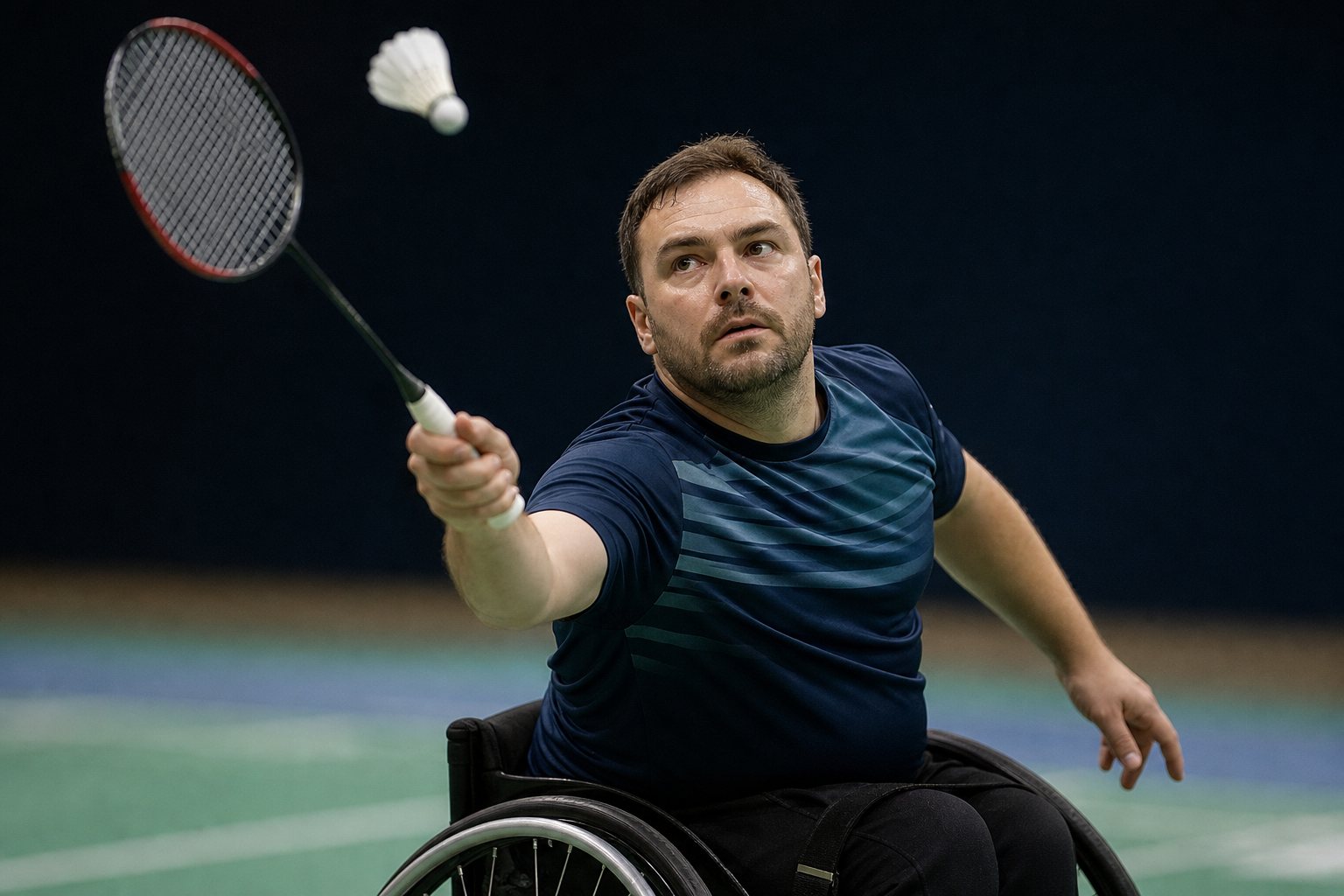
Between games at a tournament, a player tears open a snack, glances at the clock and wonders whether the powder a teammate swears by is worth trying. Para badminton nutrition is mostly about the plain things done reliably: enough food for the training, enough fluid for the room, and caution around anything sold as a shortcut. This page covers those basics, what research on Para athletes has found, and how to think about supplements.
Quick answer: Eat enough to match your training, with carbohydrate for the work, protein spread through the day and fluids you can actually drink in a hot gym. A 2026 scoping review of 47 studies found Para athletes often eat less carbohydrate and fiber than recommended and have common gaps in vitamin D, calcium, magnesium and iron, but evidence is limited. Supplements are optional, food comes first, and any supplement carries a doping risk, so choose products with third-party testing and talk to a doctor or sports dietitian.
General information, not medical advice or a diet plan. For recovery see our recovery page, and for the sport start at the Para badminton hub.
Daily fuel
The joint position statement of the Academy of Nutrition and Dietetics, Dietitians of Canada and the American College of Sports Medicine (2016) says carbohydrate should match training load, protein is typically 1.2 to 2.0 g per kg of body weight per day for athletes, and a pre-event meal can be eaten one to four hours before, keeping fat and fiber low. Those are general athlete figures, not specific to Para badminton. Standard badminton is played at a high heart rate with a substantial aerobic share, according to a 2015 review, so fuelling for long days of play is reasonable.
Para athletes can have extra things to consider. A 2026 scoping review of nutrition in Para athletes (47 studies) found carbohydrate and fiber intakes often below recommendations, protein generally adequate but low in some female athletes, vitamin D, calcium, magnesium and iron inadequacies common, and supplement use ranging from 0 to 91 percent. It also said evidence on hydration and low energy availability was scarce. Energy needs also depend on the impairment, body composition and activity. A registered dietitian who works with athletes can estimate yours.
Around training and matches
Our sources do not give a Para badminton match-day plan. Common practice is to eat a familiar meal a few hours before, bring easy snacks (fruit, a sandwich, something with carbohydrate) for long tournament days and eat again after play. Try new foods in practice, not on match day. Keep urgent medical needs (diabetes, allergies, swallowing issues) with your clinician.
Fluids and heat
Hot gyms and long sessions raise fluid needs. A 2024 study of 15 elite athletes with a spinal cord injury found that sweat rate was lower in athletes with tetraplegia, and six of the 15 were dehydrated before exercise by a urine measure; the authors concluded that raising awareness of hydration seems valuable. Some impairments change how the body handles heat, so plan:
- Carry your own bottle and sip regularly instead of waiting for thirst.
- Take breaks in the shade or cooler air, and use fans or cool cloths if your clinician agrees.
- Tell your coach if you feel dizzy, headachy or unusually hot.
For athletes with a spinal cord injury at or above T6, autonomic dysreflexia can raise blood pressure suddenly and be life-threatening (2022 review). Do not induce it: boosting is banned by the IPC.
Weight and body composition
Para badminton is classified by impairment, not by body weight, so there are no weight classes to make. The IOC consensus statement on Relative Energy Deficiency in Sport (REDs, 2023) describes harm to health and performance in female and male athletes who do not eat enough for their training, and it also covers safe approaches to body-composition assessment. The 2026 Para scoping review found evidence on low energy availability in Para athletes is scarce. Our advice is cautious: do not diet hard during heavy training, and see a doctor or dietitian if you have tiredness that will not lift, repeated injuries, missed periods, frequent illness or a growing worry about food. Those are health matters, not willpower problems.
Supplements: the cautious view
Dietary supplements are a small part of nutrition. The IOC consensus statement on supplements (2018) says food first, and that only a few supplements, among them caffeine and creatine, have good evidence for improving performance, in specific situations. We do not give doses.
- Third-party testing: supplements are less tightly regulated than medicines and contamination can happen. Programs such as NSF Certified for Sport and Informed Sport test products for banned substances, but a certification lowers risk and does not remove it.
- Anti-doping: BWF competitors are bound by the World Anti-Doping Code, under which an athlete is responsible for what is in their body. The BWF says on its integrity pages that bad labeling is not a defense. Check substances with your national anti-doping organization and ask about therapeutic use exemptions for any medication you need.
- Medicines: some medicines for conditions that come with an impairment may be restricted in sport. Never stop a prescribed medicine without your doctor.
- Creatine: can add body weight, and the American Academy of Pediatrics advises against it under 18.
- Stimulants and energy drinks: caffeine suits some people and not others, for example people with heart conditions or sensitivity. The AAP advises against energy drinks for children and adolescents.
Talk to a doctor or sports dietitian before starting any supplement, and do not buy anything that promises to boost, burn or cure.
Para badminton nutrition FAQs
What should I eat before a Para badminton match?
A familiar meal one to four hours before, with carbohydrate and little fat or fiber, per the 2016 joint position. Test it in practice.
Do wheelchair players need less food?
Energy needs depend on body size, impairment and training. A sports dietitian can estimate yours, so avoid copying a diet from the internet.
Do I need supplements?
Not necessarily. The IOC says food comes first. If you use one, choose a third-party tested product and discuss it with a clinician.
Is creatine safe for juniors?
The AAP advises against creatine use under 18.
How do I avoid a positive doping test from a supplement?
You cannot remove the risk. Use third-party tested products, check with your national anti-doping organization and ask your doctor about medicines.
Sources
- Nutrition and athletic performance: joint position of AND, DC and ACSM, 2016 (PubMed)
- Nutritional challenges in para-athletes: scoping review, 2026 (PubMed)
- How elite athletes with a spinal cord injury sweat during exercise, 2024 (PubMed)
- Autonomic dysreflexia following spinal cord injury, 2022 (PubMed)
- Electroceuticals for Paralympic athletes, 2026 (PubMed)
- IOC consensus statement on REDs, 2023 (PubMed)
- IOC consensus statement on dietary supplements and the high-performance athlete, 2018
- BWF: dietary supplements
- BWF: strict liability
- AAP: sports drinks and energy drinks for children and adolescents
- AAP: creatine use by adolescents not recommended
- The science of badminton, Sports Medicine 2015 (PubMed)
General information for education only, not medical advice. It does not replace a visit with a doctor or registered dietitian. See how we write and check our pages in our editorial policy. Back to the sports hub and badminton.