This article contains affiliate links: if you buy through them we may earn a commission, at no extra cost to you. Read our affiliate disclosure.
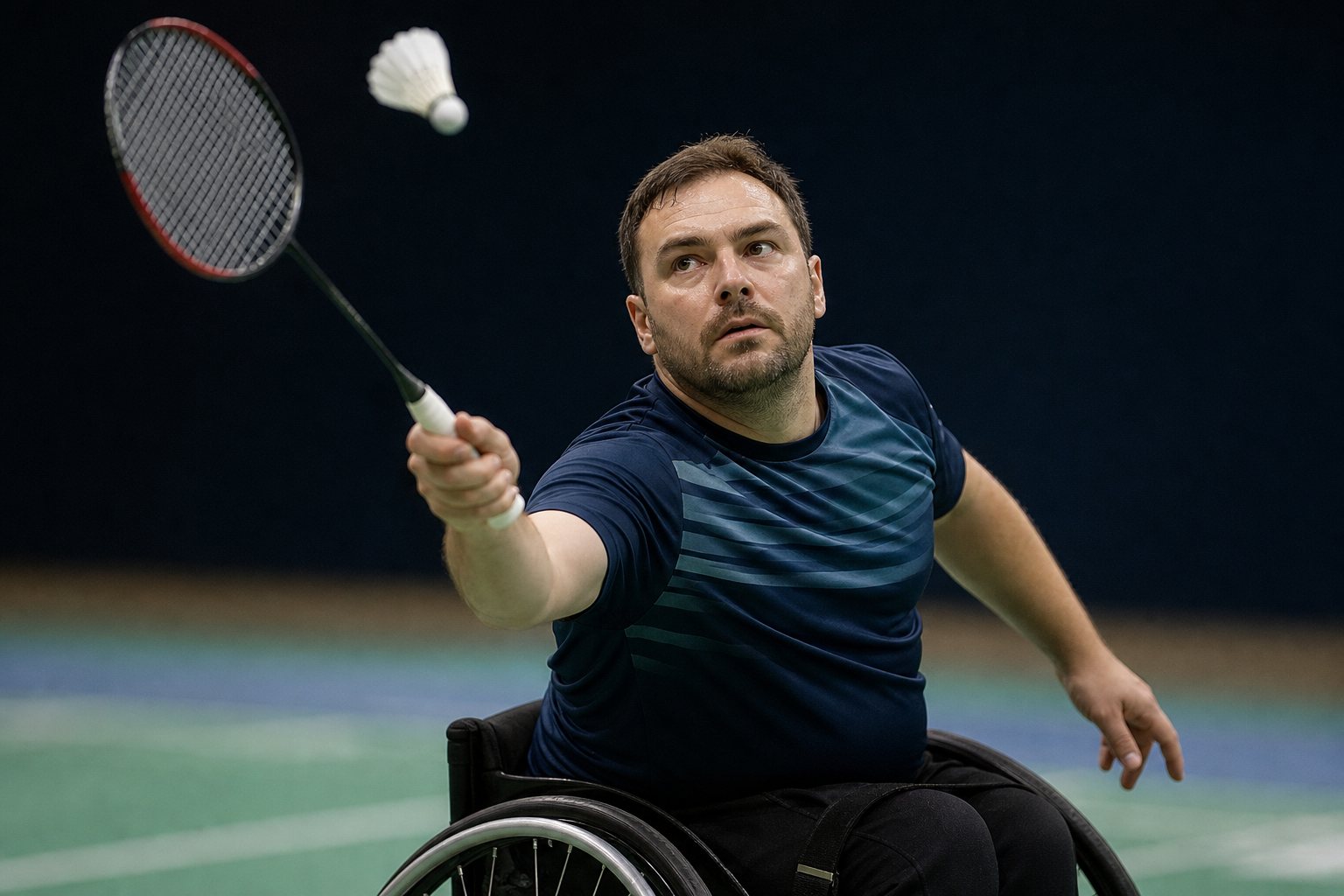
Walk into a para badminton hall and you will see two kinds of equipment: the ordinary kind, a racket and a tube of shuttles, and the personal kind, a sports chair fitted to one body or a prosthesis tuned to one stride. Para badminton gear starts with the second kind, because fit and rules matter more than any racket brand. This page covers both, keeps maker claims separate from standards, and points out what a beginner can skip.
Quick answer: Para badminton uses standard rackets and shuttles. What is special is the chair and prosthesis, which must follow the rules: for example, a wheelchair may have no electric device that assists movement or steering, a prosthesis must match the length of the existing limb, and a prosthesis is not allowed in SU5 (USA Badminton). Start with a forgiving, head-light racket, nylon practice shuttles and, if you like, racket-sport eye protection. Chair set-up is individual and best chosen with a coach or clinician.
General information, not medical advice. The rules are summarised on our rules page; safety is on the injury prevention page.
Wheelchair set-up and the rules around it
USA Badminton’s equipment page says wheelchair players may be strapped to the chair around the waist, across the thighs or both, that the feet must be fixed to the footrest, and that part of the trunk and the legs must touch the seat when the shuttle is struck. The seat, including padding, may be level or tilted back but not forward. A rear supporting wheel is allowed and may extend beyond the main wheels, and the chair may have no electric or other device that helps movement or steering.
What this means in practice, in general terms and not as a sourced fitting guide:
- Chair set-up is individual. Seat height and angle, wheel camber and strap position change how you reach and recover. A coach or clinician with Para experience is the right person to help.
- Check what the rules allow before you buy or modify. The BWF writes and enforces the Para rules; read the current regulations, or ask USA Badminton, before a tournament.
- Check the chair before play. Look at straps, footrest fixings, tyres and brakes (common practice).
Prosthesis and crutch
According to USA Badminton, prosthetic limbs are allowed in SL3, SL4 and the wheelchair classes and not in SU5, and a prosthesis must be the same length as the player’s existing limb and in proportion to the other limbs. Standing players who have an amputation may use a crutch no longer than their natural measurement from armpit to ground. Prosthetic fitting and sports-specific components are for your prosthetist. We found no sourced guidance on prostheses for badminton, so we do not make recommendations.
Racket
Para badminton uses standard rackets (USA Badminton). For a beginner, a head-light, medium-flex racket is a forgiving choice, which is common coaching advice rather than a sourced rule. The weight, grip size and string tension that suit you depend on your swing and, for wheelchair players, on how much reach and trunk control you have, so try a few if you can. Do not chase the most expensive racket: technique and fit matter more.
Shuttles
Nylon shuttles last longer and suit practice; feather shuttles are the traditional choice for match play. That is general knowledge rather than something we found in a Para badminton source, so check the tournament prospectus for the shuttle in use. Shuttle speed ratings can change with room temperature, so a hall that is hot or cold may need a different one.
Strings and grips
String choice affects feel and durability, and fresh strings or a new overgrip are the cheapest upgrade to a racket. Overgrips help a wet hand hold on, and a towel grip is an option for players who sweat. If you have reduced hand function or use a strap or cuff to hold the racket, ask your coach or occupational therapist about adaptations that stay within the rules; we did not find a rule on this and do not advise on it.
Eye protection
A shuttle or racket can reach the eye in any racket sport, and the American Academy of Ophthalmology publishes a clinical statement on protective eyewear for young athletes. Racket-sport eyewear is typically tested to ASTM F803, which is the standard to look for, and the product below states that it meets it, which is a maker claim we have not verified. Ask an eye care professional if you wear glasses or contacts.
Footwear and after-play comfort
Court shoes should fit and grip the floor. For standing players, shoe fit with a prosthesis or a leg-length difference is worth sorting out with a clinician. After a long day, soft recovery footwear is a comfort, and not a treatment.
Standards versus maker claims
- Standards and rules: the BWF and IPC rules and the USA Badminton equipment page for chairs, prostheses, crutches and straps; ASTM F803 for racket-sport eyewear is a test standard that a maker says a product meets.
- Maker claims: speed, power, stiffness and weight descriptions on racket and string listings, and seals such as the APMA Seal of Acceptance on footwear. Treat them as the maker’s description.
Starter products
These are examples that fit the basics above, using specifications listed by the makers. Check size, weight and your own needs before buying, and see our badminton guide for more on standard equipment.

Yonex NanoFlare 1000 Play
- 4U, G5 grip
- Head-light, medium flex
- Pre-strung, cover included

Yonex NanoFlare 700 Play
- 4U, G5 grip
- Head-light, flexible shaft
- Pre-strung, cover included

Yonex Mavis 350 Nylon Shuttles (6)
- Nylon skirt, cork base
- Tube of 6
- Speed by temperature

Yonex Aerosensa 30 Feather Shuttles (12)
- Feather, medium speed
- Tube of 12
- For match play
$64.99 at Amazon, as of Nov 17, 2026 02:07 UTC
Check price on Amazon
Yonex Super Grap Overgrip (3 pack)
- Slightly tacky, absorbent
- 3 overgrips
- Finishing tape included
$9.95 at Amazon, as of Nov 17, 2026 02:07 UTC
Check price on Amazon
Tourna Clear Eye Protection
- Polycarbonate wrap lens
- Meets ASTM F803 (maker)
- Anti-fog coating
$16.99 at Amazon, as of Nov 17, 2026 02:07 UTC
Check price on Amazon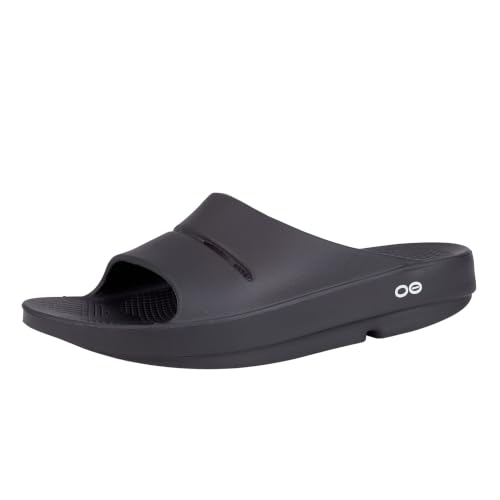
OOFOS OOahh Slide
- OOfoam slide
- APMA Seal of Acceptance
- Machine washable
$59.95 at Amazon, as of Nov 17, 2026 02:07 UTC
Check price on AmazonPara badminton gear FAQs
Do I need a special racket for Para badminton?
No. Standard rackets and shuttles are used (USA Badminton). A coach can help with grip, string tension and, for wheelchair players, chair set-up.
Can I use an electric wheelchair?
Not in play. USA Badminton says the chair may have no electric or other device that assists movement or steering.
Can I wear a prosthesis in every class?
Prostheses are allowed in SL3, SL4 and the wheelchair classes, and not in SU5, per USA Badminton. Check the current BWF rules.
Do I have to strap into the chair?
USA Badminton says players may be strapped at the waist, thighs or both, and that feet must be fixed to the footrest. Straps are an option; footrest fixing is a requirement.
Are cheap rackets fine to start?
Yes. A forgiving racket and good technique are better than an expensive one. Replace strings and grips when worn.
Sources
- USA Badminton: Para athletes equipment
- USA Badminton: Para athletes overview
- IPC: Para badminton
- BWF Para-Badminton classification
- American Academy of Ophthalmology: protective eyewear for young athletes
- Yonex NanoFlare 1000 Play on Amazon
- Yonex NanoFlare 700 Play on Amazon
- Yonex Mavis 350 on Amazon
- Yonex Aerosensa 30 on Amazon
- Yonex Super Grap on Amazon
- Tourna Clear on Amazon
- OOFOS OOahh on Amazon
General information for education only, not medical advice. Product links are affiliate links, and we do not claim to have tested these products. See how we write and check our pages in our editorial policy. Back to the Para badminton hub and the sports hub.