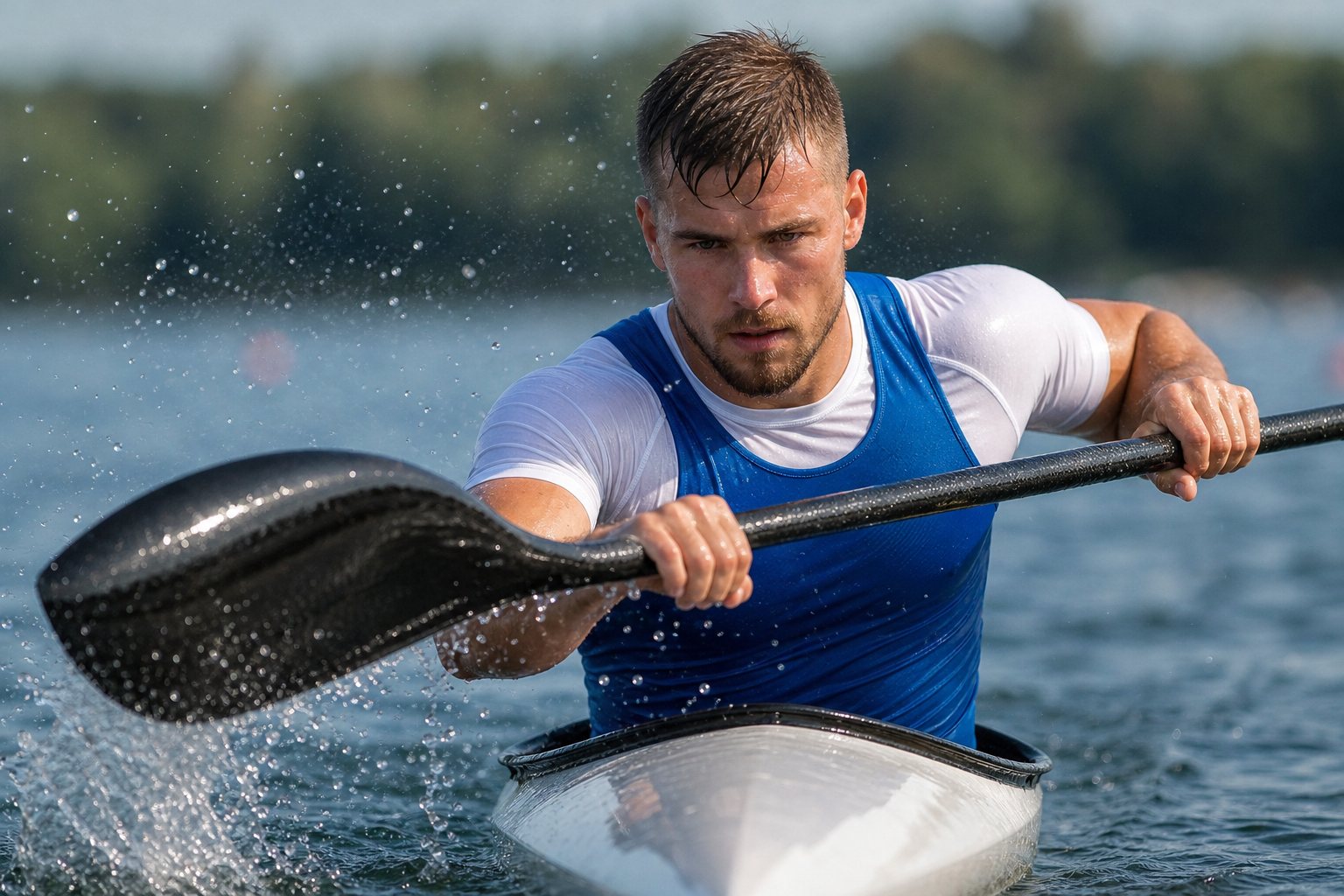
The water bottle is still in the car, breakfast was a coffee, and the session is two hours of hard paddling in the sun. Fueling is where many athletes quietly lose ground. Para canoe nutrition means eating and drinking enough to support training, staying healthy and handling heat, cold and long days at the water, with supplements as a small, careful extra. Impairment can change energy needs, heat tolerance and digestion, so general athlete advice is a starting point, not a plan. Research on Para athletes is limited, and we found none specific to Para canoe.
Quick answer: Food and fluids come first, and supplements are a minor extra: the IOC says supplements can make a minor contribution and that only a few, such as caffeine and creatine, have good evidence (IOC consensus statement 2018). Para athletes, especially those with spinal cord injury, may be at risk of not eating enough for their training, a condition called low energy availability (Figel and colleagues 2018; Pritchett and colleagues 2021). Choose third-party tested supplements only after talking to a doctor or sport dietitian, and check anti-doping rules. See a doctor, registered dietitian or sports medicine physician for weight changes, missed periods, repeated injuries or fatigue that does not fit your training.
General information, not medical advice and not a diet plan. For training, see our training page, for heat and cold safety injury prevention, and for rest recovery.
Fuel and the risk of eating too little
We did not find calorie, carbohydrate or protein targets for Para canoe athletes, so we give none. What the research does show is a gap and a warning. A 2018 review of athletes with spinal cord injury (Figel and colleagues, Nutrients) found that no studies had measured energy availability in this population and judged that these athletes may be at increased risk of low energy availability. A 2021 exploratory study of 18 national-level para-athletes (Pritchett and colleagues, Nutrients) found that, by the energy-availability thresholds used for able-bodied athletes, none were at risk. But 78% of the women scored as at risk on a low-energy-availability questionnaire, and hip bone density was clinically low in 56% of the women and 25% of the men. The authors concluded the tools disagree and that the true prevalence of relative energy deficiency in sport is unknown.
The IOC’s 2023 consensus statement on Relative Energy Deficiency in Sport (REDs) describes a syndrome of harmful health and performance effects in female and male athletes from low energy availability, notes a growing role for low carbohydrate availability and links with mental health, and provides a clinical assessment tool for clinicians. Signs that deserve a visit include unplanned weight loss, constant fatigue, frequent illness or injury, stress injuries to bones and, in women, missed periods. A doctor or dietitian who knows your impairment should assess you; do not self-diagnose.
Hydration and heat
Paddling on open water often means sun and little shade. The IOC consensus statement on events in the heat (Racinais and colleagues 2023, British Journal of Sports Medicine) covers heat acclimation, hydration management, and clothing, and says exertional heat stroke is preventable and treatable with proper risk mitigation and medical response. A Paralympic review (Griggs and colleagues 2020, Temperature) says the sport, impairment and class all affect heat strain, and that cooling methods and acclimatisation can help vulnerable athletes. For some impairments, such as spinal cord injury, sweating and blood-pressure responses may differ, so ask a doctor how much to drink and how to cool down. Bring water you can reach while you are on the water and plan breaks in shade.
Cold water and long sessions
In cold conditions, energy needs and the risk of getting chilled both go up in ways we did not find quantified for Para canoe. The National Weather Service warns that cold water can cause loss of muscle control within 10 minutes and advises dressing for the water temperature. A warm drink and dry clothes ready after a session are sensible, though not backed by a Para-specific study.
No weight classes, but class rules apply
Para canoe races are by sport class, which reflects impairment, not body weight (USOPC). There is no weight-cutting in the sport’s class system, and a doctor or dietitian should be involved if anyone considers changing body weight for performance. The ICF rules set a minimum boat weight, not a paddler weight.
Supplements: what is safe to say
The IOC consensus statement on dietary supplements (Maughan and colleagues 2018, British Journal of Sports Medicine) says nutrition usually makes a small but valuable contribution to performance, supplements can make a minor one and supplement use is widespread at all levels. Most products marketed to athletes lack good evidence; only a few, including caffeine, creatine, certain buffering agents and nitrate, have good evidence of benefit, and responses vary widely. It advises a full nutrition assessment before decisions on supplements, trial of any performance product in training first, and expert professional help.
- Third-party testing. Products certified by NSF Certified for Sport or Informed Sport are tested for banned substances. Certification lowers, but does not remove, risk. A product that is not third-party certified for sport carries more risk of unlisted ingredients.
- Stimulants. Caffeine is not for everyone. Check with a doctor if you have a heart or blood-pressure condition, are pregnant or are sensitive. Avoid anything marketed as a fat burner or pre-workout with proprietary blends.
- No disease or cure claims. We do not recommend supplements to treat any condition, and we give no doses beyond the product label.
Anti-doping and Para-specific rules
Inadvertent doping from supplements is a recognised risk (IOC 2018). Para athletes face extra rules. The IPC bans boosting, deliberately causing autonomic dysreflexia to raise blood pressure and performance, as doping, and a survey of 99 Paralympians with spinal cord injury (Bhambhani and colleagues 2010, Disability and Rehabilitation) found 16.7% had used it and that most considered it dangerous. The classification consent form that the ACA lists asks athletes to list all medications and supplements so they can be checked for banned substances. Ask your national anti-doping organisation, such as USADA in the United States, before taking anything, and ask your doctor about any prescribed medication that may require a therapeutic use exemption.
Para canoe nutrition FAQs
How many calories does a Para canoe athlete need?
We found no sourced figure. Needs depend on your body, impairment and training, so ask a registered dietitian who works with athletes.
What is RED-S?
Relative Energy Deficiency in Sport, called REDs by the IOC, is a set of health and performance effects from not eating enough for the energy your training uses. The IOC’s 2023 statement describes it and a clinical tool doctors can use.
Are creatine or caffeine okay for Para athletes?
The IOC says caffeine and creatine are among the few supplements with good evidence for performance, but responses vary and anti-doping rules apply. Talk to a doctor or sport dietitian first and use third-party tested products.
How do I stay cool when paddling in the heat?
Plan shade, fluids and cooling methods, and acclimatise gradually. Ask your doctor about heat if you have a spinal cord injury or another condition that affects sweating or blood pressure.
Is boosting allowed?
No. The IPC bans boosting as doping, and it carries health risks such as dangerously high blood pressure.
Sources
- USOPC: Paracanoe
- Figel K et al. 2018, energy and nutrient issues in athletes with spinal cord injury, Nutrients (PubMed)
- Pritchett K et al. 2021, risk of low energy availability in Paralympic athletes, Nutrients (PubMed)
- IOC consensus statement on Relative Energy Deficiency in Sport (REDs), 2023 (PubMed)
- IOC consensus statement on sport events in the heat, 2023 (PubMed)
- Griggs KE et al. 2020, heat-related issues for Paralympic athletes (PubMed)
- National Weather Service: cold water hazards
- Maughan RJ et al. 2018, IOC consensus statement on dietary supplements and the high-performance athlete (PubMed)
- Bhambhani Y et al. 2010, boosting in athletes with high-level spinal cord injury (PubMed)
- American Canoe Association: Paracanoe
- ICF Paracanoe Competition Rules 2022 (PDF)
- NSF Certified for Sport
- Informed Sport
General information for education only, not medical advice. It does not replace a sports medicine doctor, physical therapist, athletic trainer or a classifier who knows your impairment. See our editorial policy for how we research and write.