This article contains affiliate links: if you buy through them we may earn a commission, at no extra cost to you. Read our affiliate disclosure.
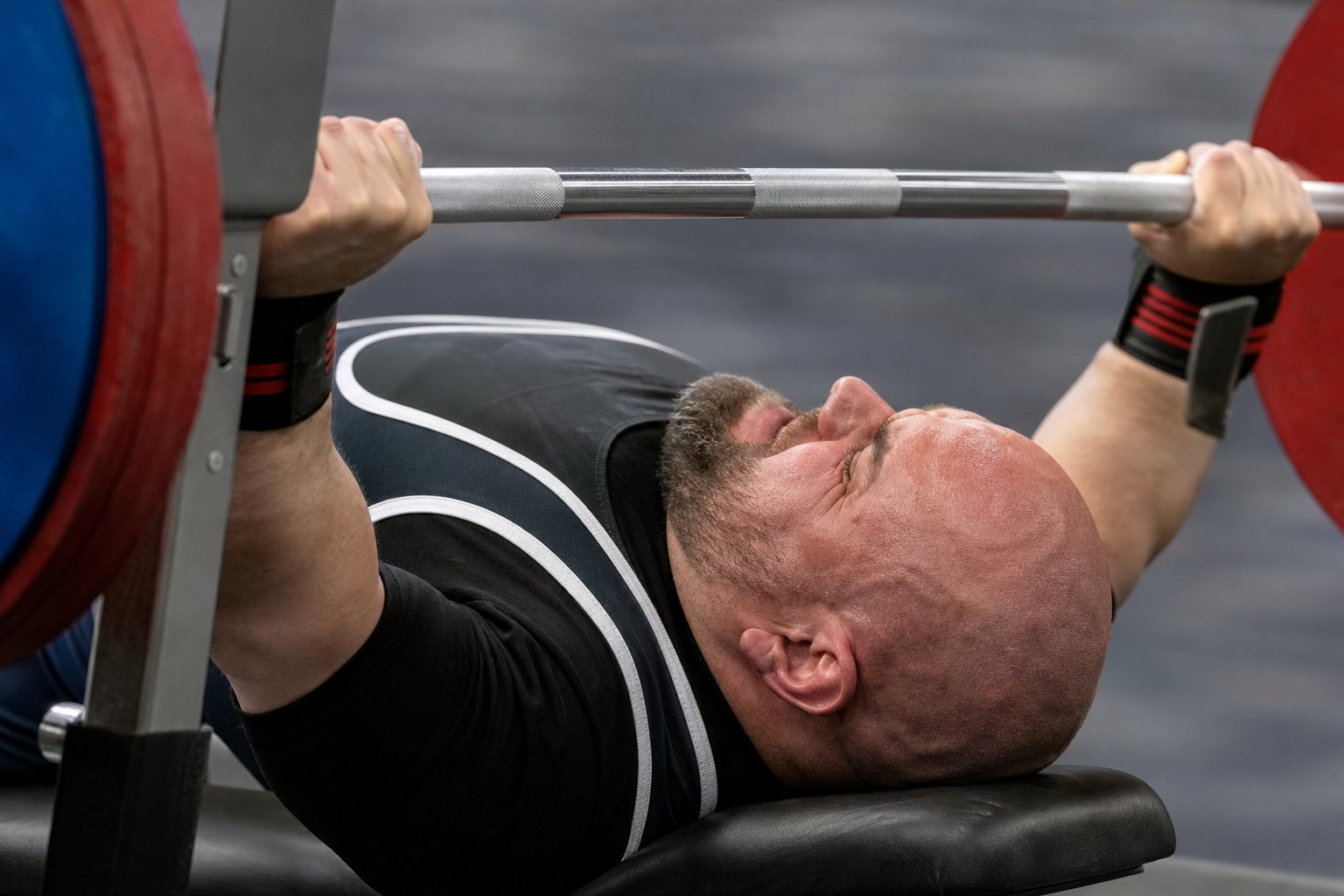
The bar, the bench, the plates and the lifting suit: at a Para powerlifting competition almost everything on the platform is supplied and approved, so the question for most athletes is what to bring and what to train with. Para powerlifting gear means the equipment used on the bench, from the official competition items to personal accessories and recovery tools. This page separates what the rules say from what makers claim, and is honest that we cannot confirm any accessory below is permitted at a given event.
Quick answer: At recognised competitions the bar, collars, weights, platform and bench must come from World Para Powerlifting approved suppliers, and uniforms also come from approved suppliers, so you buy little for the platform itself. Chalk, wrist wraps and similar items may or may not be allowed: check Appendix 5 (Equipment Regulations and Requirements) of the rules or ask the meet organiser. Maker phrases such as “IPF approved” are not World Para Powerlifting approval. See a coach or classifier for adaptive set-up questions.
General information, not medical advice. Start at the hub; rules are on the rules page. The standard sport’s gear is on our powerlifting guide, but its belts, shirts and rules do not apply to Para bench.
What the rules fix for you
The World Para Powerlifting Rules and Regulations took effect on 1 May 2025, with Appendix 5 covering equipment regulations and requirements and Appendix 4 the identification on uniforms. Paralympic.org lists approved suppliers for bars, collars, weights, platforms and benches, and for uniforms including lifting suits and T-shirts. The competition bench is 2.1 m long, 61 cm wide narrowing to 30 cm at the head end, and 48 to 50 cm high. We could not open the full rulebook text to list rules on straps, wraps, shirts or footwear, so read Appendix 5 before packing.
Standards versus maker claims
A standard is a rule from the governing body, such as the approved-supplier requirement above. A maker claim is a statement on a product page. Terms like “IPF approved” refer to a different federation (the International Powerlifting Federation, for standard powerlifting), and we have not verified that any product is permitted in Para competition. Always trust the current World Para Powerlifting appendices and ask the organiser.
Fit, set-up and inspection
The following points are general practice, not rules. Your coach and clinician know your set-up best.
- Bench set-up. Train on a bench that is stable and as close as possible to the competition bench in size and height; how you get on and are positioned is a matter for your coach and the rules.
- Safety arms and spotters. Use catchers or safety arms set for your bench and trained spotters or loaders; do not train heavy alone.
- Check before each session. Look at the bar, collars, plates and bench for loose parts, damage or a wobble, and check clothing or straps for wear.
- Skin and comfort. If you have reduced sensation, check pressure points after a session and tell your clinician about marks that persist.
- Adaptive equipment. Ask your classifier, coach or clinician about equipment specific to your impairment and the rules.
Personal accessories
Chalk is used for grip, wrist wraps are used by many lifters in training for wrist comfort, and a foam roller is a recovery tool many athletes keep at home. None is proven to prevent injury, and wraps and chalk may be limited at some events. The cards below are general training and recovery items, not endorsements; check meet rules first.
Frequently asked questions
What gear is provided at a Para powerlifting meet?
Bars, collars, weights, platforms and benches at recognised competitions must come from World Para Powerlifting approved suppliers, according to Paralympic.org, so the meet provides the equipment for the lift.
Can I wear a lifting suit?
Uniforms, including lifting suits and T-shirts, come from approved suppliers per Paralympic.org. Check the current Appendix 4 and 5 for what is required.
Are wrist wraps allowed?
We could not confirm this. Check Appendix 5 of the rules or ask the organiser before you pack them.
Is “IPF approved” good enough?
No. That phrase refers to a different federation. Para competition follows the World Para Powerlifting rules.
How do I know my bench is safe?
Check it for stability and damage before each session, use safety arms and spotters, and ask your coach to confirm it matches competition dimensions.
Recovery tools are a separate question from competition gear. A foam roller or similar tool is a comfort choice for many athletes; the 2018 Dupuy review found massage had the strongest evidence for soreness, but most of that research was not in Para athletes. If you use a wheelchair or have reduced sensation or spasticity, ask a physical therapist before using firm pressure, heat or cold. See our recovery page for the evidence, and the injury prevention page for safe-lifting basics.

Cannon Sports Gym Chalk
- Magnesium carbonate
- Eight 2 oz blocks
- Check meet rules
$17.99 at Amazon, as of Nov 17, 2026 01:07 UTC
Check price on Amazon
Gymreapers 18" Wrist Wraps
- 18 x 3 in
- Reinforced thumb loop
- Check meet rules
$19.99 at Amazon, as of Nov 17, 2026 01:07 UTC
Check price on Amazon
TriggerPoint GRID 1.0 Foam Roller
- 13 in multi-density
- Hollow core
- Keeps its shape
Sources
- Paralympic.org: World Para Powerlifting rules, appendices and approved suppliers
- Paralympic.org: Para powerlifting about (bench dimensions)
- Amazon product pages for the three cards (reused ASINs from sports/powerlifting gear sources)
General information for education only, not medical advice. It does not replace a sports medicine doctor, physical therapist, athletic trainer or your classifier. See how we research our pages in our editorial policy. Back to the Para powerlifting hub, the sports index and the standard sport’s powerlifting guide.