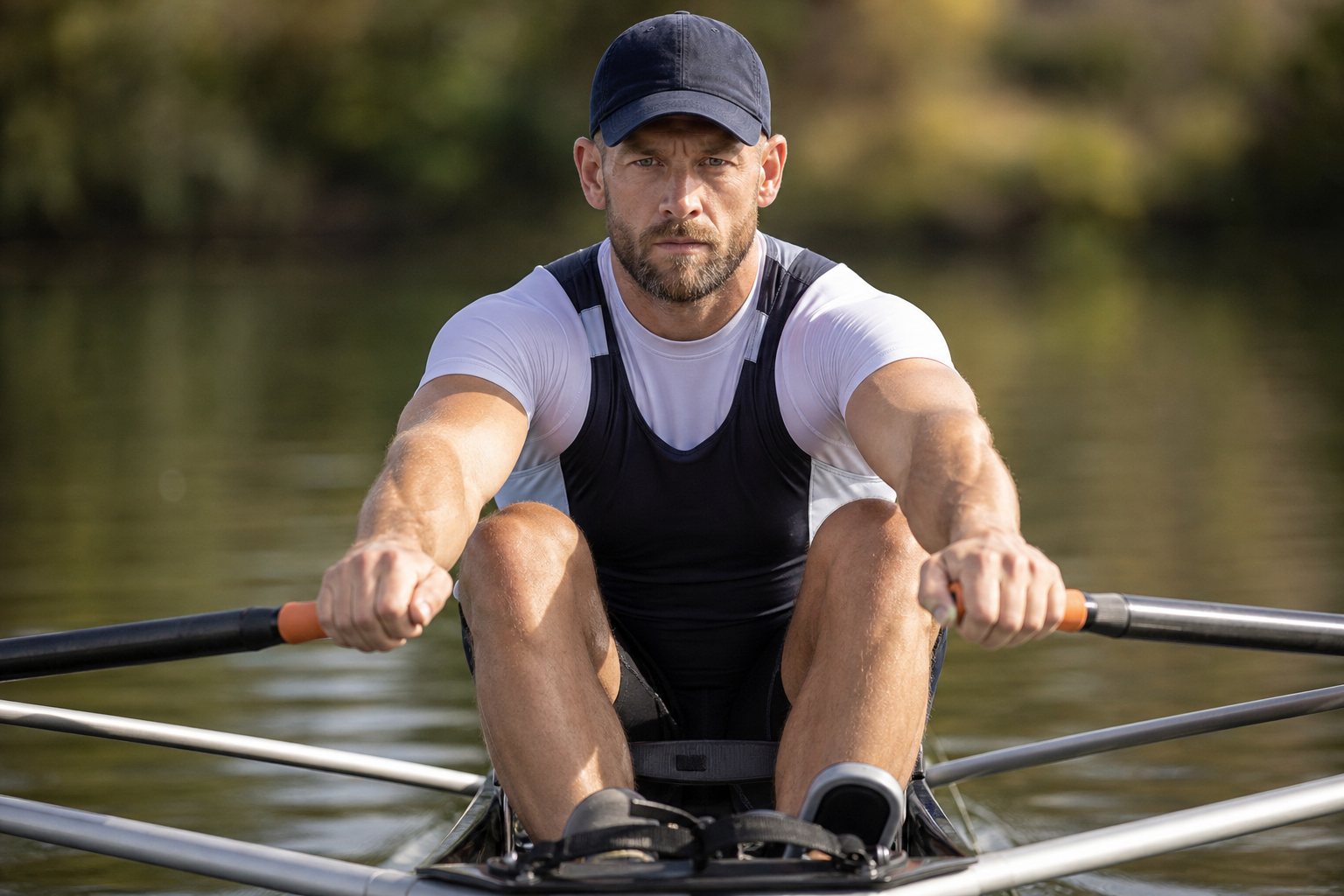
A cold, bright morning at the boathouse. A PR1 single sits on the dock with its pontoons out, the rower’s seat padded with foam they cut and re-cut over a winter, the strap adjusted twice because it rubbed a sore spot last week. None of that is glamorous, but it is what Para rowing injury prevention mostly looks like: lowering the chance of harm with a good set-up, a gradual build, a safety plan for the water and the weather, and early attention to small problems. It lowers risk; it cannot remove it.
Quick answer: The best-supported steps are a boat, seat and strapping fitted to your body and your class, quick-release footplates or straps, a swim test and a life-jacket plan, a gradual build in rowing volume, and heat and cold plans, with extra attention to skin and temperature if you have a spinal cord injury. Evidence specific to Para rowing is thin, so most advice is general practice. See a sports medicine doctor, physical therapist or athletic trainer for pain that lingers, any new numbness, or skin that will not settle.
This page is about lowering risk. What the injuries look like, and what to do about them, is on Para rowing injuries. For the sport overview start at the Para rowing hub.
Warm-up
We did not find a published warm-up programme for Para rowing, in the way FIFA 11+ exists for football. General coaching practice is 5 to 10 minutes of easy rowing or ergometer work, then mobility and activation for the shoulders, back and whatever muscles your class uses, then a few build-up strokes at race pace before hard work. If you have a spinal cord injury, add the routine your medical team gives you for blood pressure, temperature and skin checks.
Fit the boat to the rower
In Para rowing the set-up is itself a prevention tool. A 2023 USRowing article by PR1 rower Andrew Mangan describes how the standard seat, a flat base with two aluminium back pipes and canvas, made him carry the boat’s weight through his low and mid back and caused repeated back injuries and spinal bruising. Foam wedges that tilted his pelvis forward and extra padding on the backrest, he reports, made the seat pain free. It is one athlete’s account, not official guidance, but it shows why seat height, angle, padding and strapping should be adjusted with a coach, and why USRowing and the USOPC are studying seat position and padding. Other nations, such as Great Britain, use custom-moulded seats for PR1 and PR2.
Strapping is also a safety item. Concept2 notes that strapping gives stability, not restraint, and must allow a quick release and safe exit. USRowing’s safety guidelines add that being able to remove the feet quickly is critical if a boat flips, and that each rower is responsible for checking footplates, rigging nuts and the slide before launching.
Technique and load
Technique specific to your class is best taught by a coach who has worked with it. A 2025 study found trunk swing affects performance differently across PR1, PR2 and NE rowers, so a technique cue that is right in one class may be wrong in another. For load, no source gives a safe weekly increase for Para rowers. General practice is to raise rowing time and intensity gradually, keep at least one rest day, and treat pain that builds over a week as a signal to ease off. The AAOS describes overuse injuries as those that build when an activity is repeated so often that the body lacks time to heal.
Strength and conditioning
A 2013 report in the British Journal of Sports Medicine from physicians with ten years in adaptive rowing said the sport has inherent injury and health risks, especially in the thorax, shoulders and low back, and called for long-term follow-up to develop prevention strategies. Strength work for the back, trunk and shoulders is a common response; it is general practice here, not a Para-rowing-proven protocol. See training for how it fits into a week.
Skin, hands and pressure
Sitting still on a fixed seat can load the skin. A 2026 scoping review in the Australian Occupational Therapy Journal looked at pressure injury prevention among athletes with mobility impairments in disability sport, which shows how recognised the issue is; we could not read its findings, so check seat cushioning, skin checks and pressure relief with your medical team. For hands, World Rowing’s blister advice is to keep a loose grip, keep handles clean, build time gradually, and watch for infection.
Heat, cold and water
USRowing’s guidelines are the baseline most programs use. For heat, plan effort to the heat and humidity, avoid mid-day rowing where possible, and drink before leaving the dock and often on the water. For cold, water below 80 degrees F can be dangerous and below 50 degrees F very dangerous, and a launch should stay within 100 yards of all boats when the air is below 40 degrees F or the water below 50 degrees F. Do not row in an electrical storm or high winds.
Heat needs extra care with some impairments. A 2020 review of Paralympic athletes says reduced thermoregulation raises heat strain and recommends cooling and heat acclimation for vulnerable athletes; a 2015 review explains that people with spinal cord injury lose sweating and blood-vessel control below the lesion, and that higher lesions carry more risk. A 2024 study of 15 elite athletes with spinal cord injury found sweat responses were impaired and several were already dehydrated before exercise. Autonomic dysreflexia, a sudden dangerous rise in blood pressure possible with an injury at or above T6, is a medical emergency per a 2022 review; know your own warning signs and plan.
Life jackets and water safety
USRowing asks programs to run a swim test, require non-swimmers to wear a life jacket in the boat at all times, and keep launches ready. The US Coast Guard says inflatable life jackets are not recommended for under-16s or non-swimmers. If a life jacket must fit over strapping or a seat back, test it on land first, with your coach.
What prevention cannot do
Prevention lowers risk without removing it. A capsize, a collision or a sudden illness can still happen, and a well-padded seat will not stop an overuse problem if the training load jumps. For youth rowers we did not find Para-specific guidance, so follow your program’s rules and a clinician’s advice.
When to see a professional
See a sports medicine doctor, physical therapist or athletic trainer for pain that lasts more than a few days, pain at night or at rest, new numbness or weakness, skin that is red and does not fade, or a break in the skin. For a head injury, the CDC’s HEADS UP rule is to recognise the signs, remove the athlete from activity, and let a healthcare provider decide; seek emergency care for danger signs.
Para rowing injury prevention FAQs
What is the biggest safety step in Para rowing?
Programs that follow USRowing guidelines start with a swim test, a life-jacket plan, and the ability to release the feet quickly if the boat flips. Concept2 adds that strapping must allow a quick release and safe exit.
Can seat padding prevent injury?
It can help comfort and posture. Mangan’s account of a re-padded PR1 seat is one athlete’s experience, not proof, so adjust the seat with a coach.
Do I need to warm up differently with a spinal cord injury?
There is no published Para rowing warm-up. Follow the routine your medical team gives you for temperature, blood pressure and skin, then do your usual build-up.
How hot is too hot to row?
No single number fits every athlete. USRowing says to plan effort to heat and humidity and avoid mid-day rowing; a 2020 review recommends cooling and acclimation for heat-vulnerable Paralympic athletes.
Does Para rowing cause a lot of injuries?
We found no Para-rowing injury rates. The 2013 BJSM report named the thorax, shoulders and low back as inherent risks, and the 2023 scoping review found limited research.
Sources
- USRowing Safety Guidelines (Dec 2022)
- USRowing: Andrew Mangan, rigging and seat dynamics of a PR1 rower
- BJSM 2013: Complete inclusion of adaptive rowing only 1000 m ahead (PMID 23918442)
- Healthcare 2023: scoping review of Para-rowing (PMID 36981506)
- Front Sports Act Living 2025: trunk swing (PMID 40822737)
- Temperature 2020: heat-related issues for Paralympic athletes (PMID 32166104)
- Sports Medicine 2015: cooling athletes with a spinal cord injury (PMID 25119157)
- Sweat in elite athletes with SCI, 2024 (PMID 38535744)
- Autonomic dysreflexia after SCI, 2022 (PMID 36120615)
- Australian Occupational Therapy Journal 2026: pressure injury in disability sport, scoping review
- AAOS OrthoInfo: overuse injuries
- World Rowing: the blister dilemma
- US Coast Guard: how to choose the right life jacket
- Concept2 Australia: adaptive and Para rowing
- CDC HEADS UP: respond to a concussion
General information for education only, not medical advice, and not a substitute for care from a sports medicine doctor, physical therapist, athletic trainer or your classification and coaching team. See how we write and check our pages in our editorial policy.