This article contains affiliate links: if you buy through them we may earn a commission, at no extra cost to you. Read our affiliate disclosure.
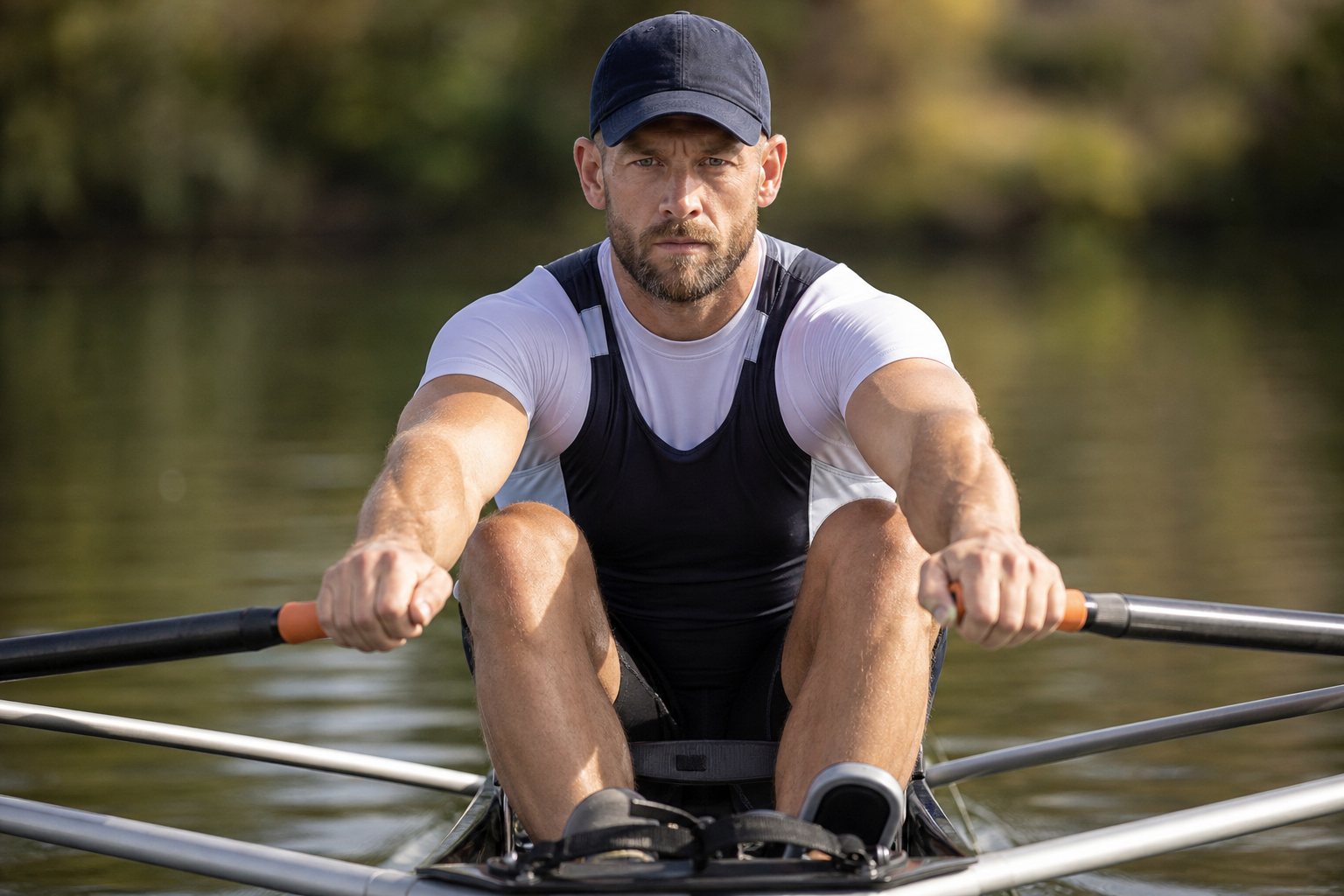
Vaires-sur-Marne, on the eastern edge of Paris, at the 2024 Paralympics: Lauren Rowles and Gregg Stevenson of Great Britain crossed the line first in the PR2 mixed double sculls. Rowles had already won two Paralympic titles; this made her the first rower to win three in a row. Stevenson, a former Royal Engineers commando who lost both legs above the knee in Afghanistan in 2009, was making his Games debut at 39. Para rowing (formerly called adaptive rowing) is rowing and sculling for athletes with a physical or vision impairment, in the same boats and over the same 2,000 m course as Olympic rowing, with adaptations for safety and for each athlete’s body.
Para Rowing guides: what do you need?
New to para rowing? Start with the first card. Everything here is general education, not medical advice.
History & Origins of Para Rowing
Para rowing, first called adaptive rowing, was created by World Rowing and uses the same regattas and the same boats as Olympic rowing, with safety and body adaptations. It is a young Paralympic sport: it first raced at the World Rowing Championships in Seville in 2002, joined the Paralympic programme in 2005 and made its Games debut at Beijing 2008 (World Rowing). Races were 1,000 m until 2017, when the distance changed to 2,000 m for all events, so Tokyo 2020 was the first Games raced over the Olympic distance. Its doubles and fours are mixed-gender, which the Olympic programme does not have (Paralympic.org). Paris 2024 added a new event, the PR3 mixed double sculls, which Australia won.
- 2002: Para rowing first races at the World Rowing Championships in Seville.
- 2005: It is added to the Paralympic programme.
- 2008: Paralympic debut at Beijing.
- 2016: Rio has 26 countries racing for 12 medals in four boat classes; Great Britain wins the most medals.
- 2017: New events are added and the distance changes from 1,000 m to 2,000 m.
- 2024: Paris adds the PR3 mixed double sculls; Jed Altschwager and Nikki Ayers of Australia become its first Paralympic champions (Paralympic.org).
Official results and records
We list the official pages rather than a results table, so you always see the latest finals and best times.
- World Rowing: results, World Cups and World Championships
- Paralympic.org: Para rowing
- Paralympic.org: Paris 2024 PR3 mixed double sculls feature
Notable Athletes
Para-athletes from different classes and eras. This is not a ranking.
- Lauren Rowles (GBR): PR2 mixed double sculls champion at Rio, Tokyo and Paris 2024, the first rower to win three consecutive Paralympic titles (Yahoo Sports).
- Gregg Stevenson (GBR): a former Royal Engineers commando who lost both legs above the knee in Afghanistan in 2009; won Paralympic gold in his Games debut at 39 (same source).
- Jed Altschwager and Nikki Ayers (AUS): first Paralympic champions in the PR3 mixed double sculls, Paris 2024; their 2023 world title was Altschwager’s first (Paralympic.org).
- Roman Polianskyi (UKR): men’s single sculls World Best Time of 9:12.99 at the 2019 World Championships, as listed by Paralympic.org before Tokyo 2020 (check World Rowing for the current best time).
- Birgit Skarstein (NOR): women’s single sculls World Best Time of 10:13.63 at the 2018 Worlds, same source and same caution.
How we keep this current: we re-check facts after each major championship and update this page. Spot an error? See our editorial policy.
This page covers how Para rowing works, the three sport classes (PR1, PR2 and PR3), how to start and be classified, the Paralympic picture, and the health and safety points that are specific to rowing with an impairment. For the standard sport, see our rowing guide.
Para rowing at a glance
| What it is | Rowing and sculling for athletes with eligible physical impairments or vision impairment, in adapted boats where needed. |
|---|---|
| How it is won | A lane race over 2,000 m: first boat across the line wins. Races have been 2,000 m since Tokyo 2020 (the change was adopted in 2017); the 2008, 2012 and 2016 regattas were 1,000 m. |
| Classes and boats | PR1 (single sculls), PR2 (mixed double sculls) and PR3 (mixed double sculls and mixed coxed four), according to how much of the legs, trunk and arms the athlete can use. |
| Where | Flat water: lakes, rivers and rowing courses, plus indoor rowing machines for training. |
| Governing body | World Rowing (international); USRowing in the US, which supports Para pathways and adaptive programs. |
| Paralympic status | Paralympic sport since Beijing 2008. Paris 2024 had five medal events; the IPC’s LA28 programme (announced 3 June 2025) lists five Para rowing events (one men’s, one women’s, three mixed) and 104 athlete places. |
How Para rowing works
Sculls are boats where each rower holds two oars; sweep boats have one oar each. Para rowing uses the same boats as Olympic rowing with safety modifications. What a spectator notices first is the seat. Paralympic.org explains that in the singles the rower is strapped into a seat that does not slide, and in the doubles the seat is also fixed, but the rower can use the torso more. Single boats must have flotation buoys or pontoons on both sides for balance. Only the PR3 crews, who can use their legs, row with a sliding seat.
The three classes
- PR1: athletes who row mainly with the arms and shoulders and use strapping around the midsection for support. USRowing’s examples include ataxia, athetosis or hypertonia affecting both legs and the trunk, and loss of muscle strength equivalent to a complete spinal cord injury at T12. PR1 races in single sculls, men’s and women’s.
- PR2: athletes with working arms and trunk but who cannot use their legs to drive a sliding seat, such as a double amputation around the knee or significantly reduced leg strength or knee range. PR2 races as a mixed (one woman, one man) double scull.
- PR3: athletes who can use the legs, trunk and arms, including the sliding seat, with a physical impairment (for example loss of at least three fingers on one hand, or a foot amputation at the tarsometatarsal level) or a vision impairment. PR3 races in the mixed double sculls and the mixed coxed four.
Athletes who do not meet the minimum for Para eligibility are called Not Eligible (NE) by USRowing, but they can still row as adaptive athletes in non-Para events. At Paris 2024 the five medal events were PR1 men’s single sculls, PR1 women’s single sculls, PR2 mixed double sculls, PR3 mixed double sculls and PR3 mixed coxed four. Great Britain won gold in three of them, and Australia’s Jed Altschwager and Nikki Ayers became the first holders of the PR3 mixed double sculls Paralympic title.
Who rows Para, and at what level
Beginners and clubs. Most Para rowers start at a community or club program that lends adaptive equipment. USRowing says more than 60 USRowing clubs support adaptive rowing in the US and lists the programs on its site. Classification is not needed to row for fun or to race adaptive events at many regattas.
Competitive and national. To race in Para events and progress along the Para pathway, athletes need classification; USRowing publishes a national classification process and a list of classified athletes. Coaches then move athletes through the pipeline toward the US Para Rowing Team, or athletes race for their clubs regionally and nationally. Para rowers also race alongside able-bodied athletes at some World Rowing Cups and the World Rowing Championships.
Elite and Paralympic. Para rowing raced for the first time at the 2002 World Rowing Championships in Seville, joined the Paralympic programme in 2005 and made its debut at Beijing 2008. Rio 2016 had 96 rowers in 48 boats from 26 countries. For the current Games, check the official programme: the IPC’s LA28 table lists five Para rowing events and 104 athlete places, but qualification details change between Games.
We did not find a single US school or college structure for Para rowing to report. One case study mentioned college championships beginning to add events for athletes with disabilities, but we could not confirm it from a current source.
Physical demands
A 2,000 m race lasts several minutes of near-maximal effort, so Para rowing draws heavily on both the aerobic and anaerobic energy systems, much like the standard sport. What changes between classes is where the power comes from. PR1 rowers drive through the shoulders and arms while the trunk is supported by straps, PR2 rowers add the trunk swing, and PR3 rowers use the legs as well. A 2025 study in Frontiers in Sports and Active Living looked at the contribution of trunk swing to performance in fixed-seat rowing, a reminder that technique in these classes is its own specialty. Training should be built for the athlete’s class: a coach experienced in Para rowing is invaluable.
Health and safety for Para rowing
This is general information, not medical advice. For anything specific to your body or your impairment, see a sports medicine doctor, physical therapist or athletic trainer who works with Para athletes.
What the research says
Para rowing has not been studied as much as many sports. A 2023 scoping review in Healthcare found no systematic appraisal of the scholarly evidence before it and called for rigorous research. Paris 2024 surveillance in the British Journal of Sports Medicine recorded 535 injuries among 4,450 Paralympic athletes over 14 days (8.6 per 1,000 athlete days), with the highest rates in taekwondo, 5-a-side football and sitting volleyball. We did not find rowing-specific injury numbers from that study, and we will not invent any. Rowing’s general injury patterns, such as back, rib and overuse problems, are covered on our rowing injuries page, and they may not apply to every class.
Water safety
USRowing’s safety guidelines (December 2022) set the baseline for every program: a swim test (floating or treading water for 10 minutes and putting on a life jacket while floating), a life jacket at all times for non-swimmers, no minors out unsupervised without a safety launch, and staying with the boat after a capsize. Water below 80°F is potentially dangerous and below 50°F very dangerous, and the guidelines call for a launch within 100 yards when the air is below 40°F or the water below 50°F. Pontoons add stability to single boats, but they do not remove the need for a swim test, a life jacket if you need one, and a plan.
Ask your program how the footplates and straps release, and rehearse what happens on a capsize with your coach before you need it. That is practical safety advice, not a guarantee, and every boat setup is different.
Heat, the sun and spinal cord injury
USRowing suggests avoiding midday rowing in the heat, drinking before you leave the dock, taking your own bottle in the boat, and wearing sunscreen and a hat or visor. Sweating can also work differently after a spinal cord injury: an exploratory study of elite athletes with spinal cord injury found that sweat and thermal responses are impaired depending on the lesion. Athletes with an injury at or above T6 can also have autonomic dysreflexia, a potentially life-threatening sudden rise in blood pressure, and the IPC bans athletes from deliberately inducing it. Learn your own warning signs and emergency plan with your medical team.
Head injuries
Collisions and capsizes are uncommon but possible. The CDC’s HEADS UP rule is the same everywhere: recognize the signs, remove the athlete from activity, and let a healthcare provider decide when to return. Call 911 for danger signs such as repeated vomiting, a seizure, or a headache that gets worse.
Training, recovery and nutrition pointers
Most Para rowers train on the water and on an indoor rowing machine, often using the same ergometer standard rowers use with adaptations from the program’s coach. Keep weekly increases gradual, warm up before hard pieces, and include rest days. See rowing training, rowing recovery and rowing nutrition and supplements for the base, adjusted to your class, and the recovery tools guide for gear. As a Paralympic sport, Para rowing is subject to anti-doping rules, so check any supplement with your federation first.
Gear for Para rowing
The boat, the seat, the footplates and the strapping are fitted by your program and set by the classification rules; they are not a shopping-cart item, and the right setup depends on your class. What you can buy yourself is simple:
- Indoor rower: the Concept2 RowErg is the machine used for rankings and indoor championships; ask your coach about adaptations for your class.
- Heart rate strap: the Polar H10 pairs with the Concept2 monitor. Heart rate can respond differently after a spinal cord injury, so ask your coach how to read it.
- Dock shoes: easy slip-on slides for the dock and after the erg.
- Life jacket: required for non-swimmers under USRowing guidelines; your program will tell you which type it accepts.

Concept2 RowErg (PM5)
- PM5 monitor included
- 500 lb max user (maker)
- Splits in two for storage
$990.00 at Amazon, as of Nov 17, 2026 01:07 UTC
Check price on Amazon
Polar H10 Heart Rate Sensor
- Bluetooth and ANT+
- Pairs with the Concept2 PM5
- Chest strap, M-XXL
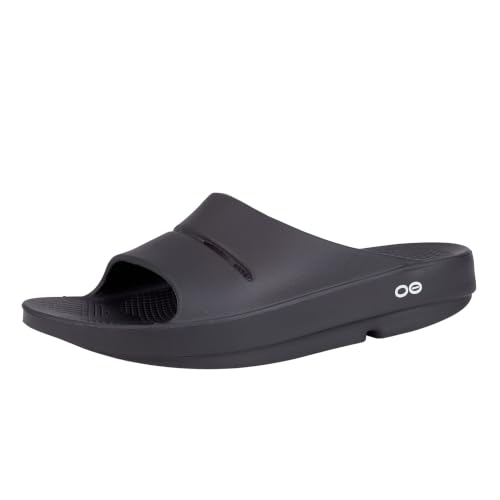
OOFOS OOahh Slide
- OOfoam slide
- APMA Seal of Acceptance
- Machine washable
$59.95 at Amazon, as of Nov 17, 2026 01:07 UTC
Check price on AmazonRelated sports and disciplines
Parent sport: rowing, with its gear and rules pages. Other Paralympic sports on this site: Para canoe (another flat-water sport), Para cycling, Para triathlon, Para swimming and Para powerlifting.
Para rowing FAQs
Is Para rowing in the Paralympics?
Yes, since Beijing 2008. Paris 2024 had five medal events, and the IPC’s LA28 programme lists five. Check the official programme for the current Games.
What do PR1, PR2 and PR3 mean?
They are sport classes by how much of the body the rower can use. PR1 rows mainly with arms and shoulders, PR2 uses arms and trunk but not a sliding seat, and PR3 can use legs, trunk and arms, and includes rowers with a vision impairment.
How long is a Para rowing race?
2,000 m, the same as Olympic rowing. Para races were 1,000 m at the 2008, 2012 and 2016 Games and moved to 2,000 m at Tokyo 2020.
Can I row if I am not eligible for Para classification?
Yes. USRowing says athletes who do not meet the Para minimum are classed Not Eligible but can still row as adaptive athletes in non-Para events.
Do I need to be able to swim?
Programs following USRowing’s guidelines run a swim test, and non-swimmers wear a life jacket at all times on the water. Tell your coach about any concern before the first session.
Sources
- Paralympic.org: 10 things to know about Para rowing
- IPC: LA28 Paralympic medal event programme and athlete quotas
- World Rowing: What is Para-rowing
- USRowing: Para classification
- USRowing: Para and adaptive rowing
- USRowing Safety Guidelines (December 2022)
- British Rowing: Paris 2024 Paralympic rowing regatta
- Yahoo Sports: Lauren Rowles makes history
- British Journal of Sports Medicine: Injury and illness at the Paris 2024 Paralympic Games
- Scoping review of Para-rowing (Healthcare, 2023)
- How elite athletes with a spinal cord injury sweat during exercise (PubMed)
- Autonomic dysreflexia following spinal cord injury (PubMed)
- CDC HEADS UP: respond to a concussion
Keep exploring: rowing injuries, best wearables for rowing, the heart rate monitor guide, the recovery shoes guide and every other sport on our sports hub.