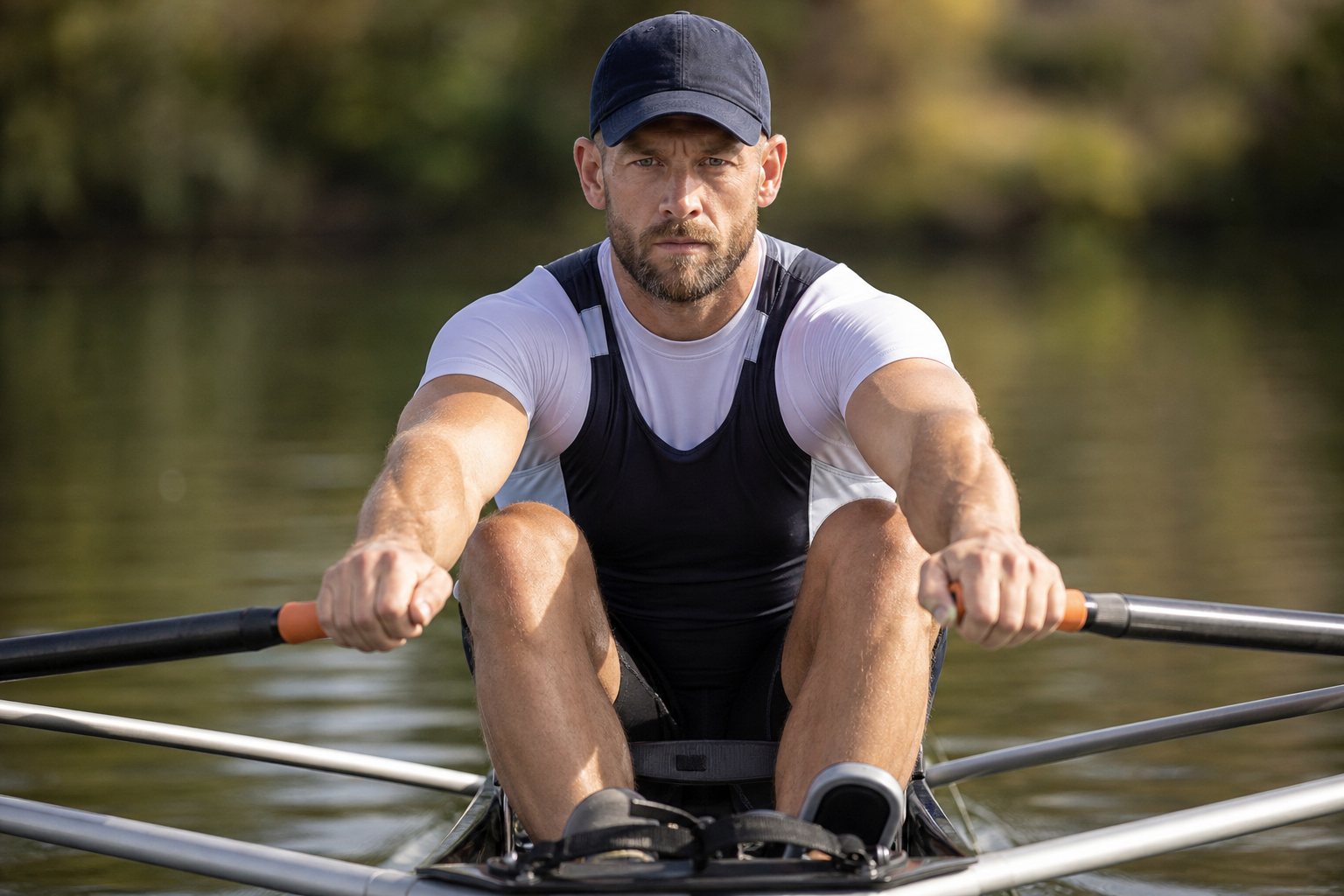
The last piece of the Saturday long row is done, the boat is back on its rack, and the rower is still sitting on the dock with a cup of water and a bag of snacks, arms heavy, waiting for the shoulders to feel like their own again. What happens in the next 24 hours matters as much as the session itself. Para rowing recovery is everything an athlete does between hard sessions so training can be absorbed: sleep, food and fluid, easy movement, skin and temperature care, and planned rest.
Quick answer: Sleep and planned rest days are the base of recovery; no gadget replaces them. Cold water, massage and easy active recovery can ease short-term soreness in studies, but the benefit fades by two to three days and most research is not on Para athletes. Soreness that eases over a day or two is normal; pain that builds, sharpens, or comes with numbness or skin changes is not. See a sports medicine doctor, physical therapist or athletic trainer about the second kind.
Training load is on training, fuel on nutrition and athlete health, and injury detail on injuries. General information, not medical advice.
Sleep
Sleep is the recovery tool with the strongest logic and the weakest habits. A 2025 study of 98 Paralympic athletes at Tokyo 2020 in the Journal of Sport Rehabilitation found low knowledge about sleep hygiene in both medalists and non-medalists, frequent habits that harm sleep, and only 26 percent who considered sleep hygiene practices necessary. Coaching staff encouraged sleep hygiene more often for medalists (29 percent) than for non-medalists (13 percent). A 2026 study of 24 Brazilian Para powerlifters found that stable sleep duration was the one variable that consistently separated athletes who matched or improved performance from those who did not, though it shows association, not cause.
Common-sense steps, which are general practice rather than Para-rowing findings: keep a regular bedtime, keep the room cool and dark, finish caffeine early, and plan travel and early boat calls so sleep is not cut. A 2026 meta-analysis found caffeine after exercise was linked to poorer sleep recovery in four studies (about g = 0.75), so watch late-day doses. Some impairments affect sleep (pain, spasms, bladder routines); raise that with your medical team.
Load management and rest days
Load management means matching hard training to what the body has recovered from. The AAOS describes overuse injuries as those that build when the same activity is repeated so often that tissue cannot heal between sessions. General coaching practice: follow a hard day with an easy day, keep at least one full rest day a week, and cut back for a few days when sleep, mood or shoulders say so. Para rowers who use their arms and shoulders for most of the drive, in PR1 and PR2, may want to share that load with non-rowing shoulder-friendly cross-training, which is general advice not found in a Para-specific source.
What the evidence says about recovery methods
A 2026 systematic review and network meta-analysis in Healthcare compared recovery strategies after strenuous exercise. In the first 24 hours, active recovery and cold-water immersion showed the largest effects on jump recovery (with wide confidence intervals), cold-water immersion and massage reduced soreness immediately and at 24 hours, and by 48 to 72 hours most effects had faded. So these tools may help you feel better sooner, and they do not replace sleep, food and rest. Evidence for Para athletes is thin, so be careful with any method that changes temperature or pressure: with spinal cord injury, cold or heat on areas you cannot feel can burn or injure the skin, and cooling should be planned with your medical team.
- Active recovery (easy rowing or cycling, a gentle arm ergometer): low risk, mild evidence.
- Massage and foam rolling: may ease soreness short term; avoid pressing hard on numb or insensate areas.
- Cold-water immersion: short-term soreness benefit in studies; check safety with your medical team, as cold and sensation matter.
- Compression and gadgets: we did not find Para-rowing evidence; treat as comfort tools.
Heat and cooling after hard sessions
Cooling is a recovery topic as well as a safety one. A 2015 review of cooling athletes with spinal cord injury said people with high-level lesions have a greater heat-illness risk, and that site-specific cooling suits them better than whole-body water immersion because of practical difficulties. A 2022 Paralympic expert group adapted the IOC guidance on exertional heat stroke: early recognition, rapid on-site cooling and advanced medical care apply to Para athletes too, with adjustments for physiology and for moving a collapsed athlete. Rowers should have a cool, shaded place, fluids and a plan for who helps after the race.
Skin, positioning and mobility
After a long session on a fixed seat, check skin where you sit and where straps sit, especially if sensation is reduced, and take pressure off. A 2026 scoping review in the Australian Occupational Therapy Journal studied pressure injury in disability sport; the findings were not available to us, so ask your medical team for a routine. For mobility, gentle stretching of the shoulders, chest and back after rowing is common practice, but evidence that stretching speeds recovery is weak. Mobility work is best for comfort and posture in the boat; avoid forcing ranges at joints with spasticity or contracture without guidance from a clinician.
Soreness versus injury
Normal post-training soreness is a dull, widespread ache in the muscles you used that eases within a day or two as you warm up. Warning signs: sharp or localised pain, pain at rest or at night, swelling, numbness or weakness, skin that stays red after pressure is off, or spasms that change. These are general guides, not a diagnosis. The injuries page explains what the research says about rowing injuries.
Para rowing recovery FAQs
How much sleep does a Para rower need?
No Para-rowing figure exists. The research shows most Paralympic athletes have poor sleep habits; aim for a consistent schedule and ask your coach or doctor about your own needs.
Does an ice bath help recovery?
A 2026 network meta-analysis found cold-water immersion reduced soreness for about a day, with effects fading by 48 to 72 hours. Check safety with your medical team if you have a spinal cord injury or reduced sensation.
Are rest days necessary?
General coaching practice and the AAOS overuse guidance say yes: tissue needs time to heal between repeated efforts. Take at least one full day off each week.
Can I use a foam roller or massage gun?
They may ease soreness in the short term. Avoid pressing hard on areas without sensation, and stop if something hurts sharply.
How do I know if soreness is an injury?
Soreness that eases within a day or two is typical. Sharp, localised or night pain, numbness, weakness or skin changes should be looked at by a professional.
Sources
- Journal of Sport Rehabilitation 2025: sleep knowledge in Paralympic athletes (PMID 39527949)
- IJERPH 2026: injuries, sleep, nutrition, mood and performance in Para powerlifting (PMID 42074398)
- Frontiers in Physiology 2026: caffeine and post-exercise recovery (PMID 42823978)
- Healthcare 2026: recovery strategies network meta-analysis (PMID 42194413)
- Sports Medicine 2015: cooling athletes with a spinal cord injury (PMID 25119157)
- BJSM 2022: prehospital management of exertional heat stroke for Paralympic athletes (PMID 34620604)
- Temperature 2020: heat-related issues for Paralympic athletes (PMID 32166104)
- AAOS OrthoInfo: overuse injuries
- Australian Occupational Therapy Journal 2026: pressure injury in disability sport (scoping review)
General information for education only, not medical advice, and not a substitute for care from a sports medicine doctor, physical therapist, athletic trainer or your classification and coaching team. See how we write and check our pages in our editorial policy.