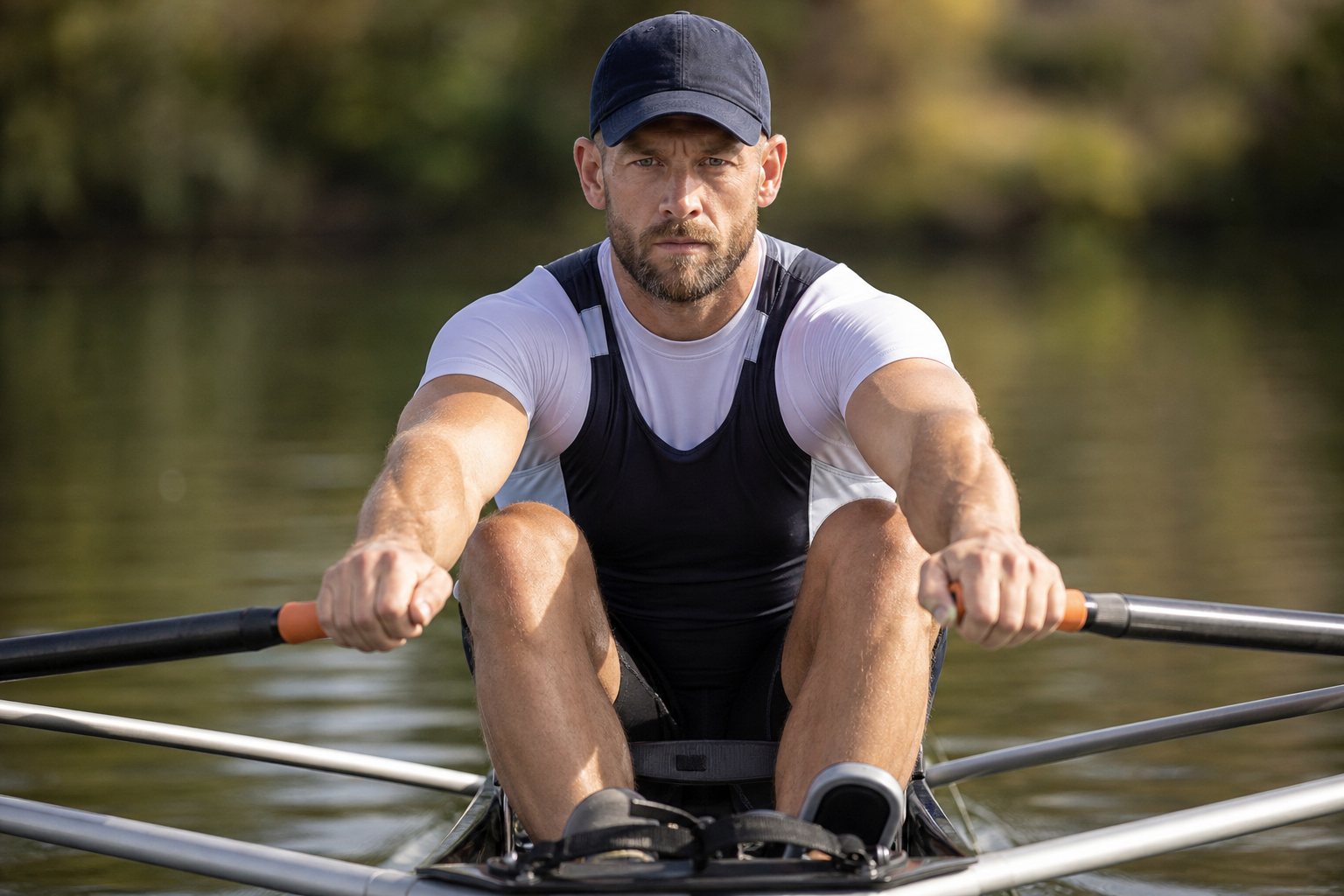
Two minutes before a Paralympic final, the boats sit in their lanes, the starter’s voice carries across the water, and every rower is doing something different: breathing slowly, running through the first ten strokes, or staring at the end of the course. At Paris 2024, World Rowing described a sell-out crowd at the PR1 women’s final, which is a lot of noise to row through. Mental training for Para rowing is the set of skills athletes use to focus, stay confident and manage pressure so their training shows up on race day. It is separate from mental health, which is covered below.
Quick answer: Mental skills for Para rowing are practical habits: a clear race plan, one or two focus cues per piece, imagery of your stroke and start, a repeatable pre-race routine, and a plan for what to do when things go wrong. They support good preparation; they do not guarantee results. Mental health problems such as anxiety, depression, disordered eating or burnout are health matters: see a qualified professional, and in the US call or text 988 in a crisis.
Race logistics and class rules are on rules and getting started, and pacing on the erg is on training. This page is general information, not medical advice.
What the research covers
Mental skills are one of the least studied parts of Para rowing. The 2023 scoping review of Para-rowing found 17 studies and noted that psychological aspects in para-rowers, other than those with visual impairment, were overlooked. A 2026 study of 111 Turkish Paralympic athletes in other sports measured imagery use and found no significant differences by type of disability or athletic achievement, which suggests these skills are available to athletes of all impairments, but it was a survey, not a test of results. The tips below are general sport-psychology practice applied to rowing, and we say so where there is no rowing-specific study.
Confidence and focus
Confidence in rowing comes mainly from proof: sessions completed, times logged, a plan rehearsed. Keep a training log or simple notes of pieces you were pleased with, and look at them before racing. For focus, general practice is a short cue for each phase of the stroke or race, such as “long catch” or “drive the legs” (for PR3) or “arms and trunk together” (for PR2), kept to one or two words. Pick cues with your coach, and practise them on the erg.
Motivation and goal setting
Long winter blocks test motivation. A common approach is to set three kinds of goals: outcome goals (a place or a time), performance goals (a split target or a technical standard) and process goals (the habits that get you there, such as completing every session). Process goals are the ones within your control on bad days. Write them down and review them with your coach every few weeks. Classification can also bring uncertainty about the sport class you will race in, so set goals you can reach in whichever class you are placed.
Imagery and pre-race routines
Imagery means rehearsing the race in your mind, with the feel of the oar handle, the sound of the start, and your cues at each 500 m. Imagery does not have to be visual: the 2015 German study of sound feedback in Para-rowing shows that hearing can be used in technique work for rowers with vision impairment. Build a pre-race routine of fixed steps: the order you warm up, the cues you use, a breathing pattern, and a final check of your straps and footplates. A routine gives you something to do when nerves arrive. General practice is to rehearse it before low-stakes races so it feels automatic.
Pressure, pacing and the first 500 m
Concept2 warns that it is very easy to go out too hard in a 2,000 m piece, and advises splitting the race into four 500 m pieces and pacing each one. Nerves push in the same direction. A race plan that names your target split for each quarter, and what you will do if the other boats go out faster, turns the pressure into a decision you have already made. For crews, such as the PR3 coxed four, calls from the cox and trust between seats matter: practise race plans together, including who says what when things change.
Setbacks and decision-making
Races go wrong: a crab, a missed start, an illness before the regatta. A simple routine is to name what happened, decide what you can control for the next stroke, and refocus on a cue. After the race, review what worked and what to change with your coach rather than replaying the mistake alone. In mixed doubles and fours, agree in advance how you will make decisions in the boat, for example who calls a power push, as Paralympic.org’s description of “power 10” shows crews planning bursts of rate to gain ground.
Competition preparation
Plan your travel, boat and seat set-up, classification paperwork and warm-up time well ahead so your mind is free for racing. Know where the course, docks and rules differ at a regatta. General coaching practice is to rehearse the race-day timeline in training. See rules and getting started for how events and classes are organised.
Mental health is not the same as mental performance
Mental skills sharpen performance. Anxiety that will not settle, low mood, disordered eating, sleep problems or burnout are health matters that need a qualified professional. The IOC’s 2019 consensus statement says mental health symptoms and disorders are common in elite athletes, can impair performance, and raise the risk of physical injury and slower recovery. Paralympic athletes are not exempt: in a Polish study of 137 Paralympic athletes screened with the IOC’s SMHAT-1 before Paris 2024, 61 percent scored above the triage threshold for psychological distress, and after clinical interviews 18.3 percent were advised psychoeducation or a sport psychologist consultation and 7.3 percent were referred to a mental health specialist; the proportion did not differ significantly from Olympic athletes.
If you are struggling, talk to your doctor, a sport psychologist or a counsellor. In the US you can call or text 988 (the 988 Suicide and Crisis Lifeline, available 24/7) or use chat at 988lifeline.org if you are in crisis or worried about someone else. Outside the US, use your local emergency number or crisis line. For eating concerns, see nutrition and athlete health.
Para rowing mental training FAQs
Can mental training make me faster?
It can help you execute your plan under pressure, but nothing guarantees a result. Treat it as part of preparation alongside training, sleep and fuel.
How do I manage nerves before a race?
General practice is a fixed routine, slow breathing and a short list of cues. Rehearse it in low-stakes races so it works when it matters.
Is there Para-rowing-specific sport psychology research?
Very little. The 2023 scoping review said psychological aspects were overlooked in Para rowers other than those with vision impairment.
What if my anxiety feels out of control?
Treat it as a health matter and see a doctor or qualified mental health professional. In the US, call or text 988 in a crisis.
Does imagery work for athletes with disabilities?
A 2026 survey of 111 Paralympic athletes found imagery use did not differ significantly by disability type. It shows athletes use imagery, not that it improves results.
Sources
- Healthcare 2023: scoping review of Para-rowing (PMID 36981506)
- BMC Sports Sci Med Rehabil 2026: imagery in Paralympic athletes (PMID 41888877)
- IOC 2019 consensus statement: mental health in elite athletes (PMID 31097450)
- J Hum Kinet 2026: SMHAT-1 in Paralympic vs Olympic athletes (PMID 42211805)
- Journal of Sports Sciences 2015: acoustic feedback in Para-Rowing (PMID 25105858)
- Concept2: training for a 2K erg test
- Paralympic.org: 10 things to know about Para rowing
- World Rowing: five Paralympic finals in Paris (2024)
- 988 Suicide & Crisis Lifeline
General information for education only, not medical advice, and not a substitute for care from a sports medicine doctor, physical therapist, athletic trainer or your classification and coaching team. See how we write and check our pages in our editorial policy.