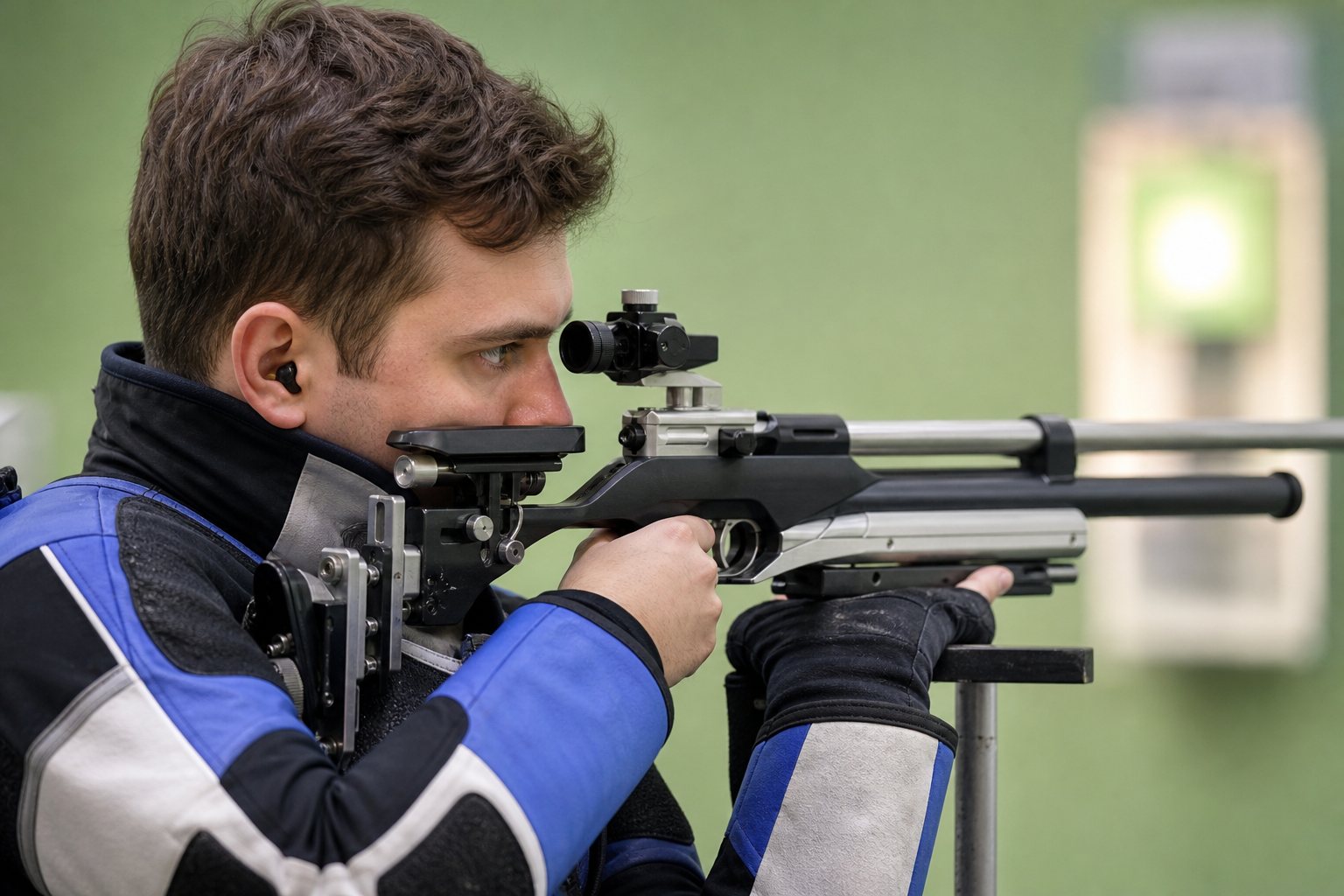
Forty minutes into a long session, the shooter in the wheelchair realises the hold feels worse and the lower back is tight, and the next ten shots are not going to be good ones. Para shooting injury prevention is the set of habits around a session that lower the chance of pain, overuse or hearing and lead problems, so you can keep shooting. Prevention cannot remove risk, and the evidence for Para shooters is thin; this page says plainly where advice is general practice. Injury detail is on the injuries page.
Quick answer: The best-supported steps are range safety rules (NSSF), hearing protection, lead hygiene if you shoot powder-fired or indoors often, and building breaks into long sessions because back pain is common in rifle athletes. Studies of Olympic-style shooting report low injury rates, but most data come from able-bodied athletes. See a sports medicine doctor, physical therapist or athletic trainer for pain that lasts, numbness, skin problems or any worry about your setup.
Warm up and take breaks
We found no published injury-prevention warm-up program tested in Para shooters. General coaching practice, not a study result: a few minutes of easy movement for the neck, shoulders, trunk and hands before you hold a position, then a calm first few shots. Because a 2025 survey in the International Journal of Sports Physical Therapy found 89% of 114 college rifle athletes had at least one episode of low back pain, with 24% of those missing at least a day of training or competition, build in short rests and position changes in long sessions. That survey was not of Para shooters.
Position, support and technique
A position that is comfortable and repeatable is the first prevention tool. The Aspetar Sports Medicine Journal notes that the core principles of injury prevention are the same for Para athletes as for others, with added complexity from impairment, sport and equipment, and recommends sport- and impairment-specific studies to guide it. For shooters that means: have your chair, stool, stand or sling checked by an instructor, and ask a physical therapist about support for the trunk and shoulders. Do not force a position the equipment rules allow you to change.
Gradual training load
We found no sourced numeric rule for how fast to increase shooting volume. General coaching practice: raise session length and shot counts gradually, add one change at a time, and treat lingering soreness in the back, shoulders or neck as a reason to cut back, not push through. Your training plan is the place to set volume.
Conditioning and strength
Many programs use trunk endurance, shoulder stability and aerobic fitness work to support long holds. Seated and wheelchair athletes should ask their clinician which exercises suit their impairment. The Aspetar article also flags long-term shoulder health in wheelchair athletes generally and calls for long-term surveillance; shooting-specific figures were not given.
Environment: noise, lead and long matches
- Noise. A published measurement review found peak sound levels of 140 to 175 dB in shooting, most between 150 and 165 dB, and a study of youth shooting setups found all 26 above the WHO 120 dB level. Air rifles and pistols are quieter, but small-bore and shotgun events are not. The CDC lists general hearing-loss information; wear hearing protection that your range requires or recommends.
- Lead. A 2017 review of 36 studies found blood lead above 10 micrograms per deciliter in some shooters in 31 of them, with the CDC and NIOSH reference at 5. Reviewers pointed to changing clothes after shooting and other behaviour changes. Ask range staff about ventilation and cleaning, wash hands before eating, and ask your doctor about testing if you shoot indoors often.
- Heat and long days. The Aspetar article notes briefly that athletes with spinal cord injury may have thermoregulatory impairment; it gives no specific prevention steps. Ask your clinician, drink water and use shade or cooling that the range allows.
Protective equipment and standards
The NSSF says every shooter should wear eye and ear protection, keep the muzzle in a safe direction, keep firearms unloaded when not in use, not rely on a gun’s safety, be sure of the target and what is beyond it, and use the correct ammunition. These rules come from a trade-and-safety organisation, not a clinical trial, and they are the baseline at any range. We do not link firearms, ammunition or weapon accessories on this site. Maker claims about padding, cushions or supports are not tested standards; ask your clinician before using any seating or support product.
Youth and what prevention cannot do
We found no Para shooting youth injury data, so we give none. Ask your coach and clinician about age-appropriate sessions. Prevention lowers risk but never to zero: injuries still happen to careful athletes, and the Olympic-shooting review (Harr and colleagues, 2021) found low injury rates but warned that surveillance focuses on acute injuries and may miss chronic ones.
When to see a professional
See a sports medicine doctor, physical therapist or athletic trainer if pain persists, you have numbness or tingling, skin breaks down where you sit or hold, hearing rings after a session, or you feel unwell. In an emergency, call your local emergency number.
Frequently asked questions
Is para shooting dangerous?
Injury rates reported for Olympic-style shooting are low (the 2021 systematic review by Harr and colleagues), but those studies mostly cover acute injuries in able-bodied athletes. Range safety rules matter every time.
Do I need hearing protection for air rifle?
Ask your range. Air events are quieter than powder-fired ones, but the NSSF lists eye and ear protection as a rule for all shooters, and many ranges require it.
Is lead a problem for para shooters?
It can be for people who shoot powder-fired ammunition often or indoors. The 2017 review found raised levels in many studies; ask range staff and your doctor.
How do I avoid back pain?
No method is guaranteed. A published survey found high rates in rifle athletes, so breaks, position checks, trunk conditioning and a clinician’s advice are sensible.
Are there injury-prevention programs made for para shooters?
We found none published. Seek individual advice from a clinician who knows your impairment.
Sources
- NSSF: rules of safe gun handling
- PubMed: lead exposure at firing ranges, a review (2017)
- PubMed: low back pain in college rifle athletes (2025)
- PubMed: injury prevalence and incidence in Olympic-style shooting, systematic review (2021)
- Aspetar Sports Medicine Journal: principles of injury prevention in the para athlete
- PubMed: noise exposure in shooting (peak 140-175 dB)
- PubMed: noise at youth shooting setups (2014)
- CDC: hearing loss
General information for education only, not medical advice. It does not replace care from a sports medicine doctor, physical therapist, athletic trainer or dietitian who knows you and your impairment. See how we work in our editorial policy.