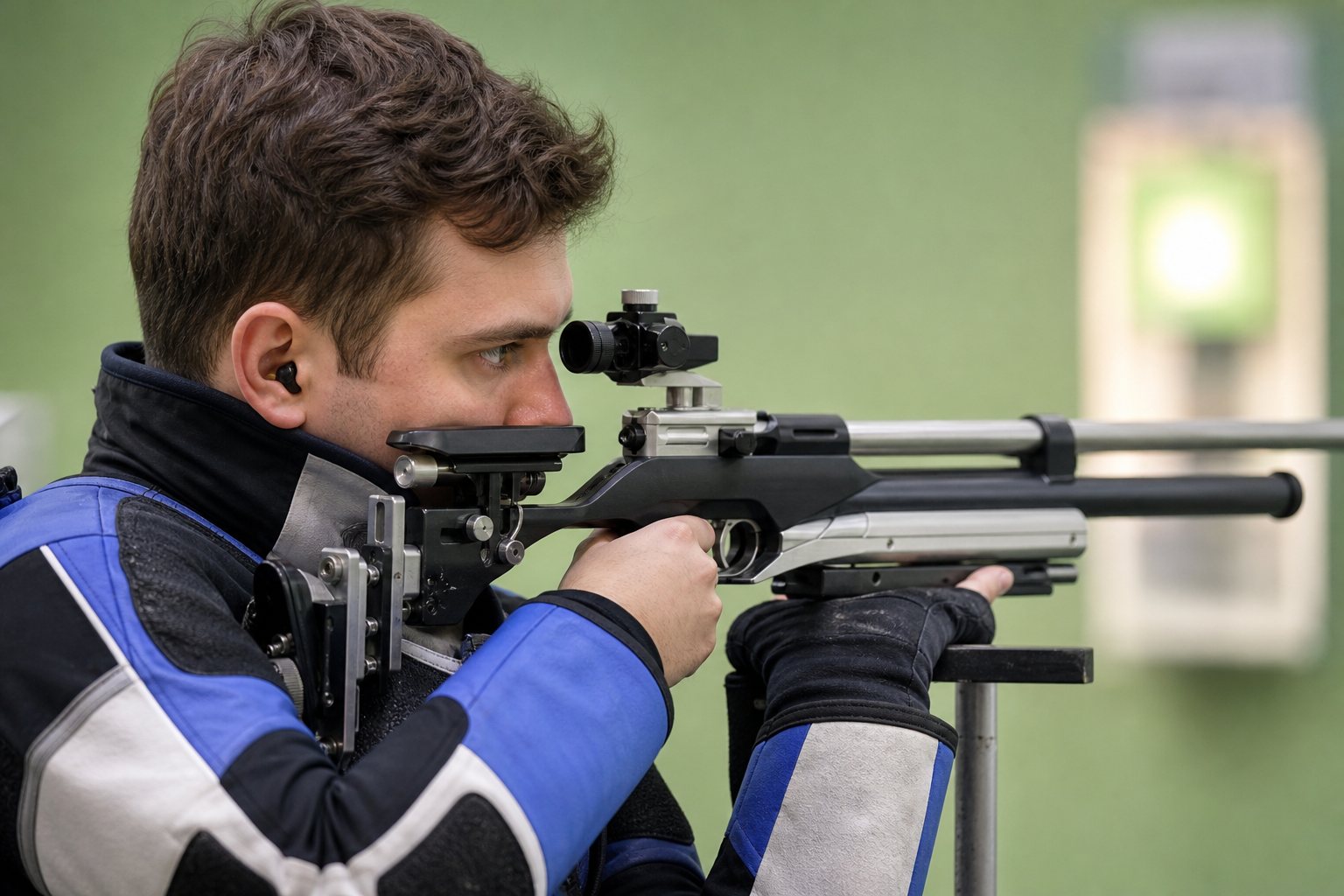
Forty-odd shots into a qualification round, the shooter’s hold is still quiet, but the clock and a stiff back are starting to speak. Para shooting training is mostly the work of staying precise for a long time: a stable position, a calm body and a mind that stays on one shot at a time. This page covers physical demands, a sensible weekly shape and how training changes across a season. It is general information; para shooters vary widely, so a coach who knows your class and your clinician should shape any plan. Start with the rules and getting started page if you are new.
Quick answer: Para shooting is a precision sport: most of the training is position, aiming, trigger and routine work, with off-range fitness for posture, trunk and shoulder endurance and general health. Evidence specific to Para shooters is thin, so most advice here comes from able-bodied shooting research and general coaching practice, which we label. Short, focused sessions with breaks usually serve better than one long, tiring one (general coaching practice). Ask a clinician before starting a strength program.
What the sport asks of the body
Shooting looks still, but the stillness is the skill. A 2021 systematic review in PLOS ONE (Spancken and colleagues) covered 14 studies of Olympic air-rifle and small-bore shooting with 268 subjects. It found that elite and national-level shooters could be told apart by rifle stability and body sway, but body sway did not predict shot scores among elite or national-level athletes, and heart rate generally did not correlate with shot score. The authors said the evidence was too limited for firm conclusions at the elite level or in small-bore. In plain words: a steady setup matters, yet no single body measure explains a score, so training should stay broad.
For Para athletes the picture is thinner still. A study titled “Stability in para-shooting: a multimodal approach” notes that postural control had been widely studied in able-bodied shooting but not in Paralympic athletes, and argues that each athlete’s impairment calls for an individual response. We have read its summary only; its results are reported per athlete and stability gains did not always match score gains. Treat that as a reason to track your own results, not a rule.
A sensible weekly shape
Nothing published sets a weekly template for Para shooters, so this is general coaching practice, not a prescription. Many coaches organise the week around a few principles:
- Range sessions (live or air) a few times a week, kept short enough that position quality does not fade. Stop or change position when form drops.
- Dry-fire or dry-hold practice where the range and your coach allow it, to rehearse position and trigger work with no shot. Follow range rules for safe handling at all times.
- Off-range conditioning two or three times a week: trunk and shoulder endurance, posture, and general aerobic fitness adapted to your impairment.
- Rest days and an easy day before matches.
Seated and wheelchair athletes should ask a physical therapist about trunk support, seat setup and skin checks during long sessions. Vision-impaired athletes work with their coach on the sound or tactile systems of their setup.
Strength and conditioning for a still sport
Strength here is spent on holding, not moving. A survey of 114 US college rifle athletes (Urbach and colleagues, 2025, International Journal of Sports Physical Therapy) found 89% had at least one episode of low back pain, which is one reason many programs build trunk endurance, shoulder stability and hip mobility. That survey was not of Para shooters. We also found a 2026 pilot randomized trial of unstable trunk core training in 10 m air pistol shooters, but we read only its title, so we draw no conclusion from it. See injury prevention for the safety side.
Practical principles from general coaching practice, not from a study:
- Use exercises your clinician says suit your impairment; a wheelchair user and a standing shooter need different programs.
- Build gradually: add one new element at a time.
- Train the muscles that hold your position for the length of a full match, not only for a few seconds.
- Add easy aerobic work for general health and recovery between ranges.
Periodisation basics
Periodisation means planning the year in phases. Typical shapes, again general coaching practice, are a base phase (technique, general fitness), a build phase (match-like sessions, timing and finals practice), a competition phase (fewer new changes, more rest) and a break after the season. World Shooting Para Sport runs World Cups and World Championships through the year, so build your plan around the events your national federation selects for. Keep a training log of scores, position notes and how you felt; it is the best Para-specific data you have.
Match-day readiness and simulation
Practising the finals format helps. Per Paralympic.org, finals shoot to decimal scores with eliminations, so practise a few shots under that pressure, including the wait between shots. Sleep, hydration and meals matter for steady performance, and our recovery page and nutrition page cover those. For the mental routine see mental training.
Frequently asked questions
How often should I practise?
There is no published weekly figure for Para shooters. Many coaches favour short, regular sessions over rare long ones; your coach and clinician can set a schedule that fits your class and energy.
Do I need to be strong to shoot well?
Strength is used for holding a position steadily, so endurance and a good setup count for more than power. The research we found says body sway alone did not predict scores at elite level.
Is dry-fire practice safe?
It can be when done under the rules of your range or club and with a coach, using safe handling at all times. Ask your instructor before trying it.
Is there special training for vision-impaired shooters?
Yes, SH-VI athletes use adapted aiming systems under WSPS technical specifications. Details belong to your coach and the rulebook; we have not covered them here.
Does cardio help a still sport?
General fitness supports recovery and steadier nerves in many athletes (general coaching view). The evidence we found for a direct link to score is limited.
Sources
- PLOS ONE 2021: factors that influence performance in Olympic air-rifle and small-bore shooting (systematic review)
- Stability in para-shooting: a multimodal approach (record)
- PubMed: low back pain in college rifle athletes (2025)
- PubMed: 2026 pilot trial of unstable trunk core training in 10 m air pistol (title only)
- Paralympic.org: Paris 2024 introduction to shooting Para sport
- World Shooting Para Sport: rules and regulations
General information for education only, not medical advice. It does not replace care from a sports medicine doctor, physical therapist, athletic trainer or dietitian who knows you and your impairment. See how we work in our editorial policy.