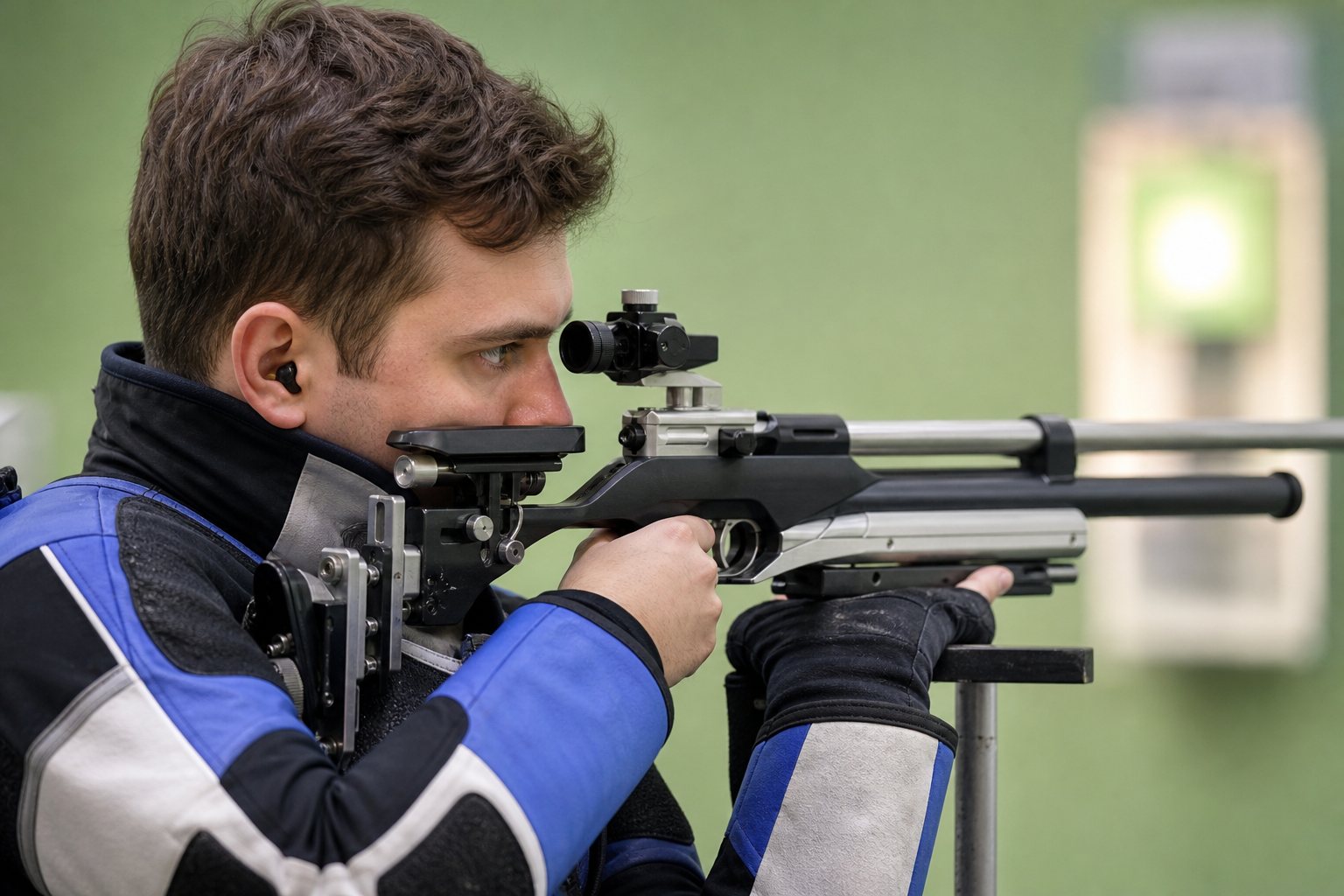
The seventh shot of the final is a 9.1 after six tens, and the scoreboard is visible to everyone. In the pause before the eighth shot, the shooter has about a minute to decide what to do with that number. Para shooting mental training is the set of skills that help you shoot your next shot, not the last one: a repeatable routine, steady attention, sensible goals and a calm response to pressure. It is separate from mental health, which is a health matter covered below. Skills like these are general sport psychology practice; nothing here guarantees a better score.
Quick answer: Most shooters build mental skills around a repeatable pre-shot routine, one-shot-at-a-time focus, process goals, breathing and imagery. The research on these methods in Para shooting is limited, so this is general sport psychology practice. Mental health concerns such as anxiety, depression, disordered eating or burnout are health matters: talk to a qualified professional, or call or text 988 in the US.
Why mental skills matter in a still sport
Per Paralympic.org, a final is shot to decimal scores with eliminations after each round, so there is real pressure on every shot. Qualification can be long. A 2021 systematic review in PLOS ONE found that heart rate generally did not correlate with shot score in Olympic air-rifle and small-bore shooting, and that evidence was limited, so we avoid claiming that a particular body response predicts performance. Practical conclusion: skills that keep attention on the process are worth practising, and you can measure whether they help you in your own training log.
A pre-shot routine
A routine is the same sequence of steps before every shot, for example settle the position, breathe, aim, release, hold the follow-through. Coaches value routines because they give the mind a task when nerves rise. This is general coaching practice. You and your coach should design a routine that fits your class, your equipment and your impairment; vision-impaired shooters build theirs around the sound or tactile cues of their setup.
Focus and attention
- One shot at a time. The last shot is gone; the next has not happened.
- A reset cue. A word or breath that returns attention after a distraction. Coaches use it because attention drifts in long rounds.
- Plan for interruptions such as equipment checks, range commands or noise.
Goals and motivation
Process goals (hold the routine on every shot, keep the breath steady, call each shot) are inside your control. Outcome goals (a score, a place) are not entirely. Many coaches pair a small number of both, review them after each session in the training log and keep an eye on enjoyment: motivation lasts longer when the sport is fun.
Imagery and rehearsal
Imagery means rehearsing a shot or a match in your mind, using as many senses as you can, ideally in a quiet place. It is widely used in sport and is part of what a sport psychology consultant may teach; the Association for Applied Sport Psychology has resources for finding a certified consultant. We found no Para shooting trial, so treat it as an option to try.
Handling pressure and setbacks
Everyone drops a shot. A common approach is to give the error a short, fixed response (breathe, reset the position, back to the routine) and avoid analysing it during the match. Review it afterwards with your coach. Matches with eliminations, such as finals, are worth rehearsing in practice so the format is not new on the day. Our training page covers match simulation.
Preparing for competition
Know the schedule, equipment control and classification requirements ahead of time so they do not steal attention on the day. The WSPS rules page lists the equipment control sheet and technical rules. See the rules page, and our recovery page for sleep and match-day planning. Our gear page covers what to check before you travel.
Mental health is different from mental performance
Anxiety, depression, disordered eating and burnout are health matters, not performance problems, and mental skills training does not treat them. The IOC published a consensus statement on mental health in elite athletes, updated in 2026, which says these are health concerns requiring qualified care. If you feel overwhelmed, hopeless or unsafe, or think about harming yourself, call or text 988 (the US Suicide and Crisis Lifeline) or your local emergency number. Talk to a doctor, a licensed mental health professional or your sport’s medical staff for anything that lingers. Para athletes face the same range of mental health concerns as other athletes, and asking for help is a normal part of staying well.
Frequently asked questions
How do I stop getting nervous?
Nerves are normal. Routines, breathing and process goals help many shooters manage them, but nothing removes nerves entirely or guarantees a score.
What is a pre-shot routine?
The same sequence of steps before each shot, such as settle, breathe, aim, release and hold the follow-through. It is general coaching practice, to be set with your coach.
Does visualisation work for shooting?
It is widely used in sport. We found no Para shooting trial, so try it and judge for yourself with your coach.
When is it more than performance nerves?
If anxiety, low mood, disordered eating or burnout affect daily life, talk to a qualified professional. In the US, call or text 988 for crisis support.
Should I work with a sport psychologist?
Many athletes do. The Association for Applied Sport Psychology has resources for finding a certified consultant.
Sources
- Paralympic.org: Paris 2024 introduction to shooting Para sport
- PLOS ONE 2021: factors that influence performance in Olympic air-rifle and small-bore shooting
- PubMed: IOC consensus statement on mental health in elite athletes (2026)
- 988 Suicide and Crisis Lifeline
- Association for Applied Sport Psychology: resources
- World Shooting Para Sport: rules and regulations
General information for education only, not medical advice. It does not replace care from a sports medicine doctor, physical therapist, athletic trainer or dietitian who knows you and your impairment. See how we work in our editorial policy.