This article contains affiliate links: if you buy through them we may earn a commission, at no extra cost to you. Read our affiliate disclosure.
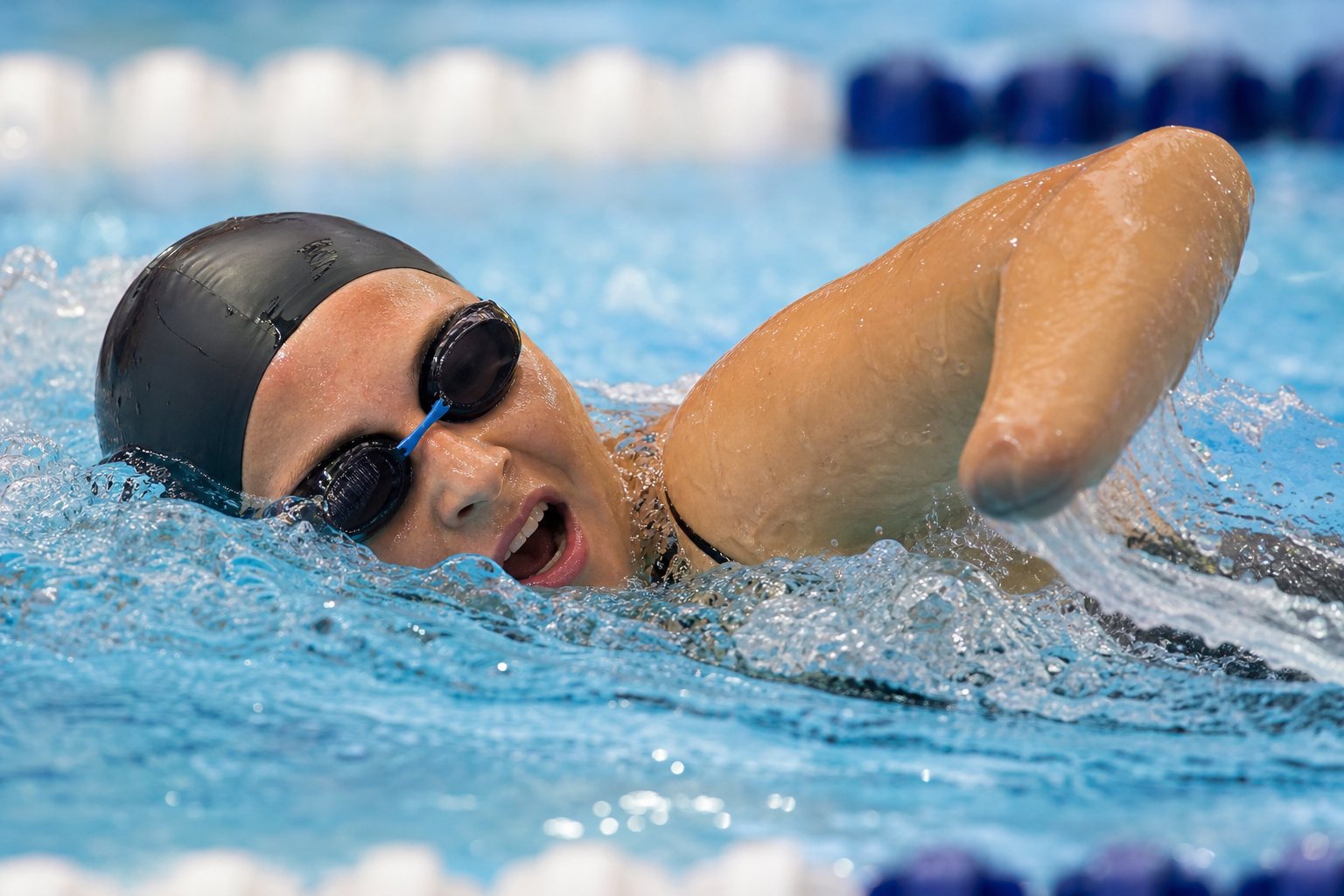
The meet is over, the swimmer is back at the hotel, and the quiet part of the job starts: eat, drink, cool down, find the bed. Para swimming recovery is what happens between sessions, sleep, rest days, food and fluids, gentle movement and, for some, tools, that lets the next session happen. It sounds simple. The evidence for many popular recovery methods is thin, and the evidence in Para swimmers is thinner, so this page says plainly where it is weak.
Quick answer: Sleep, enough food and fluid, regular rest days and a gradual build-up of training are the recovery basics with the most support. Massage, foam rolling, compression and cold water have small or mixed evidence, and most of it is in athletes without impairments. Normal muscle soreness fades in a day or two; pain that lingers, sharpens or wakes you is not routine soreness, so see a sports medicine doctor, physical therapist or athletic trainer.
General information, not medical advice. How recovery fits your body depends on your impairment and medicines.
Sleep first
The American Academy of Sleep Medicine and Sleep Research Society consensus statement (2015) recommends adults sleep 7 or more hours a night; the CDC gives the same adult guidance. In a 52-week study of 107 Swedish elite Para athletes (Fagher and colleagues, PM&R, 2023), 60.9% reported sleeping 7 hours or less in an average week, so short sleep is common in this group. In a study of 61 Para athletes (Madaleno and colleagues, 2026), daily scores for stress, sleep quality, soreness and fatigue were collected and linked to injury patterns, and the authors suggest that tracking them could help spot athletes at risk. It shows association, not cause.
Early practices make sleep harder. A study of 70 nationally ranked athletes in seven sports (Sargent and colleagues, Chronobiology International, 2014) found they slept less before early training days. A 2026 trial in 27 national-level swimmers (Brandts and colleagues, Sports Medicine Open) moved the start from 07:00 to 09:00 and found about an hour more sleep, with no significant effect on recovery or on 100 m and 800 m times. If your schedule allows a later start, that is one lever; if not, an earlier bedtime and a dark, cool room are the basics (general practice). Sleep that is loud, broken or accompanied by choking sounds should be raised with a doctor.
Rest days and load
The American Academy of Pediatrics (Brenner, 2016) suggests 1 to 2 days a week off a main sport and about 3 months a year away, in 1-month blocks, for young athletes. The IOC’s 2016 load consensus says gradual increases in training protect against injury. A 2025 study of Para athletes (Resende and colleagues) found the odds of a substantial gradual-onset injury rose slightly across a 50-week season, so a rest week at planned points is a reasonable idea; ask your coach to plan it. See Para swimming training.
Cool-down, refuelling and fluids
A narrative review of cool-downs (Van Hooren and Peake, Sports Medicine, 2018) found they largely do not affect same-day or next-day performance, do not appear to prevent injuries and mostly do not reduce soreness, though they may help heart rate and breathing settle. An easy swim after a hard set is still popular; treat it as a habit, not a treatment. The American College of Sports Medicine’s 2016 position (Thomas and colleagues) points to carbohydrate and a modest amount of protein soon after hard sessions, and the Gatorade Sports Science Institute’s 2024 Para review (Goosey-Tolfrey and O’Brien) says fluid needs depend on the athlete: sweating can be reduced below a spinal cord lesion, thirst may be dulled, and long-strawed bottles help athletes with limited hand function. Details are on our Para swimming nutrition page.
Mobility and flexibility
Mobility work should suit your range of motion, not a template. A 2025 study (Shimura and colleagues) of female Japanese Para swimmers found that those with a unilateral forearm deficiency had reduced shoulder range of motion and quadriceps tightness compared with swimmers with a vision impairment, which a therapist may address in a different way for each swimmer. Gentle stretching and movement after training are common practice; we did not find a trial showing that stretching prevents injuries in Para swimmers. Be careful with any stretch that causes sharp or lasting pain, and ask a physical therapist to adapt exercises to your impairment.
Recovery tools: what the evidence says
These findings are from athletes in general, mostly without impairments:
- Massage. A 2018 review of 99 studies (Dupuy and colleagues, Frontiers in Physiology) found massage the most effective of the methods compared for soreness and perceived fatigue.
- Cold-water immersion. A 2016 review (Machado and colleagues, Sports Medicine) found it slightly better than passive rest for soreness; a 2015 study (Roberts and colleagues, Journal of Physiology) found 12 weeks of cold water after strength sessions led to smaller strength and muscle gains. Reduced sensation or circulation can hide cold injury, so ask a doctor first (general caution).
- Compression garments. A 2017 review (Brown and colleagues, Sports Medicine) found small benefits. Compression is a medical matter for some swimmers, so ask first.
- Foam rollers and slides. Comfort tools with little direct Para evidence. The listings below are from the makers’ pages.

TriggerPoint GRID 1.0 Foam Roller
- 13 in multi-density
- Hollow core
- Foam rolling for comfort
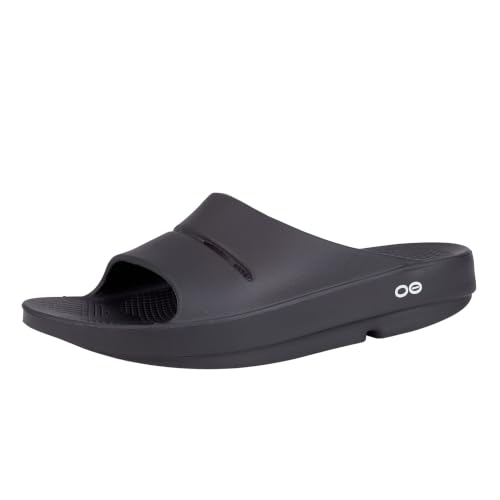
OOFOS OOahh Slide
- OOfoam slide
- APMA Seal of Acceptance
- Machine washable
$59.95 at Amazon, as of Nov 17, 2026 02:07 UTC
Check price on AmazonSoreness or injury?
General rule of thumb from coaching practice: soreness is broad, symmetrical and eases within a day or two; injury pain is often sharp, in one spot, present at rest or at night, or changes how you move. Swimmers with reduced feeling in parts of the body should check skin and pressure points and report new sores, since pain may not warn them. See injuries and the Para swimming hub.
When to get help
See a sports medicine doctor, physical therapist or athletic trainer for pain that lingers, poor sleep that does not settle, extra fatigue for more than a week or two, new low mood, a skin sore, or any worry about heat illness. For emergencies, including a head injury with danger signs, call emergency services.
Para swimming recovery: FAQs
How much sleep do Para swimmers need?
The 2015 AASM and SRS consensus recommends at least 7 hours for adults, and the CDC gives the same guidance. Teens need more. A 2023 study of Swedish Para athletes found most reported 7 hours or less.
Does a swim-down help recovery?
A 2018 review found cool-downs largely do not affect performance, injuries or soreness, though they may help the body settle. It is a habit, not a treatment.
Are cold plunges good for recovery?
Evidence is mixed: slightly less soreness in one review, smaller strength gains in a 12-week study. Reduced sensation or blood pressure issues are reasons to ask a doctor first.
Is foam rolling safe for Para swimmers?
It is a comfort tool with little direct evidence. Ask a physical therapist, especially if you have reduced sensation, skin issues or a spinal cord injury.
When is soreness a problem?
If it is sharp, in one spot, present at rest or at night, or changes your stroke, see a professional.
Sources
- Fagher et al. 2023, mental health, sleep and pain in Para athletes, PM&R
- Madaleno et al. 2026, stress, sleep, fatigue and injury in Para athletes
- Resende et al. 2025, one-year injuries in Para athletes
- AASM and SRS 2015, recommended sleep for healthy adults
- CDC: about sleep
- Sargent et al. 2014, training schedules and sleep in elite athletes
- Brandts et al. 2026, delaying early morning training in swimmers, Sports Med Open
- AAP, Brenner 2016
- Soligard et al. 2016, IOC consensus on load
- Van Hooren and Peake 2018, do we need a cool-down?
- Thomas et al. 2016, ACSM joint position: nutrition and athletic performance
- Goosey-Tolfrey and O’Brien 2024, thermoregulatory challenges in Para sport (GSSI)
- Shimura et al. 2025, Japanese female Para swimmers
- Dupuy et al. 2018, recovery methods review
- Machado et al. 2016, cold-water immersion
- Roberts et al. 2015, cold water after strength training
- Brown et al. 2017, compression garments
General information for education only, not medical advice. It does not replace a visit with a sports medicine doctor, physical therapist or athletic trainer who knows you and your impairment. See how we write and check our pages in our editorial policy, and return to the Para swimming hub.