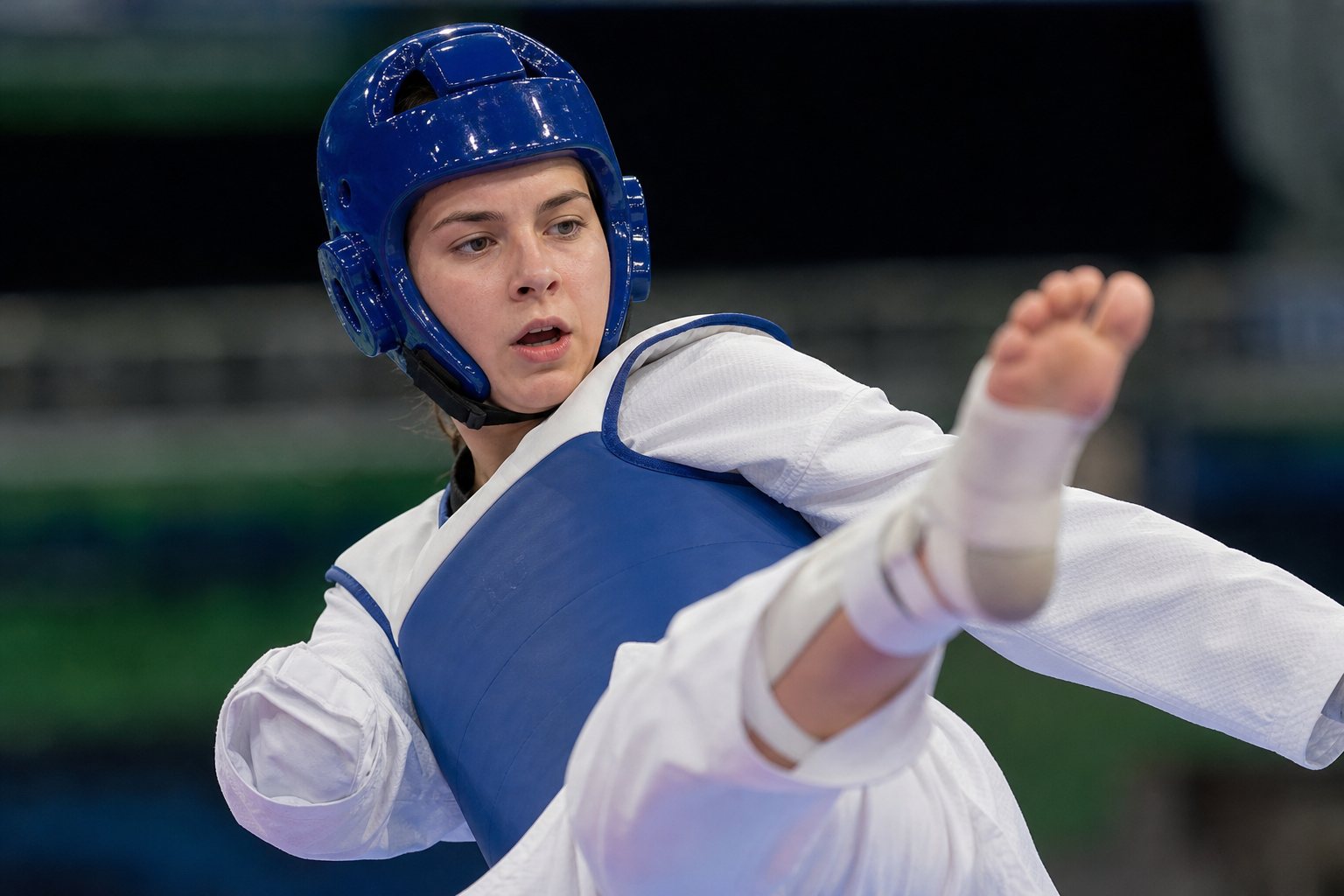
Sunday morning after a hard sparring weekend. Thighs ache on the stairs, the shoulder feels tight, and a tournament is three weeks away. Is today a rest day, an easy kicking day or a day to see someone about that shoulder? Recovery is everything an athlete does between sessions to let the body adapt to training: sleep, food, easy movement, time off and, for some, extras such as massage or cold water. This page covers what research says and where the evidence is thin.
Quick answer: Sleep and sensible rest do the most for recovery, and the CDC recommends at least 7 hours for adults and 8 to 10 hours for teens. Mobility work helps kicking range, but the evidence that stretching or gadgets speed recovery is mixed. Normal soreness eases within a few days; pain that is sharp, stays in one spot or comes with swelling or a weak joint should be checked by a sports medicine doctor, physical therapist or athletic trainer.
General information, not medical advice. For the hard training that creates the need for recovery, see our training page, and for the overview of the sport, the Para taekwondo hub.
Sleep comes first
The CDC recommends 8 to 10 hours of sleep a day for teens aged 13 to 17 and at least 7 hours for adults aged 18 to 60. Para taekwondo athletes must be at least 16 to enter WT-promoted Para championships, so many are in the teen or young adult range. In a 50-week study of 61 Para athletes that included taekwondo, daily self-reports of stress, sleep, fatigue and soreness were linked to injury status the next week; for example, high stress went with higher odds of a gradual-onset injury (Madaleno and colleagues, 2026). It is an association, not a cause. Sleep is also often neglected: a survey of 60 coaches and health staff preparing elite Paralympic athletes for Tokyo 2020 found that only 56 percent monitored their athletes’ sleep, mostly with subjective methods (Grade and colleagues, 2026).
Good sleep habits are general advice from sleep medicine: a regular schedule, a dark and cool room, and less screen time before bed. Travel across time zones to a tournament makes this harder, so arrive early when you can.
Load management
Load management means matching hard days with easier days. The idea is simple. Hard sparring or heavy strength sessions should be followed by lighter work, and the weeks before an event usually reduce volume (a taper). No Para taekwondo source gives numbers, so ask your coach. The same 2026 Para athlete study suggests that tracking stress and fatigue can flag who is at risk. Even a simple daily note (“sleep, mood, soreness, 1 to 5”) helps you and your coach spot a trend.
Mobility and flexibility
Turning kicks and back kicks need hip range of motion and ankle control, so most taekwondo programs include mobility work. General practice is dynamic movement (leg swings, controlled lunges) before training and slower stretching afterward. We did not find Para taekwondo studies of flexibility programs, so this advice is general. If you have a limb difference, a joint contracture or a prosthesis, ask a physical therapist to adapt the routine, because stretching can put stress on the wrong place.
Recovery methods: what the evidence supports
A 2018 systematic review and meta-analysis of 99 studies (Dupuy and colleagues, Frontiers in Physiology) compared recovery techniques after exercise. Massage was the most effective for reducing delayed onset muscle soreness and perceived fatigue, and compression garments and water immersion also reduced perceived fatigue. Massage and cold exposure were the best at lowering inflammation markers. That review measured soreness, tiredness and blood markers, not how well athletes fought afterwards or whether they stayed injury-free. And it did not study Para taekwondo athletes.
- Better supported: sleep, regular meals and fluids, easy movement on lighter days.
- Some evidence, mainly for comfort: massage, compression, cool water. They may make you feel less sore, but evidence that they improve later performance or prevent injury is weaker.
- Weak or mixed: foam rolling and stretching as recovery tools. Many athletes like them and they are low risk for most people, but do not expect miracles.
- Check first: heat, cold, electrical stimulation or devices if you have a heart condition, are pregnant, have skin problems on a residual limb or lack feeling there. Ask a doctor.
Soreness or injury?
General guidance used by sports clinicians, not a diagnosis: normal muscle soreness is dull, spreads across a muscle, shows up a day or two after unfamiliar work and eases within a few days. A possible injury is sharp or catching, stays in one spot, appears suddenly during a kick, comes with swelling, bruising or a weak or unstable joint, or does not improve. A head knock is never “just soreness”. See our injuries page for patterns and warning signs, and injury prevention for lowering risk.
Recovery around tournament weekends
At WT events the weigh-in is the day before competition and may be followed by a random weigh-in the morning of competition. That squeezes eating, drinking and sleep into a tight window, which is one reason weight management should be planned well ahead (see nutrition and athlete health). Practical general advice: keep warm between bouts, sip fluids, eat familiar food, and plan an easy day after the event.
Frequently asked questions
How much sleep do I need as a Para taekwondo athlete?
The CDC recommends at least 7 hours for adults and 8 to 10 hours for teens. Needs vary, and hard training often calls for the upper end. No Para taekwondo sleep guideline exists that we could find.
Is foam rolling worth it?
Evidence that it speeds recovery is mixed. Many athletes use it for feel. It is not a substitute for sleep, food and rest days, and you should skip it over a painful or injured area.
Do ice baths help recovery?
Cold exposure lowered inflammation markers in one 2018 meta-analysis, but that does not prove better performance or fewer injuries. Check with a doctor first if you have a heart condition or loss of feeling in a limb.
How do I tell soreness from an injury?
Soreness is usually dull, spread out and improves in a few days. Sharp, localized pain, swelling, instability or pain at rest deserves a visit to a sports medicine professional.
Should I train through a sore shoulder?
Do not guess. Soreness and injury can feel alike, and Para athletes often under-report problems. A physical therapist or sports medicine doctor can check it.
Sources
- CDC, sleep: how much sleep do I need
- Madaleno et al., daily stress, sleep, fatigue and soreness and injury in Para athletes, BMJ Open Sport Exerc Med 2026 (Europe PMC)
- Grade et al., sleep management in Paralympic sports among coaches and healthcare staff, Sleep Sci 2026 (Europe PMC)
- Dupuy et al., choosing post-exercise recovery techniques: systematic review with meta-analysis, Front Physiol 2018 (PubMed)
- World Taekwondo, Para Taekwondo Competition Rules in force as of 23 October 2025, Art 4.1.5 and 10
- Pinheiro et al., periodic health evaluation in Para athletes: position statement, BMJ Open Sport Exerc Med 2024 (Europe PMC)
General information for education only, not medical advice. It does not replace a visit with a doctor, physical therapist or athletic trainer. See how we write and check our pages in our editorial policy.