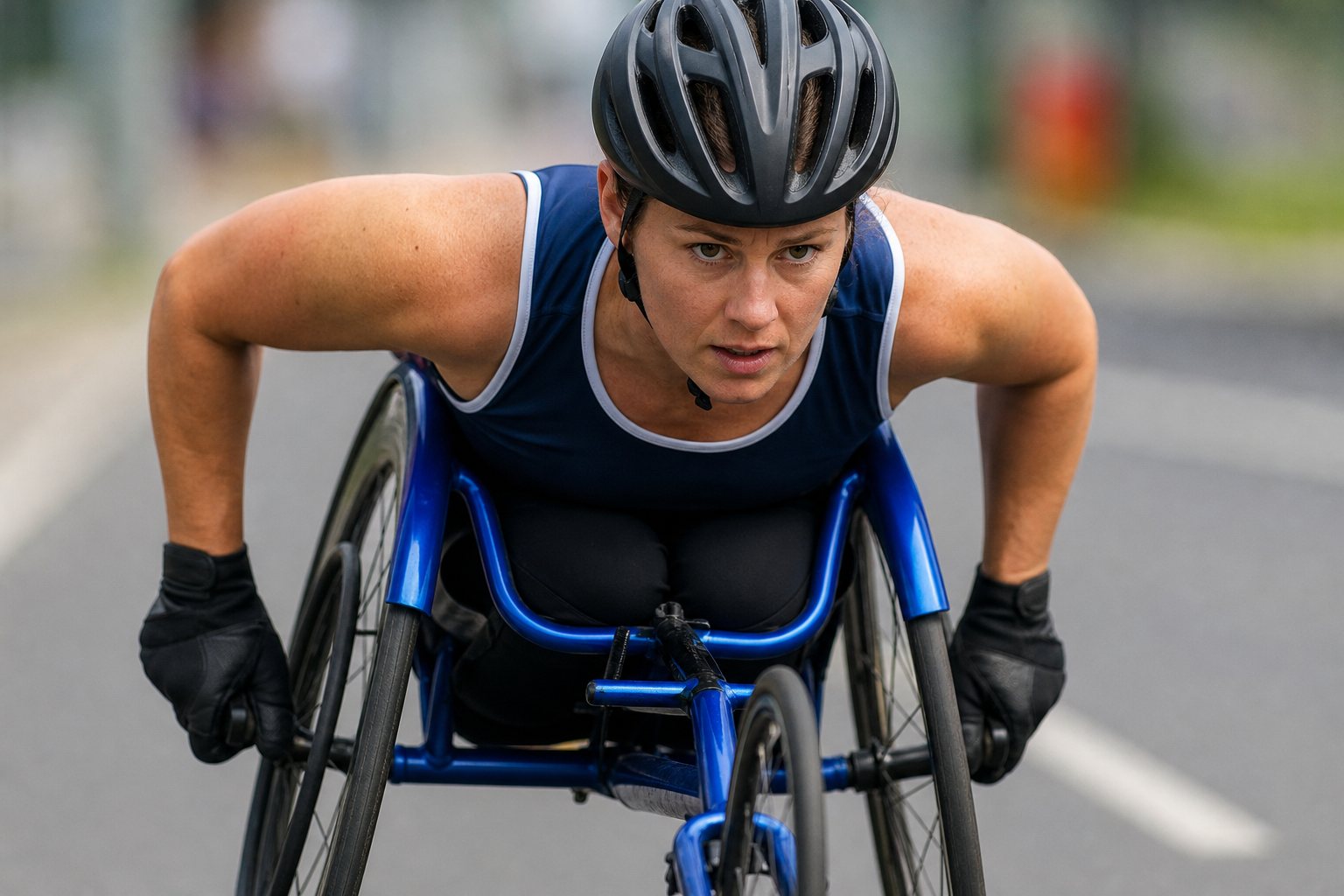
A handcyclist rolls to the water’s edge on a hot race morning, a little queasy from travel, shoulders still tight from last week’s block, and a helmet she has not checked since spring. Para triathlon injury prevention is the set of habits around that moment: equipment that fits, a training load that grows slowly, care of the shoulders and skin, a plan for heat and open water, and looking after your health when you travel. These habits lower the chance of trouble. They cannot promise anything.
Quick answer: The best-documented risks in Para sport are upper-limb injuries and illness, and triathlon had the highest illness incidence at the Paris 2024 Paralympics. Sensible steps are a well-fitted chair or handcycle, gradual load, shoulder and trunk strength work, a heat and cooling plan (especially after spinal cord injury), infection control when travelling, and a helmet on every ride. Evidence that specific programs prevent injury in Para triathletes is limited. See a sports medicine doctor, physical therapist or athletic trainer if pain stays in one place, a skin area stays red or broken, or you have danger signs after a head hit.
General information, not medical advice. What each injury looks like and how it is managed is on our injuries page, so we do not repeat it. Back to the Para triathlon hub.
Warm-up
We found no published warm-up program tested in Para triathletes, and there is no Para-specific equivalent of the football programs studied in team sports. The advice below is general practice. Begin with easy movement in the first sport of the day, add gentle shoulder, trunk and hip mobility that suits your impairment, and finish with a few short pickups before hard efforts. Wheelchair and handcycle athletes may warm the shoulders with light band work before a session.
Technique and equipment set-up
A review of handcycling by Nevin and colleagues says seat position, crank height, crank length and handgrip position each need individual configuration. Poor set-up changes where force goes through the shoulder, so book a fitting with someone who knows handcycles or racing chairs and re-check after any change in strength or body weight. For daily wheelchair use, the Consortium for Spinal Cord Medicine guideline on preserving upper-limb function recommends educating users about injury risk, minimizing repetitive upper-limb tasks and avoiding positioning the hand above the shoulder. It was written for spinal cord injury and everyday life, not racing, so use it as a starting point and not a race plan. A randomized trial of 37 new manual wheelchair users found an education program improved propulsion skills linked to upper-limb health, though it found no difference in pain.
Progressive training load
The Para-triathlon-specific numbers we found are cautionary rather than rules. In a case report of one elite wheelchair triathlete, training load rose from 414 to 604 hours a year over two seasons and was highest in training camps, which the authors say brought physical stress and need careful monitoring. We found no source for a safe weekly percentage increase in Para triathletes, so we do not give one. A practical, general habit: change one thing at a time (volume or intensity, not both), keep a lighter week every few weeks, and tell your coach about niggles early.
Shoulders, trunk and conditioning
The International Paralympic Committee says upper-limb injuries carry the highest risk in Para athletes, and that older athletes and athletes with spinal cord injury face greater upper-limb risk. That points to balanced shoulder, upper-back and trunk strength work, planned with a physical therapist who knows your impairment. For athletes with a prosthesis or limb difference, the other side of the body often carries extra load; check in with a clinician about compensations. A survey of 21 elite US Para swimmers found 11 had an injury that changed their training, and only 6 followed an injury prevention program, a reminder that many athletes lack a tailored plan.
Heat, open water and the environment
- Heat: the Gatorade Sports Science Institute describes spinal cord injury as reducing sweating and vasomotor control below the injury, and says athletes with injury above T6 may also develop autonomic dysreflexia. Paratriathlon is named as a high heat-strain event. Plan cooling with your medical team: pre-cooling (ice vests, ice slurry or cold water before exercise) was more effective than cooling during exercise in the studies it cites, and water spray with fans helps evaporation.
- Wetsuits: in a study of 28 Para triathletes racing at about 33 degrees C, 57 percent wore wetsuits and those athletes had higher core temperature while swimming (Stephenson and colleagues). Decide on a wetsuit with your coach when water is warm.
- Open water: practice with a buddy or on a supervised course, never alone. This is general triathlon safety practice, not a Para-specific research finding.
- Skin and pressure: a 2026 scoping review found only ten sources on pressure injury prevention in disability sport, with little sport-specific evidence. General practice is to check skin after long sessions and see a clinician for any area that stays red or opens.
Staying well: illness prevention
Illness is a bigger signal than injury for this sport. The Paris 2024 Paralympic surveillance study (Derman and colleagues, British Journal of Sports Medicine) found triathlon had the highest illness incidence among sports, and female athletes had a higher illness incidence than male athletes. A separate study of Team USA found Paralympic athletes had 15.7 illnesses per 1,000 athlete days compared with 8.3 for Olympians, with respiratory illness most common. Causes were not given in the abstracts, so we do not guess. Reasonable steps, in line with the study’s call for stronger infection control, are hand hygiene, sleep, and a plan with your team doctor for travel and race week. A 2024 position statement on periodic health evaluation in Para athletes notes that Para athletes tend to under-report health issues, so report early.
Helmet, protective equipment and fit
Wear a helmet that fits on every ride, with the strap adjusted. Handcycles sit close to the road, so a helmet and good visibility (lights, bright clothing) matter. Look for the safety standard sticker inside the helmet (in the United States, CPSC) and replace a helmet after a hard impact. Standards are set by regulators; maker claims about extra features are marketing unless an independent test says otherwise. See our gear page.
What prevention cannot do
None of this removes risk. The evidence for Para-specific prevention programs is limited, and most of what is available comes from small studies, surveillance reports and expert statements. Crashes, infections and overuse can still happen to well-prepared athletes.
When to see a professional
See a sports medicine doctor, physical therapist or athletic trainer for pain that lasts more than a few days, pain at rest or at night, numbness, a red or broken skin area, or a change in how your equipment fits. If someone hits their head, use the CDC HEADS UP steps: recognize the signs, remove the athlete from activity and have a healthcare provider decide about return. Call emergency services for danger signs such as repeated vomiting, a seizure, worsening headache, or sudden severe blood pressure symptoms in athletes at risk of autonomic dysreflexia.
Para triathlon injury prevention FAQs
How can Para triathletes lower injury risk?
Fit equipment well, build load gradually, work on shoulder and trunk strength with a physical therapist, plan for heat, and report problems early. Evidence for any single program in Para triathlon is limited.
Why is illness such a big issue in Para triathlon?
At the Paris 2024 Paralympics, triathlon had the highest illness incidence among sports. The study abstracts do not give causes, so we do not claim one.
Should I wear a wetsuit?
In warm races it may raise core temperature during the swim, according to a study of Para triathletes. Decide with your coach based on water temperature and the race rules.
How do I protect my shoulders?
Keep your equipment set-up checked, avoid sudden jumps in volume, and follow a strength plan from a physical therapist who knows your impairment. The IPC identifies the upper limb as the highest-risk area.
What if I hit my head in a crash?
Stop, use the CDC HEADS UP steps and see a healthcare provider before returning. Call emergency services for danger signs.
Sources
- IPC: Injury and illness surveillance
- Derman et al., Paris 2024 Paralympic injury and illness, Br J Sports Med 2026 (PMID 42103446)
- Post et al., Team USA at Paris 2024, BMJ Open Sport Exerc Med 2025
- GSSI, Thermoregulatory challenges in para sport (SSE 259)
- Stephenson et al., thermoregulatory strain in Para triathlon racing in the heat (IJSPP 2020)
- Nevin et al., The science of handcycling (IJSPP 2022)
- Consortium for Spinal Cord Medicine, Preservation of upper limb function (2005), consumer/clinical guideline
- Rice et al., wheelchair education protocol randomized trial (2014)
- Quittmann et al., wheelchair triathlete case report (2022)
- Injury and injury prevention in US Para swimming (2022)
- Pressure injury in disability sport: scoping review (2026)
- Periodic health evaluation in Para athletes: position statement (2024)
- CDC HEADS UP: respond to a concussion
- Autonomic dysreflexia following spinal cord injury (PubMed)
General information for education only, not medical advice. It does not replace a visit with a doctor, physical therapist or athletic trainer. See how we write and check our pages in our editorial policy.