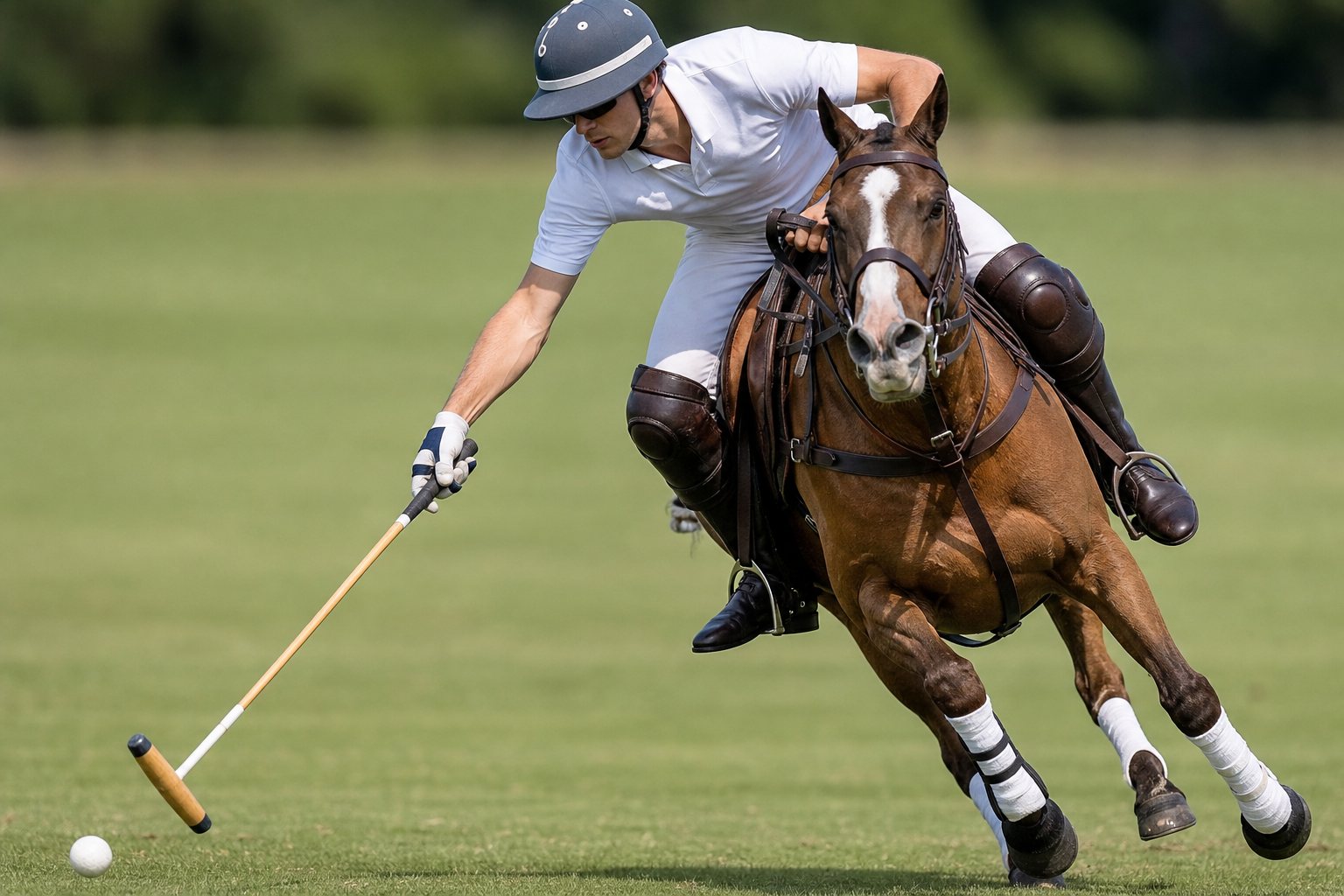
It is a hot afternoon in the third chukker, and a rider who skipped lunch and has been sipping only coffee starts to feel light-headed. Food and fluids for polo nutrition are not exotic: they are about turning up fuelled and hydrated for a day that can mean several chukkers, travel and heat. This page covers fuel, hydration, energy availability and supplements for polo players, as general information. It is not a diet plan; a registered dietitian can build one for you.
Quick answer: Eat regular meals with carbohydrate and protein, drink before you are thirsty on hot days, and treat supplements with caution: the IOC’s 2018 consensus says only a few have good evidence of benefit and that some carry a risk of inadvertent doping. Look for third-party tested products and ask a doctor or sports dietitian before starting anything. Polo has no weight classes, but under-eating or food rules that feel out of control are health matters to raise with a doctor.
General information, not medical advice. Back to the polo hub. See also training and recovery; riders can also read our horseback riding nutrition guide.
What the research says
Polo-specific nutrition research is thin. A 2023 review of the physiological requirements of equestrian riders (Best and colleagues, Nutrients) says equestrian sport is under-researched and estimates the energy use and nutrition and hydration needs of riders across disciplines. The 2016 joint position statement of the Academy of Nutrition and Dietetics, Dietitians of Canada and the American College of Sports Medicine says that well-chosen nutrition strategies enhance performance and recovery, and that athletes should be referred to a registered dietitian for a personalised plan. That is the best advice we can give: build the habits, then personalise with a professional.
Fuel for a polo day
The following is general sports-nutrition practice, not polo research:
- Before: a normal meal with carbohydrate (rice, pasta, bread, fruit) and some protein, a few hours before play, plus a drink. Try new foods in practice, not on match day.
- Between chukkers: with only minutes between periods, sips of water or a drink you tolerate, and perhaps a small snack on a long tournament day. Riding with a stomach full of food is uncomfortable.
- After: a meal with protein and carbohydrate and fluids within a few hours. See recovery.
- Tournament weekends: pack food. Event catering is not always athlete-friendly.
Hydration and heat
Polo is often played in warm weather, in protective gear. The CDC says people who exercise in heat are more likely to dehydrate and develop heat-related illness. Its advice includes not waiting until you are thirsty to drink, avoiding very sugary or alcoholic drinks (which increase fluid loss), scheduling hard work for cooler parts of the day, and building up heat exposure gradually. Muscle cramps can be an early warning sign. If you feel faint or weak, stop and get to a cool place; confusion or loss of consciousness needs immediate medical care. Chukker breaks are a natural time to drink and cool off (see gear).
Energy availability and RED-S awareness
Relative Energy Deficiency in Sport (REDs) arises when an athlete does not take in enough energy for health and training; a 2026 scoping review in Frontiers in Sports Activity and Living defines it as a multifactorial syndrome arising from low energy availability, with physiological, psychological and performance effects. Polo has handicaps, not weight classes, and we found no research on REDs in polo, so we do not claim it is common here. Anyone who is restricting food, feels constantly tired, has missed or irregular periods, repeated injuries or a preoccupation with weight should see a doctor or sports dietitian. See our mental training page for where to find mental-health help.
Supplements: a cautious approach
Supplements are optional, and food comes first. The IOC consensus statement on dietary supplements (Maughan and colleagues, 2018) says nutrition usually makes a small but valuable contribution to performance and supplements a minor one; that only a few, including caffeine, creatine, specific buffering agents and nitrate, have good evidence of benefit; that responses vary between individuals; that supplements should be trialled in training before competition; and that inadvertent ingestion of prohibited substances is a known risk, so expert professional advice is strongly advised.
- Third-party testing. Where a product is for athletes who might be tested, choose one certified by a programme such as NSF Certified for Sport or Informed Sport, and check the batch on the programme’s website. Certification lowers but does not remove risk.
- Banned-substance awareness. If your competition has drug testing, check your association’s rules, since we have not confirmed what applies at each level of polo, and ask the governing body or a sports doctor.
- No claims. We do not recommend dose or brand, and no supplement should be used to treat a health problem. Stimulants such as caffeine are not suitable for everyone; ask a doctor if you have a heart condition, are pregnant or are young.
- Youth. Young riders should get nutrition from food and professional advice, not supplements.
Caution on weight
Polo does not use weight classes, but some riders worry about weight. Crash diets and dehydration to “make weight” for a horse or an appearance are risks for health and performance. If weight is an ongoing worry, speak to a doctor.
The horse’s feed
The USPA’s Equine Welfare Guidelines (search summary) focus heavily on feeding and nutrition for polo horses. Your vet and trainer set that plan.
Polo nutrition FAQs
What should I eat before a polo match?
A normal meal rich in carbohydrate with some protein a few hours earlier, plus fluids. Practise on training days.
How much water should I drink?
There is no single number. The CDC says to drink before you are thirsty in heat; a sports dietitian can personalise.
Is caffeine allowed?
The IOC consensus says caffeine has good evidence for performance in some uses, but it is not suitable for everyone. Check your competition’s rules and ask a doctor.
Do I need supplements?
Usually not. Food first; supplements are optional and carry doping and quality risks.
Can I use creatine or protein powder?
Ask a doctor or sports dietitian, and choose third-party tested products. We do not give doses.
Sources
- Maughan RJ et al. IOC consensus statement: dietary supplements and the high-performance athlete (Br J Sports Med 2018, PMID 29540367)
- Academy of Nutrition and Dietetics, Dietitians of Canada, ACSM. Nutrition and athletic performance (2016, PMID 26891166)
- Best R et al. Equestrian riders: physiology and nutrition (Nutrients 2023, PMID 38068833)
- Application of REDs guidelines: a scoping review (Front Sports Act Living 2026, PMID 42974010)
- CDC: Heat and athletes
- USPA Equine Welfare Guidelines
- NSF Certified for Sport
- Informed Sport
General information for education only, not medical advice. It does not diagnose, treat or clear anyone to play. For your own situation, see a sports medicine doctor, physical therapist or athletic trainer. How we write and check our pages is in our editorial policy.