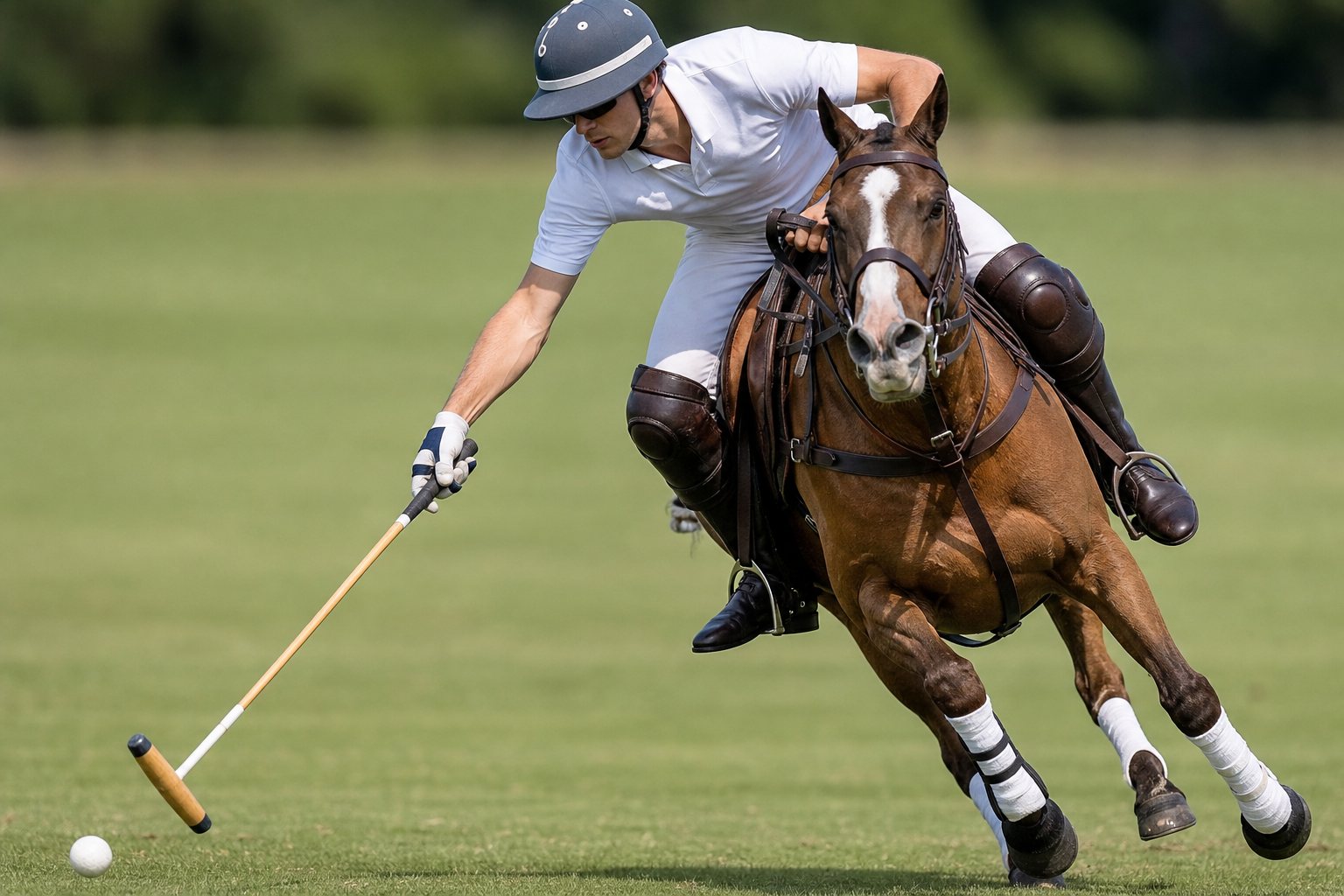
The final horn sounds, the saddle comes off, and the rider’s first job is the horse: walk it cool, water it, rub it down. Only then do the rider’s own legs, back and shoulders get attention. Polo recovery is everything that helps a player come back ready for the next session: sleep, easing the load, mobility, food and fluids, and knowing the difference between ordinary soreness and an injury. This page also says honestly where the evidence for popular recovery tools is weak.
Quick answer: Sleep and sensible training load are the foundations; the CDC recommends at least seven hours of sleep a night for adults and 8 to 10 for teens. For recovery tools, a 2024 umbrella review in endurance athletes found no strategy with consistent benefit, so treat gadgets, baths and massage as comfort measures, not proven fixes. Normal soreness eases within a few days; sharp, worsening, swollen or numb pain, or any head injury, needs a sports medicine doctor, physical therapist or athletic trainer.
General information, not medical advice. For training, see polo training; for injuries, see polo injuries. Back to the polo hub. Horse recovery is covered only briefly; ask your vet.
Sleep first
The CDC says adults need at least seven hours of sleep a night and teenagers 8 to 10. Polo days often start early and end late, with travel and matches stacked on weekends, so protect sleep around tournaments: a regular bedtime, a dark room and a short wind-down are standard general advice. If you snore loudly, feel unrefreshed after a full night or fall asleep in the day, talk to a doctor.
Manage load (general coaching practice)
Recovery is also about not piling hard days on hard days. Many coaches plan an easier day after a match, add chukkers or intensity gradually, and keep at least one rest day a week. A UK survey of players (Sports Medicine Open 2015) found sudden pre-season activity, and higher handicap goals, were linked to more injuries in that sample, which fits the general idea that big jumps in load carry risk. It does not prove cause.
Cooling down and the first hours after play
- Fluids and food: replace fluids and eat a normal meal with protein and carbohydrate; see nutrition and athlete health.
- Cool off: polo is often played in heat. The CDC says to stop and cool down if you feel faint or weak, and to seek medical care for symptoms of heat-related illness; a cooling towel is a comfort aid (see gear).
- Easy movement: walking, a gentle bike or swim, and light mobility work are common ways to loosen up.
- Check yourself and the horse: note new aches, swelling or stiffness in both of you.
Mobility and flexibility
Polo asks for hip mobility (for the seat), spine rotation (for the swing), and shoulder and wrist range. General practice includes hip openers, thoracic rotation and shoulder mobility work after riding and on off days. We did not find polo-specific research on stretching. Mobility work is reasonable if it feels good and is pain-free. Stop for sharp pain. A physical therapist can set a programme for your own stiffness or old injuries.
What the evidence says about recovery methods
- Overall: a 2024 umbrella review in Sports Medicine Open (Li and colleagues) of 22 reviews in endurance athletes concluded that no recovery strategy showed consistent benefits. Individual studies suggested cryotherapy and compression garments helped, while massage showed no effect. Polo was not studied; this is the nearest general evidence we found.
- Cold, heat and contrast: a 2025 review in Sports Medicine (Rousse and colleagues) looked at recovery from exercise-induced muscle damage and said cold therapy is widely used but there is no agreement on how to apply it, and that heat therapy, particularly hot-water immersion, appeared most effective for restoring muscle function. The review also called for more research.
- Gadgets and massage guns: we found no polo-specific evidence. If one feels good and you have no medical reason to avoid it, it is a comfort choice. Ask a clinician if you have a heart condition, are pregnant, or have an injury.
The honest summary: sleep, food, fluids and gradual training do more than any single gadget.
Soreness or injury?
General rule of thumb (not a diagnosis): ordinary muscle soreness is dull, spread across the muscles you used, and eases over a few days. Warning signs include sharp or sudden pain, pain at a bone or joint, swelling, bruising that grows, numbness, a limb that gives way, pain that wakes you, or anything after a fall that doesn’t settle. Those deserve a professional. Any head blow with confusion, headache or dizziness is a possible concussion; see the CDC HEADS UP guidance on polo injuries.
The horse’s recovery
The Museum of Polo and Hall of Fame says ponies run about one to two miles per chukker, which is why high-goal players change horses frequently. A USPA info pack (search summary) says teams may shorten chukkers or take walk breaks for horse welfare. The USPA publishes Equine Welfare Guidelines. For cooling, feeding and rest, ask your trainer and veterinarian.
Polo recovery FAQs
How much sleep do polo players need?
The CDC says at least seven hours for adults and 8 to 10 for teens.
Do ice baths help?
Evidence is mixed. A 2025 review said there is no consensus on cold-therapy methods; a 2024 umbrella review found no consistent benefit overall.
Should I stretch after a match?
It is reasonable if pain-free. We found no polo-specific data on whether it helps.
Is soreness after my first lessons normal?
Often, but sharp pain or swelling is not. When unsure, ask a professional.
How soon can I ride after an injury?
We give no universal time. A clinician decides, and for a head injury, a healthcare provider.
Sources
- CDC: About sleep
- CDC: Heat and athletes
- CDC HEADS UP: signs and symptoms
- Li S et al. Recovery strategies in endurance athletes, umbrella review (Sports Med Open 2024, PMID 38753045)
- Rousse Y et al. Cold, heat and hypoxia therapies after muscle damage (Sports Med 2025, PMID 40983804)
- Falls and injuries to polo players (Sports Med Open 2015, PMID 27747839)
- Museum of Polo and Hall of Fame, FAQs
- USPA Equine Welfare Guidelines
General information for education only, not medical advice. It does not diagnose, treat or clear anyone to play. For your own situation, see a sports medicine doctor, physical therapist or athletic trainer. How we write and check our pages is in our editorial policy.