This article contains affiliate links: if you buy through them we may earn a commission, at no extra cost to you. Read our affiliate disclosure.
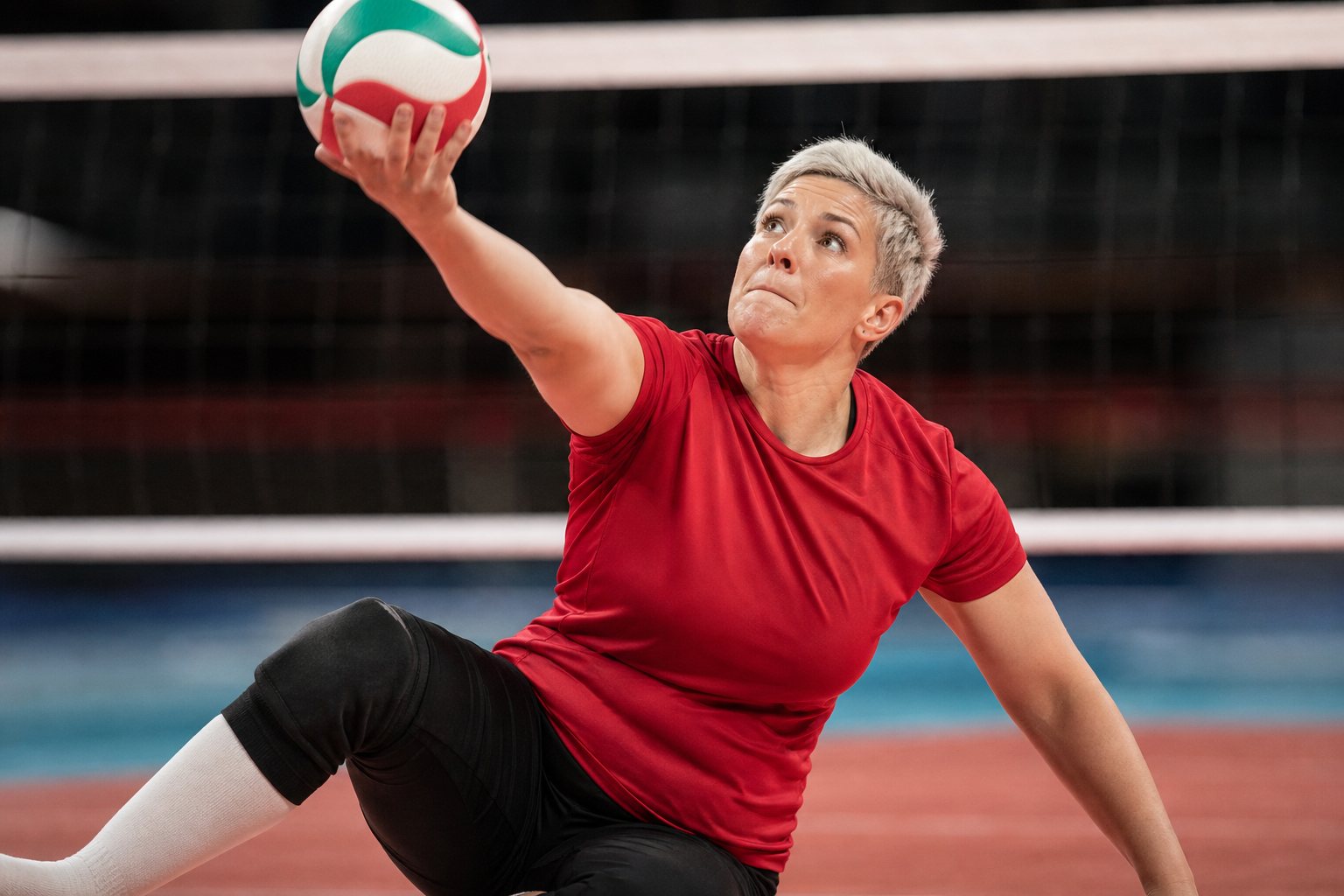
Before the first whistle in a community gym, someone checks the ball with a thumb press, someone else lowers the net, and a player sits down on a bare floor and wonders what, if anything, to wear on her hips. Sitting volleyball gear is simpler than most sports: a ball, a net, a flat floor and clothing that follows a short list of rules. What matters is the fit, the condition of the floor and ball, and not mixing up an official rule with a maker’s marketing line.
Quick answer: The rules set a standard for the ball, net, floor and uniform, and little else, so most “sitting volleyball gear” you will see advertised has no official standard behind it. Check the ball pressure, use a safe floor, keep padding within the rules, and treat any product claim as the maker’s claim. Pain, skin problems or a shoulder that hurts are reasons to see a sports medicine doctor, physical therapist or athletic trainer, not to buy something.
General information, not medical advice. Rules and scoring are on our rules page and risk reduction on our injury prevention page. Prices change, so we show none; check the listing.
The ball
World ParaVolley’s Official Sitting Volleyball Rules 2025-2028 use the standard indoor volleyball: a flexible leather or synthetic leather case with a bladder, 65 to 67 cm around, 260 to 280 g, and an inside pressure of 0.300 to 0.325 kg/cm2 (4.26 to 4.61 psi) (rule 3.1). All balls in a match must match, and World ParaVolley events use World ParaVolley approved balls (rule 3.2). Molten is the official ball supplier for World ParaVolley sanctioned events, according to a World ParaVolley announcement of 1 August 2025, which says its balls are designed for sitting volleyball. We could not confirm which model that is, so for recreation and training a regulation-size indoor ball is the sensible choice. The Mikasa V200W below is a standard international-style indoor ball; the listing says it exceeds the FIVB’s homologation standards, which is the maker’s claim, and we have not confirmed whether it is World ParaVolley approved. Check the pressure with a gauge and a firm thumb press before play; a ball that is too hard stings the hands and fingers.
The net, posts and court
- Net height: 1.15 m for men and 1.05 m for women (rule 2.1.1). A recreational net can be a volleyball net hung low; the USOPC says a pickleball or tennis net can substitute.
- Posts: at World ParaVolley events, net posts must be padded and set 1 m outside the side lines (rule 2.5.1). In a gym, if posts are hard and close to the line, pad them or move the court.
- Floor: flat, horizontal and uniform, not rough or slippery, with no danger of injury (rule 1.2.1). World ParaVolley events require a wooden or synthetic surface that World ParaVolley has approved.
Uniform and shoes
The 2025-2028 rulebook (rule 4.3) lists a jersey, shorts or long pants, socks and sport shoes. Players may play without shoes, though at World ParaVolley events barefoot (without socks) is forbidden. Shoes, if worn, must be light and pliable with rubber or composite soles without heels, and marking soles are forbidden at World ParaVolley events. Tight-fitting compression garments may be worn under team shorts if they match the shorts or are white, black or neutral, and an unpadded compression garment may be worn under long pants. Players may not sit on thick material or wear specially made thick shorts or pants. The practical meaning: choose a fabric that slides on the floor without burning, avoid rough seams, and wash after every session. The rulebook text we read does not mention gloves.
Protection and supports
Compression pads, described as padded injury protection devices, may be worn for protection or support, and bandages may be worn if nothing is dangerous (rules 4.5.1 and 4.5.3). At World ParaVolley events pads must match the colour of the uniform or be black, white or neutral and the same for the team. The rules set no product standard. We found no safety standard or trial for finger tape, wrist supports or hip padding in sitting volleyball, so treat them as personal comfort, not proven protection. A 2024 case report described custom hand orthoses made with 3D printing to let one athlete with scleroderma play (Cutti and colleagues, Medical Engineering and Physics); individual fitting by a clinician is how that was done. Whether prostheses or assistive devices may be used on court is not covered in the rulebook text we searched, so ask your referee or federation.
Warm-up and conditioning gear
Elastic resistance bands are a common, cheap tool for shoulder warm-ups and rotator cuff work, as the strength sections of our training page and injury prevention page discuss. The band kit below uses colour-coded latex bands in light resistances and is marketed for beginners and rehabilitation-style exercise. That is the maker’s positioning; it does not prove the bands prevent injury. A kit that uses latex is not suitable for anyone with a latex allergy, and a clinician can advise on resistance and exercises that suit your shoulders.
Starting picks

Mikasa V200W
- Size 5, 18 panels
- Exceeds FIVB standards (maker claim)
- Indoor volleyball
$63.91 at Amazon, as of Nov 17, 2026 02:07 UTC
Check price on Amazon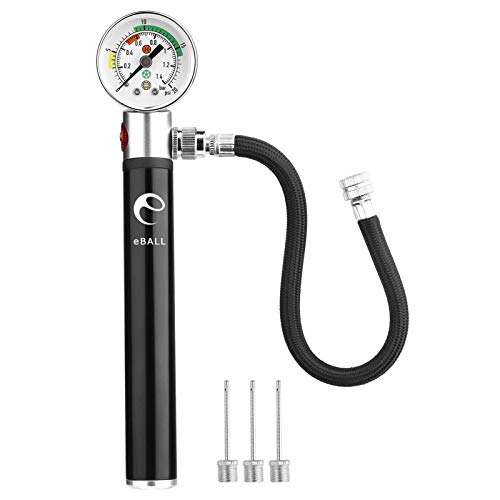
eBall Pump with Pressure Gauge
- Gauge in psi and bar
- Release valve
- Lists volleyball
$19.99 at Amazon, as of Nov 17, 2026 02:07 UTC
Check price on Amazon
THERABAND Resistance Band Beginner Kit
- 3 latex bands
- Yellow, red, green
- Light strength work
$11.99 at Amazon, as of Nov 17, 2026 02:07 UTC
Check price on AmazonProduct details come from the Amazon listings; none of them is a tested safety standard, and we do not claim these products prevent injury.
A quick inspection routine (general practice)
- Ball: seam and panel check, even bounce, pressure within the 4.26 to 4.61 psi range, wipe sweat off before storing.
- Floor: sweep or damp-mop, check for splinters, loose boards, wet patches and obstacles.
- Net and posts: height set, tension fine, padding on posts if near the lines.
- Clothing and skin: clean kit, no rough seams, check hands, hips and any residual limb for friction sores.
- Bands: check for nicks and tears before each use and replace worn ones.
Sitting volleyball gear: FAQs
What ball is used in sitting volleyball?
A standard indoor volleyball: 65 to 67 cm around, 260 to 280 g, 4.26 to 4.61 psi. World ParaVolley events use World ParaVolley approved balls, and Molten is the official supplier according to the federation.
Do I need special shoes?
No. Shoes are optional; if worn they must be light and pliable with non-marking, heel-free rubber or composite soles. Players may play without shoes, though not barefoot at World ParaVolley events.
Can I wear padding under my shorts?
Compression pads for protection or support are allowed, but thick seat material and specially made thick shorts are not. Check with your referee or federation for your event.
How high should the net be at home?
The official heights are 1.15 m for men and 1.05 m for women. The USOPC says a pickleball or tennis net can stand in for recreational play.
Do resistance bands prevent injuries?
No band has been shown to prevent injury in sitting volleyball. Related research on shoulder exercise is small and from other sports. Ask a physical therapist what suits you.
Sources
- World ParaVolley: Official Sitting Volleyball Rules 2025-2028 (rules 1.2.1, 2.1.1, 2.5.1, 3.1, 3.2, 4.3, 4.4, 4.5)
- World ParaVolley: World ParaVolley and Molten renew global partnership (1 August 2025)
- USOPC: Sitting volleyball
- Cutti et al., hand orthoses for sitting volleyball, Med Eng Phys 2024
- Amazon listing: Mikasa V200W (maker claim)
- Amazon listing: eBall pump with gauge
- Amazon listing: THERABAND Beginner Kit
General information for education only, not medical advice. It does not replace a visit with a doctor, physical therapist or athletic trainer. See how we write and check our pages in our editorial policy.