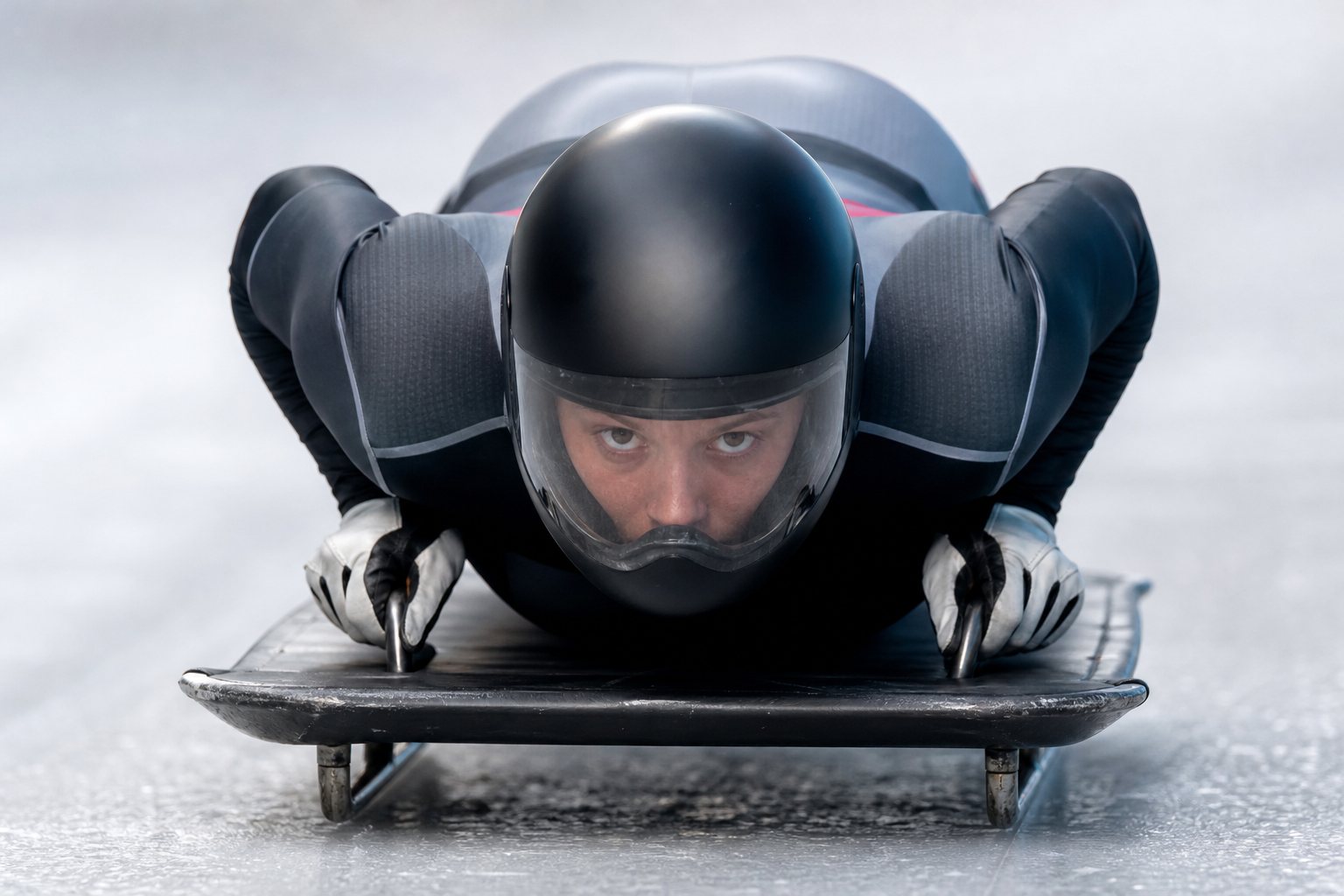
The breakfast table at a World Cup stop is a mix of oats, eggs, coffee and nervous glances at the schedule. The sled and athlete have a combined weight limit, the start is a maximal sprint, and the next run might be an hour away. Nutrition and athlete health in skeleton means eating and drinking to support sprints, strength work and recovery, protecting long-term health, and staying clear of risky supplements. There is almost no skeleton-specific nutrition research, so most of this page applies general sports-nutrition positions to this sport, and says so where it does.
Quick answer: Skeleton has no published sport-specific nutrition guidelines. The Academy of Nutrition and Dietetics, Dietitians of Canada and ACSM position says a registered dietitian can personalise a plan. The IOC says only a few supplements (caffeine, creatine, buffering agents, nitrate) have good evidence, and that contamination can cause doping violations. If you compete under anti-doping rules, use only third-party-certified products, and talk to a doctor or dietitian before using any supplement.
General information, not medical advice. Related: training, recovery, skeleton hub.
Fuel for sprints and strength
Skeleton training is short and intense: sprints, jumps, heavy lifts and sliding practice, rather than long endurance sessions. The 2016 joint position of the Academy of Nutrition and Dietetics, Dietitians of Canada and the American College of Sports Medicine says performance and recovery are enhanced by well-chosen nutrition strategies, giving guidance on the type, amount and timing of food, fluids and supplements, and recommends referral to a registered dietitian nutritionist for a personal plan. Dietitians with the Certified Specialist in Sports Dietetics credential are the sport-nutrition experts it names. Sport-specific advice for skeleton is not published, so the basics are general: enough energy overall, carbohydrate to fuel hard sessions, protein spread through the day for repair and a regular eating pattern. Your dietitian can tailor amounts to your body, training block and travel. We also do not give numbers here, because personal needs differ.
Competition days have a special shape. NBC Olympics describes four runs over two days, with long gaps between heats. Light, familiar foods and fluids between runs are the usual approach (general sports-nutrition practice, not a skeleton study). Try anything new in training, not on race day.
Body mass, weight limits and the risk of cutting
NBC Olympics lists maximum combined athlete-and-sled weights of roughly 115 kg for men and 102 kg for women, with the sled weighed in. Because of such limits, athletes may think hard about body mass. The 2005 US National Skeleton Team study measured athletes with mixed body structures, and found stronger and more powerful athletes tended to be better starters, but it did not say that gaining or losing mass changes results. Never cut weight alone. Rapid or extreme dieting can reduce performance and harm health, so involve a sports dietitian and a doctor.
Relative energy deficiency in sport (REDs)
The IOC’s 2023 consensus statement on Relative Energy Deficiency in Sport describes a syndrome of health and performance problems in female and male athletes who do not take in enough energy for their exercise. It adds that low carbohydrate availability and mental health play growing roles and that males are affected too. It also includes guidance on safe body-composition assessment and a clinical assessment tool for clinicians. We found no skeleton-specific REDs study, so we cannot say how common it is in the sport. Warning signs to take to a doctor include repeated injuries or illness, unexplained fatigue, missed or lost periods, low mood, or an unhealthy focus on food or weight. This page is not a diagnosis.
Hydration and cold
Cold can hide thirst. The ACSM-led position paper covers fluids as part of nutrition, but we found no skeleton-specific hydration guidance and give no numbers. Between runs in cold start houses, the CDC says to dress in layers and watch for early signs of hypothermia and frostbite, which include shivering, confusion and numb or waxy skin. Water, warm drinks and snacks are practical choices many teams use (general practice, not a study finding).
Illness and athlete health
Skeleton athletes appear in illness reports: the Vancouver 2010 surveillance found every tenth skeleton athlete had at least one illness, and the Sochi 2014 report listed skeleton among the highest illness rates, with respiratory problems the most common. A 2021 sleep consensus links habitual sleep under 7 hours to more respiratory infections in the general population. Regular meals, sleep and hand-washing in shared travel spaces are sensible habits. See recovery.
Supplements: the careful approach
- Food first. The IOC says nutrition makes a small but valuable contribution and supplements only a minor one, and that a full nutritional assessment should come before any supplement decision.
- Only a few have good evidence. The IOC statement names caffeine, creatine, specific buffering agents and nitrate as having good evidence of benefit for performance, with responses varying between people. Trial any performance supplement in training first.
- Contamination and doping. The IOC warns that inadvertent ingestion of prohibited substances in supplements can cause a doping violation. USADA says athletes who use supplements should use only products certified by a third-party programme that tests for banned substances, such as NSF Certified for Sport or Informed Sport, and that certification reduces but does not eliminate the chance of a positive test. Check the specific lot.
- Check the Prohibited List. The World Anti-Doping Agency publishes it. If you compete in federation events, ask your team’s doctor before taking anything.
- Medical check. Caffeine, stimulants and others are not for everyone. Ask a doctor or dietitian, especially with heart conditions, pregnancy or medicines.
This site’s supplement comparisons follow the same rules: third-party testing is a key criterion, and we make no health claims. See nutrition and supplements.
Mental health and eating
If thoughts about food, weight or body shape are taking over, or if you feel low, anxious or hopeless, that is a health matter for a qualified professional, not a training problem. In the US you can call or text 988, the Suicide and Crisis Lifeline.
Skeleton nutrition FAQs
What should a skeleton athlete eat?
There is no skeleton-specific guideline. General sports-nutrition positions call for enough energy, fuel for hard sessions and a personal plan from a registered dietitian, especially around training blocks and travel.
Do skeleton athletes need to gain or lose weight?
Combined weight limits exist, but we found no study on how body mass changes results. Never change body mass without a sports dietitian and a doctor.
What is REDs?
Relative Energy Deficiency in Sport: health and performance problems that can follow when an athlete’s energy intake is too low for their training. Take warning signs to a doctor.
Which supplements have good evidence?
The IOC names caffeine, creatine, buffering agents and nitrate, with individual responses varying. Food comes first and a doctor or dietitian should guide use.
How do I avoid a failed drug test from a supplement?
Use only products certified by a third-party programme such as NSF Certified for Sport or Informed Sport, check the specific lot, and check the WADA Prohibited List. Certification lowers but does not remove the risk.
Sources
- Academy of Nutrition and Dietetics, Dietitians of Canada and ACSM position: nutrition and athletic performance (2016)
- IOC consensus statement: dietary supplements and the high-performance athlete (2018)
- IOC consensus statement on Relative Energy Deficiency in Sport (REDs), 2023
- USADA: reduce the risk of a positive test from supplements
- WADA Prohibited List
- NBC Olympics: skeleton 101
- US National Skeleton Team profiles, Sports Biomech 2005
- Sports injuries and illnesses, Vancouver 2010
- Sports injuries and illnesses, Sochi 2014
- Sleep and the athlete: expert consensus 2021
- CDC: preventing hypothermia and frostbite
- 988 Suicide and Crisis Lifeline
General information for education only, not medical advice. It does not replace a sports medicine doctor, physical therapist, athletic trainer, licensed mental health professional or qualified coach. See our editorial policy for how we research and write.