This article contains affiliate links: if you buy through them we may earn a commission, at no extra cost to you. Read our affiliate disclosure.
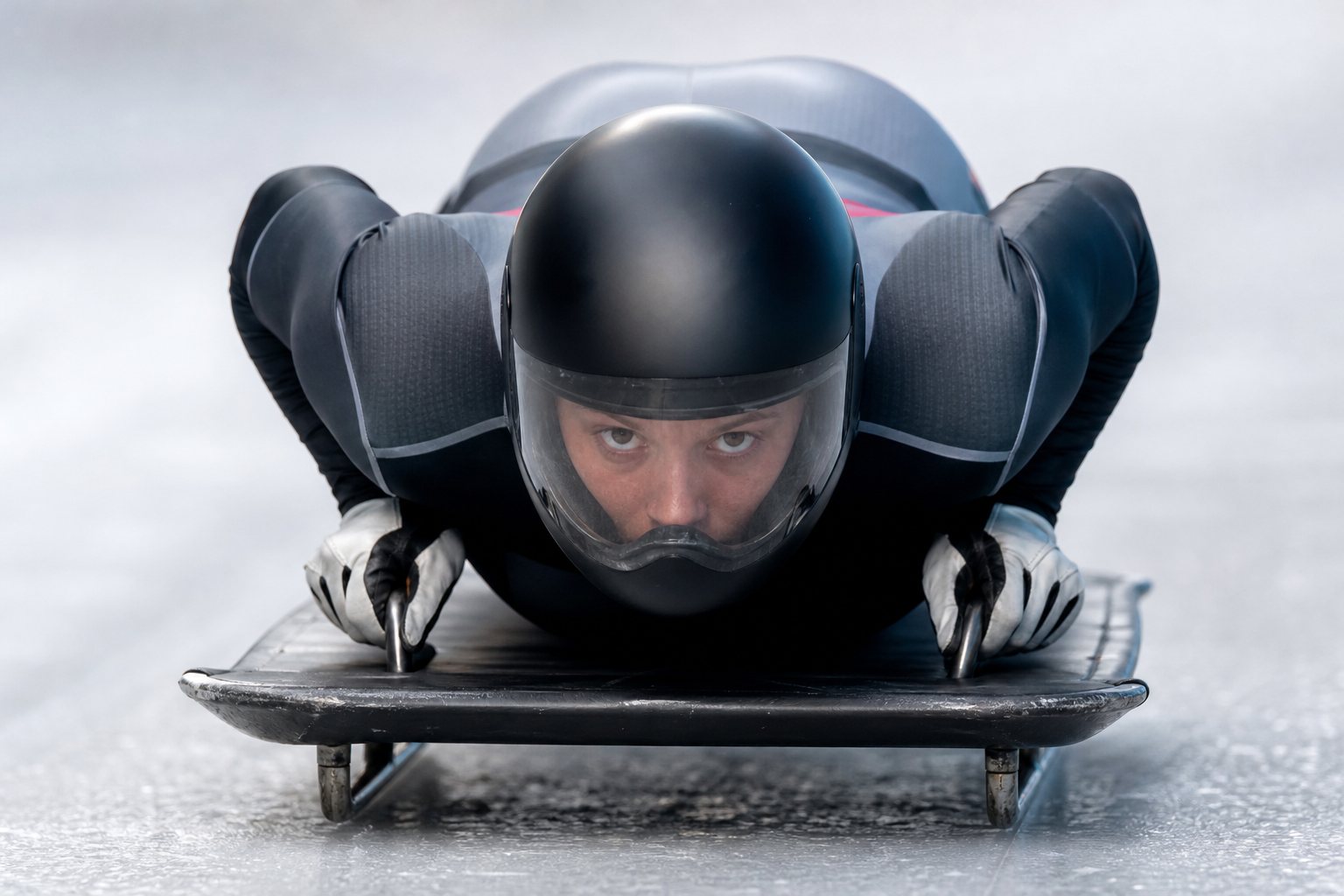
Open a skeleton athlete’s bag and you will not find much that a shop sells. The sled, the helmet and the speedsuit come through a federation or national programme. What fills the rest is small: a mouthguard, hand warmers for the cold start house, a ladder for footwork drills, a roller for the legs. Skeleton gear is the equipment that protects the athlete, the equipment that is regulated, and the practical kit around it. This page separates what is set by official rules from what is optional, and explains what we could and could not confirm.
Quick answer: The helmet and the sled follow federation rules and are normally supplied or approved through a club or national programme, so do not buy them on your own. A review says helmet standards for skeleton and bobsleigh are slightly stricter than for luge but depend on each national federation. No mouthguard prevents concussion. Below are the optional extras we list; they are comfort and training tools, not protection.
General information, not medical advice. See injury prevention for the safety picture and the skeleton hub.
Optional kit we picked

Shock Doctor Gel Max Mouthguard
- Boil-and-bite gel liner
- Youth and adult sizes
- Maker: exoskeletal shock frame
$11.99 at Amazon, as of Nov 17, 2026 01:07 UTC
Check price on Amazon
HotHands Hand Warmers, 40 pairs
- Hand warmers
- 40 pairs in the box
- For waiting between runs
$25.60 at Amazon, as of Nov 17, 2026 01:07 UTC
Check price on Amazon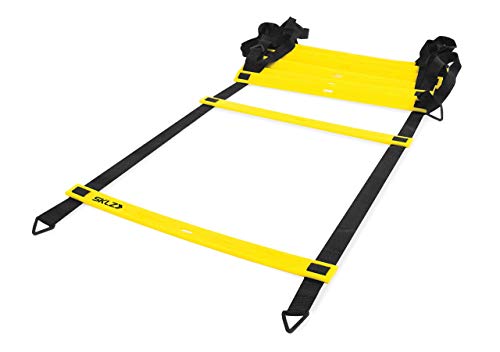
SKLZ Quick Ladder
- 15 ft, 11 flat rungs
- 17 in wide
- Carry bag included
$29.99 at Amazon, as of Nov 17, 2026 01:07 UTC
Check price on Amazon
Polar H10 Heart Rate Sensor
- Chest strap
- Bluetooth and ANT+
- Sizes M-XXL

TriggerPoint GRID 1.0 Foam Roller
- 13 in multi-density
- Hollow core
- Foam rolling for comfort
Specifications on the cards come from the maker listings and are the makers’ claims; we did not test these products. None of them replaces an approved helmet, coaching or medical care.
The sled
A skeleton sled is a steel frame on runners with a base plate. NBC Olympics coverage and reference summaries describe it as having no steering or braking device, and NBC says sled dimensions, materials and weight are tightly regulated: sleds are weighed in and kept in a controlled area, and changes after weigh-in are generally not allowed unless approved. The same page gives maximum combined athlete-and-sled weights of roughly 115 kg for men and 102 kg for women. We could not open the IBSF rulebook, so exact dimensions are not stated here; check IBSF documents before buying or building anything. A sled is not a beginner purchase. Programmes typically provide sleds for new athletes, but we did not verify this for any specific programme, so ask yours.
Inspection is part of safe sliding. The 2018 Frontiers in Neurology review says inspection of the sled for damage after a run is important for keeping it within international regulations, and suggests, as ideas rather than requirements, shock absorbers on the sled’s bridge and runners and an energy-absorbing layer between saddle and rider to soften bumpy ice.
Helmet, chin guard and face protection
NBC Olympics says helmets are mandatory in skeleton, and the Frontiers review says helmets are essential to limit severe head injury in a high-speed crash. Our earlier skeleton page describes a helmet with a chin guard and goggles or face shield. The review states that helmet standards for skeleton and bobsleigh are slightly stricter than for luge but are subject to each athlete’s national federation, and that research on sledding-specific helmets is still needed. We did not find a named certification standard, so we do not name one. In practice:
- Get the helmet through your national federation or programme, and follow its fit instructions.
- Check the fit each time: snug, level, strap secure, no wobble when you shake your head.
- Inspect for cracks, loose fittings and a damaged shell. Follow the maker’s guidance on replacing a helmet after a significant impact (general guidance, not a cited standard).
- Never wear a helmet that has been dropped hard or modified without the maker’s approval.
Mouthguard
The review says that a mouthguard may help confer some protection against concussive injury given repetitive impacts at speed, and a 2024 bobsleigh study used instrumented mouthguards to measure head impacts. The word is “may”. No mouthguard has been shown to prevent concussion, so a mouthguard is an extra layer, not a reason to take more risk. A boil-and-bite guard like the card above is shaped at home; a dentist can make a custom one. Ask your federation what is allowed.
Suit and spikes
NBC Olympics says specialised suits are mandatory, and skeleton athletes often push in spiked shoes on the start track. We found no source stating the suit or shoe specifications, so we give none. Ask your coach, and buy only what your federation’s rules permit.
Cold and training kit
Skeleton’s start house and track are cold, and the CDC says to dress in layers and recognise early signs of hypothermia and frostbite. Hand warmers are a comfort while waiting; the maker’s instructions say how to use them, and you should not place them against bare skin or leave them on numb skin. A ladder suits footwork drills in the build-up to the start (see training). A heart-rate chest strap can track easy days and recovery; see our heart rate monitor guide. A roller or massage tool is a comfort option after sprint days, and evidence for it is modest; see recovery and our massage gun guide.
How to choose
- Spend first on federation-approved protection and a proper programme.
- Do not buy a sled or helmet second-hand without a coach checking it.
- Treat optional extras as extras.
- Ask the maker or retailer for the current specifications; ours are from listings.
Skeleton gear FAQs
Do I need to buy my own sled?
Not as a beginner. Sleds are regulated and normally come through a federation programme; ask your programme. Do not use a homemade or recreational sled on a track.
What helmet standard does skeleton use?
We did not find a named standard. A review says standards for skeleton and bobsleigh are slightly stricter than luge but set by each national federation.
Does a mouthguard prevent concussion?
Not proven. A review says it may help confer some protection. No product prevents concussion.
Are skeleton suits regulated?
NBC Olympics says specialised suits are mandatory. We did not find specifications; check IBSF rules.
What should a newcomer buy first?
Usually nothing big. Ask your federation what they supply, then consider a fitted mouthguard, warm layers and training basics.
Sources
- NBC Olympics: skeleton 101
- McCradden and Cusimano 2018, Front Neurol (PMC)
- Head kinematics in World Cup bobsleigh, J Athl Train 2024
- Foam rolling meta-analysis, Sports Med 2019
- CDC: preventing hypothermia and frostbite
- International Bobsleigh and Skeleton Federation
- USA Bobsled and Skeleton
General information for education only, not medical advice. It does not replace a sports medicine doctor, physical therapist, athletic trainer, licensed mental health professional or qualified coach. See our editorial policy for how we research and write.