This article contains affiliate links: if you buy through them we may earn a commission, at no extra cost to you. Read our affiliate disclosure.
The new student’s bag is half packed: a white dobok still creased from the box, a belt, a water bottle and a mouthguard the coach said to bring. A month later the same bag has sparring protectors that smell of last week’s class. Taekwondo gear is the uniform and protective equipment used in class and competition, and the main questions are what is required, what fits and what is worth buying at which stage. This page covers the dobok, the protectors that World Taekwondo (WT) rules require, mouthguards, fit, inspection, and the gap between official standards and maker claims. See the taekwondo hub for the sport.
Quick answer: For a first class you need only a dobok and belt, and many schools sell their own. If you spar, you will need protectors and a mouthguard, and for competition the event’s rules decide which approved items you must wear. World Taekwondo rules require a trunk protector, head protector, groin guard, forearm guards, shin guards, gloves, a mouthguard and, with electronic scoring, sensing socks. “Approved” on a shopping listing is the seller’s statement, so check with your school or the tournament before buying. Gear lowers some risks but does not make full contact safe. General information, not medical advice.
Our picks for a first dobok and a mouthguard
Prices change often and are not shown here; check the current listing. The approval notes below are what the listings say, not an independent check.

Daedo Taekwondo Beginner Uniform
- WT recognized per listing
- V-neck, pants and belt
- Beginner uniform
$27.99 at Amazon, as of Nov 17, 2026 02:07 UTC
Check price on Amazon
adidas ADI-START II Taekwondo Dobok
- World Taekwondo approved per listing
- V-neck
- Cotton-blend uniform

Shock Doctor Gel Max Mouthguard
- Boil-and-bite gel-fit liner
- Breathing channels
- Youth and adult sizes
$11.99 at Amazon, as of Nov 17, 2026 02:07 UTC
Check price on AmazonThe dobok and belt
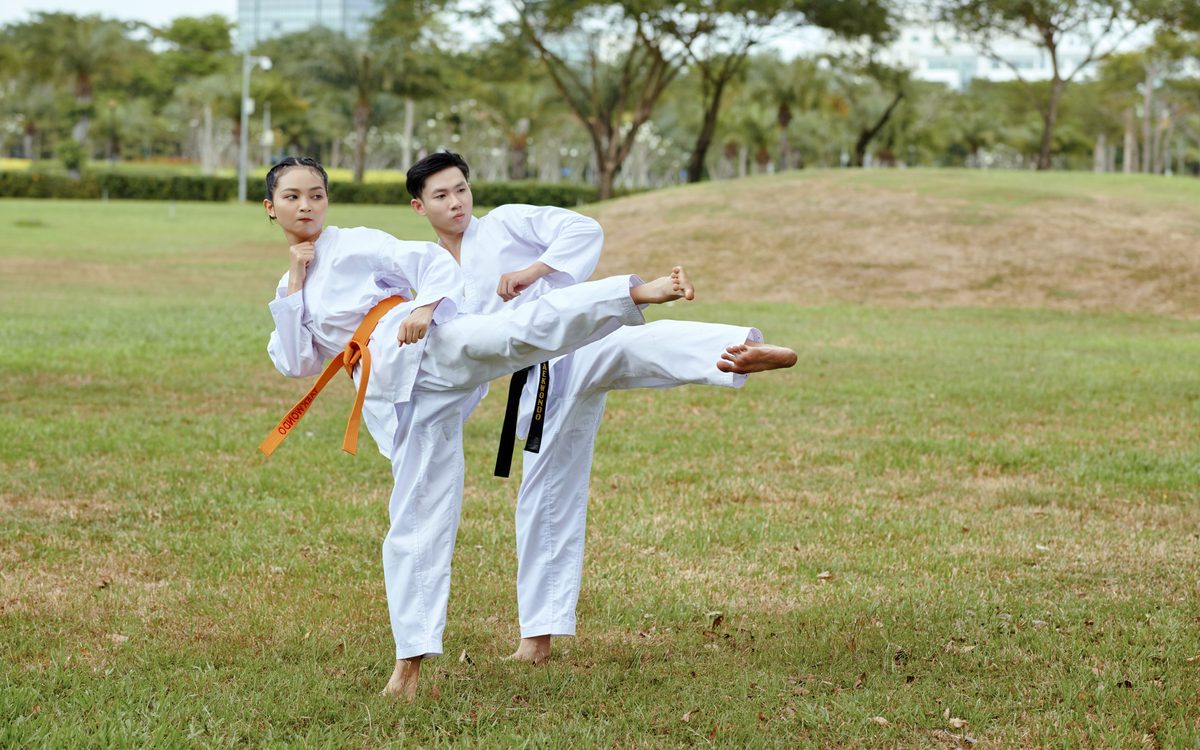
A dobok is the uniform: a V-neck top, trousers and a belt. For a first class, a basic dobok is enough, and many schools have a house design. The Daedo beginner uniform is listed as a V-neck with pants and belt, aimed at beginners, with a “WT recognized” note in the listing. The adidas ADI-START II is a cotton-blend V-neck uniform that its listing describes as World Taekwondo approved. Both approval notes are the sellers’ wording; ask your coach or the tournament whether the uniform is acceptable. If you buy for a growing child, size for the child now, not a size to grow into, and check the belt length and how it ties.
What WT rules require in competition
According to the WT Competition Rules and Interpretation in force from 1 June 2026, competitors wear a WT-approved dobok, trunk protector, head protector, groin guard, forearm guards, shin guards, gloves, sensing socks if electronic scoring is used, and a mouthguard. Scoring protectors register contact electronically, so the equipment is part of the scoring system. Cadet athletes may use a head protector with a face shield. The exact list of approved makers and models is kept by WT and by event organizers, and we did not verify any product against it. USA Taekwondo applies its own rules and modified safety rules to some age and belt groups at its events, so read the event’s requirements and ask your coach before buying protectors.
Mouthguards
The WT rules say the mouthguard must be white or clear, at least 3 mm thick and cover the entire upper teeth, with a special version for athletes with braces. The AAP martial arts report says there is no evidence that headgear or mouthguards reduce concussion, but that mouthguards reduce dental and oral injuries. A boil-and-bite guard such as the Shock Doctor Gel Max is shaped to your teeth in hot water; its listing mentions a gel-fit liner and breathing channels and sizes for youth and adults. We did not confirm whether the version you pick meets WT colour and thickness rules or suits braces, so check the colour and thickness, and ask your coach or dentist if you have braces. A guard that does not seat well, or feels bulky, is hard to keep in; replace it when it wears, cracks or no longer fits.
Protectors, shin and forearm guards, gloves and socks
Sparring protectors are an area where fit matters. A trunk protector should cover the area the rules score without riding up, a head protector should sit snugly without blocking vision, and shin and forearm guards should stay in place after a kick or block. Gloves protect the hands, and a review of hand injuries in martial arts (Drury, 2017) says hand protection reduces the risk of hand injury. Electronic systems also need compatible sensing socks and a matched protector, which is one reason to ask your school which system it uses before buying. We are not recommending specific protector models because we have no verified listing for them.
Fit, inspection and care
- Try before you buy where you can. A shop or your club’s gear sale lets you check fit, and growing athletes may only need protectors in the next size up every year or so.
- Inspect each week. Look for cracked foam, loose straps, torn stitching, worn velcro and a mouthguard that is thin or split. Replace damaged protectors. This is general practice, not a published schedule.
- Keep it clean. The National Athletic Trainers’ Association position on skin diseases advises showering after every practice, not sharing towels or gear and laundering clothing daily; sharing protectors and mouthguards is not a good idea.
- Air it out. Do not leave damp gear in a closed bag. Wash the dobok and wipe protectors per the maker’s care label.
- Standards versus claims. The WT rules are the standard for what is allowed. A maker’s words such as “pro”, “approved” or “tournament grade” are marketing unless you can check them with WT, your event or your club.
For safety around the gear, read our injury prevention page and the injuries page. For what the rules reward, see the rules page. Neighbouring sports: karate and judo.
Taekwondo gear FAQs
What do I need for my first taekwondo class?
Usually just comfortable clothes and water, then a dobok and belt, which many schools sell. Ask your school what it requires and when sparring gear is needed.
Is a mouthguard required in taekwondo?
World Taekwondo competition rules require one, white or clear and at least 3 mm thick. Many schools require one for sparring. Ask your instructor.
Does the dobok have to be WT approved?
For WT competition, yes, per the WT rules. For class, no, unless your school says so. A listing saying approved is the seller’s claim, so confirm with your school or event.
Does sparring gear prevent concussion?
The AAP report says there is no evidence that headgear or mouthguards reduce concussion. Gear reduces some injuries, such as dental injuries, but removing an athlete after a head blow matters more.
How do I clean taekwondo protectors?
Wipe them down and air-dry them after class, wash the uniform often and follow the maker’s care label. Do not share mouthguards or gear, as the NATA position on skin diseases advises.
Sources
- World Taekwondo, Competition Rules and Interpretation (in force 1 June 2026)
- USA Taekwondo, Kyorugi Rules 2026
- AAP clinical report, Youth Participation and Injury Risk in Martial Arts (2016)
- Drury 2017, hand and wrist injuries in boxing and the martial arts (PubMed 27886844)
- NATA position statement on skin diseases
- Amazon listing, Daedo Taekwondo Beginner Uniform (B0DJYP2LHH)
- Amazon listing, adidas ADI-START II Taekwondo Dobok (B094X2QT1S)
- Amazon listing, Shock Doctor Gel Max Mouthguard (B00I1BDKPC)
General information for education only, not medical advice. It does not replace a sports medicine doctor, physical therapist, athletic trainer, registered dietitian or qualified coach. See our editorial policy for how we research and write.