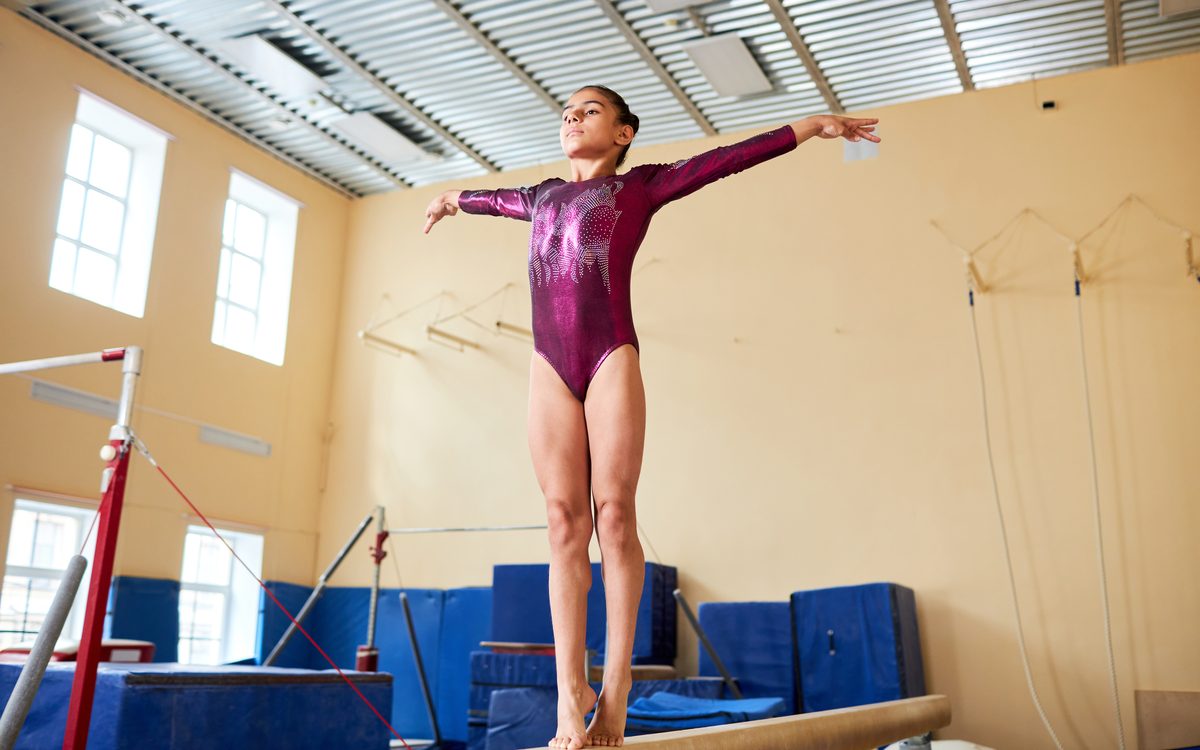
A coach hands out snack breaks between rotations and a 10-year-old digs a granola bar out of her gym bag, then hesitates because a teammate made a joke about eating. Artistic gymnastics nutrition is the food and fluid that give a gymnast the energy for practice, growth and healing, and in a sport that rewards a lean, controlled look it is also a health topic, not only a performance topic. This page covers fuel, fluids, the warning signs of under-eating, and a careful look at supplements. It is general information, not a diet plan for any one child or adult.
Quick answer: Gymnasts need enough energy for training and for growth, usually from regular meals and snacks built on carbohydrate, protein and fluid. Too little food for the training, called low energy availability, can harm bones, hormones and mood, and the IOC describes it as relative energy deficiency in sport (REDs). Supplements are optional and carry risks; talk to a doctor or registered dietitian first. See a doctor for missed periods, repeated stress fractures, dizziness, or worrying changes in eating.
Daily fuel
The joint 2016 position of the ACSM, the Academy of Nutrition and Dietetics and Dietitians of Canada gives general ranges for athletes: carbohydrate of 3 to 5 grams per kilogram of body weight a day for light or skill-based training, rising with more training, and protein of 1.2 to 2.0 grams per kilogram a day. These are adult-athlete ranges, and the needs of growing children differ, so ask a registered dietitian for a plan. In practice, general advice for gymnasts is regular meals with a carbohydrate source (rice, pasta, bread, fruit, potatoes), a protein source (eggs, dairy, meat, beans, tofu), fruits and vegetables and healthy fats, plus a snack before or after practice.
Before, during and after practice
- Before. The same ACSM position suggests 1 to 4 g per kilogram of carbohydrate 1 to 4 hours before a long or hard session, and avoiding too much fat, protein or fiber right before, which can upset the stomach. Gymnasts flip upside down, so many prefer small, familiar snacks closer to practice. That is general practice, so try new foods in training, not at a meet.
- During. Most gym practices are short enough that water is enough; very long sessions or long meet days may need snacks. Sports drinks are not needed for most gymnasts, which is general guidance.
- After. Eat or drink carbohydrate and protein within a couple of hours, and rehydrate; see recovery.
Hydration
The ACSM position suggests drinking about 5 to 10 mL per kilogram in the 2 to 4 hours before exercise, aiming for pale yellow urine. For a 40 kg child that is 200 to 400 mL, simple arithmetic from that range. Keep a water bottle handy at practice; USA Gymnastics meet rules make an exception to the no-drinks rule for water bottles in the competition area.
Low energy availability and REDs
The IOC’s 2023 consensus statement (Mountjoy, Ackerman and colleagues) defines relative energy deficiency in sport as a syndrome of impaired health and performance in female and male athletes exposed to low energy availability, whether intentional or not. It lists effects on bones, hormones, metabolism, immunity, mental health and performance. Signs include bone stress injuries, missed or stopped periods (no first period by age 15 or 12 or more missed cycles are examples of severe indicators in the IOC screening tool), frequent illness, constant fatigue and mood changes. The IOC’s prevention paper (Torstveit 2023) calls for education and for de-emphasizing body weight and leanness, especially in young and sub-elite athletes, and for involving coaches and parents.
Gymnastics-specific numbers show why this matters:
- In a 2025 study of 84 female artistic gymnasts, 17 (20.2%) scored above the cutoff for an eating-disorder questionnaire; the figure was 35.9% in high-level gymnasts compared with 6.7% in low-level gymnasts, and gymnasts at all levels knew little about REDs and its effects on periods and bones (Donti 2025).
- In a 2024 study of 14 collegiate men’s gymnasts, 12 (85.7%) had low energy availability, with carbohydrate intake averaging 3.7 g per kilogram a day (Kuhlman 2024). The sample is small, so treat it as a signal, not a rate.
- Both studies are small and cross-sectional, and they do not prove gymnastics causes under-eating.
What helps: no weigh-ins at practice, no comments on bodies, and treating food as fuel. That is a plain-language reading of the IOC prevention advice, and it is our reading, not a quote. The USA Gymnastics Safe Sport policy also lists interfering with an athlete’s hydration, nutrition, food or sleep as physical misconduct.
Bone health
A 2011 study (Maimoun) of peripubertal artistic gymnasts found higher bone mineral density (5.5 to 16.4%) and better femur structure than non-athletes, despite delayed first periods and menstrual disorders. A 2026 systematic review (Fitch) concluded that gymnastics training helps bone health before puberty, but that bone-injury risk rises around puberty, possibly with nutritional deficiency. Bone loads well when the body is also fueled well. See our injuries page for bone stress injuries.
Warning signs and getting help
This is a health matter for a doctor, not a coach or a website. NIMH says eating disorders affect people of all ages, backgrounds, body weights and sexes, even those who appear healthy, and that signs can include restricting food, fear of weight gain, distorted body image, eating in secret, purging and excessive exercise. Early treatment helps. General gym-specific signs: skipping snacks, constant talk about food or weight, extra workouts, baggy clothes, dizziness. If you notice these, talk with the athlete kindly and then a primary care provider or sports medicine doctor. In the US, call or text 988 (Suicide and Crisis Lifeline) in a crisis, and the ANAD helpline is 1-888-375-7767 (weekdays, free).
Supplements: be careful
The IOC’s 2018 consensus statement says supplements can make only a minor contribution to nutrition, a complete nutritional assessment should come first, and only a few (including caffeine, creatine, buffering agents and nitrate) have good evidence of benefit. It also warns of the risk of ingesting prohibited substances through supplements. Our rules for this site:
- Food first. A multivitamin or any other product is optional and does not fix under-eating.
- Look for third-party testing, such as NSF Certified for Sport or Informed Sport. Products without it are not certified for sport.
- Gymnasts under 18 should talk to a pediatrician or dietitian first. The AAP says energy drinks have no place in diets of children and adolescents.
- Never use products with banned substances. Athletes who are tested should check the rules of their governing body.
- We give no doses, and the label is the limit.
Prefer a food plan from a registered dietitian; talk to a doctor before choosing any product. Sport-wide advice is on gymnastics nutrition.
Artistic gymnastics nutrition FAQs
What should a gymnast eat before practice?
A small, familiar snack rich in carbohydrate one to a few hours before, and easy on fat and fiber. Try foods at practice before a meet.
Do gymnasts need to be lean?
Skill and strength depend on fitness and fuel, not a number on a scale. The IOC prevention paper advises de-emphasizing body weight and leanness in young athletes.
What is REDs?
Relative energy deficiency in sport: health and performance problems that come from consistently eating too little for the training load. See a doctor for symptoms.
Do gymnasts need protein powder?
Most athletes can meet needs through food. Powders are optional; choose third-party tested products and ask a dietitian first.
Are energy drinks okay for young gymnasts?
The AAP says they have no place in the diets of children and adolescents.
Sources
- ACSM, AND and DC 2016 joint position (PMID 26891166)
- IOC consensus statement on REDs, 2023 (PMID 37752011) and Torstveit 2023, REDs prevention (PMID 37752004)
- Donti 2025, female artistic gymnasts (PMID 40431439)
- Kuhlman 2024, men’s collegiate gymnasts (PMID 39359485)
- Maimoun 2011, bone in gymnasts (PMID 21359671) and Fitch 2026 (PMID 41893970)
- IOC consensus on dietary supplements, 2018 (PMID 29540367)
- AAP, energy drinks, Pediatrics 2011
- NIMH, Eating Disorders
- ANAD helpline and 988 Lifeline
- USA Gymnastics Safe Sport Policy
General information for education only, not medical advice. See our editorial policy for how we research and write.