This article contains affiliate links: if you buy through them we may earn a commission, at no extra cost to you. Read our affiliate disclosure.
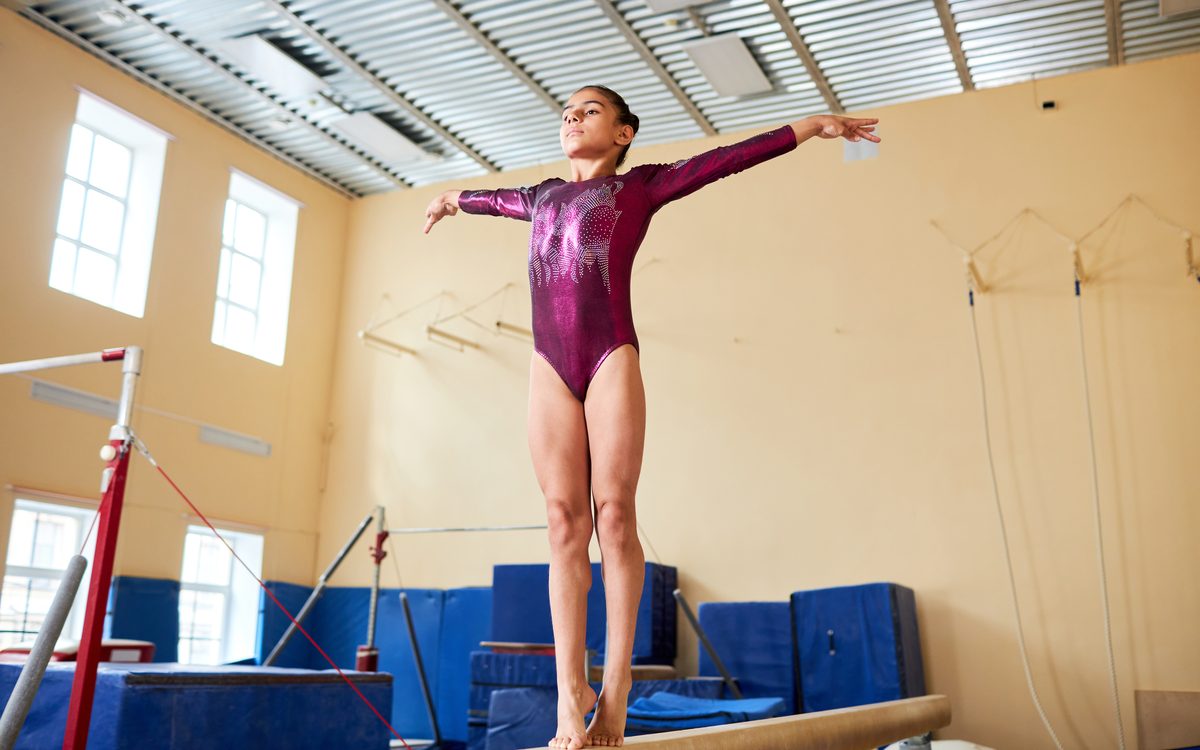
A gymnast stands at the end of a balance beam: 500 centimeters long, 10 centimeters wide and 125 centimeters off the floor. She has up to 90 seconds, and one wobble costs her tenths of a point. A fall costs a full point. Artistic gymnastics, often just called gymnastics, is the Olympic gymnastics discipline with the vault, bars, beam, floor, rings and pommel horse.
Artistic Gymnastics guides: what do you need?
New to artistic gymnastics? Start with the first card. Everything here is general education, not medical advice.
History & Origins of Artistic Gymnastics
Modern artistic gymnastics grew out of the German and Central European gymnastics movement of the early 19th century. Friedrich Ludwig Jahn, often called the “father of gymnastics,” is credited with inventing the horizontal and parallel bars (Wikipedia, used as a pointer). The international federation, now called World Gymnastics (the FIG), was founded in 1881 with three member countries, and men’s gymnastics was on the programme of the first modern Olympics in Athens in 1896. The first World Championships were held in 1903.
Women entered later. They first competed in Olympic gymnastics in 1928, as a team, and were first recognized in the all-around at the 1934 World Championships. A turning point for public attention came at Montreal 1976, when Romania’s Nadia Comaneci scored the first perfect 10 in Olympic gymnastics (Olympics.com). Scoring changed again in 2006, when the open-ended system replaced the 10.0 cap: today a routine adds a difficulty (D) score with no cap to an execution (E) score. The exact origin of some early apparatus is not well documented, so we list only dated, sourced milestones.
- 1881: The international gymnastics federation (now World Gymnastics, the FIG) is founded.
- 1896: Men’s gymnastics is part of the first modern Olympic Games, Athens.
- 1903: First World Artistic Gymnastics Championships.
- 1928: Women compete in Olympic gymnastics for the first time (team event).
- 1934: Women first recognized in the all-around at the World Championships.
- 1976: Nadia Comaneci scores the first Olympic perfect 10, Montreal.
- 1992: Vitaly Scherbo wins six gold medals at one Games, Barcelona (Olympics.com).
- 2006: Open-ended D plus E scoring replaces the 10.0 maximum.
- 2024: Paris Games; the United States women win team gold and Simone Biles reaches 11 Olympic medals.
- 2028: Los Angeles; a new mixed team event is planned (see the hub above).
Legends of the Sport
Athletes from different eras, listed in rough chronological order, not ranked.
- Larisa Latynina (URS): won 18 Olympic medals between 1956 and 1964, the most by any gymnast (Olympics.com).
- Nadia Comaneci (ROU): scored the first perfect 10 in Olympic gymnastics at Montreal 1976 and won three golds there (Olympics.com).
- Vitaly Scherbo (BLR/EUN): won six golds at the 1992 Barcelona Games (Olympics.com).
- Kohei Uchimura (JPN): Olympic all-around champion in 2012 and 2016 (Olympics.com).
- Simone Biles (USA): 11 Olympic medals and 30 world medals; all-around champion at Rio 2016 and Paris 2024 (Olympics.com).
- Rebeca Andrade (BRA): Olympic vault champion in Tokyo and floor champion at Paris 2024, and 2022 world all-around champion (Olympics.com, World Gymnastics).
- Zou Jingyuan (CHN): parallel bars champion at Paris 2024 and again at the 2025 and 2026 World Championships (World Gymnastics).
- Daiki Hashimoto (JPN): Tokyo 2020 Olympic all-around champion and winner of the world all-around title four times (2022, 2023, 2025, 2026) (World Gymnastics).
Official results and records
We only list champions and records here after checking them on the official source. For the latest results, go to:
- Olympics.com Paris 2024 gymnastics results
- World Gymnastics (FIG) results
- CGTN
- Olympics.com
- Olympics.com
- Olympics.com
- Olympics.com
How we keep this current: we re-check facts after each major championship and update this page. Spot an error? See our editorial policy.
Artistic gymnastics at a glance
| What it is | Routines on apparatus, judged for difficulty and execution. Women compete on four (vault, uneven bars, balance beam, floor); men on six (floor, pommel horse, still rings, vault, parallel bars, horizontal bar). |
|---|---|
| How it is scored | A routine score is the D score (difficulty, no cap) plus the E score (execution, starting from 10.00 and reduced by deductions). Example in the FIG women’s code: D 5.70 + E 9.00 = 14.70. |
| Who takes part | Preschool-age tumblers through adult elites. USA Gymnastics counts about 240,000 members and more than 3,300 clubs across its disciplines. |
| Where | Gyms and club programs, high schools in some states, colleges and international meets. |
| Governing bodies | World Gymnastics (the FIG, renamed in December 2025) worldwide; USA Gymnastics in the US. |
| Season | Club seasons run much of the year; NCAA and high school seasons are winter to spring. |
How artistic gymnastics works
Each routine is a short, intense performance. On the women’s beam and floor, FIG’s Code of Points caps the routine at 90 seconds; the men’s floor routine is capped at 70 seconds. Floor is a 12-by-12-meter carpeted square with spring. Judges first count the gymnast’s hardest elements for the D score (in the women’s code, the eight highest-value elements, including the dismount, on bars, beam and floor), then take away points from 10.00 for execution mistakes such as bent legs, poor form or steps on landing. Deductions for falls cost a full point.
The events
- Women: vault, uneven bars, balance beam, floor exercise.
- Men: floor, pommel horse, still rings (hung from 5.8 meters), vault, parallel bars, horizontal bar (2.5 meters high), according to Wikipedia’s summary of FIG apparatus rules.
- Formats: team, individual all-around (all events), and single-apparatus finals.
Attire follows the code. For women it means a leotard or unitard, only small stud jewelry, securely fastened hand guards and wrist wraps; for men a singlet, with long pants and socks on pommel horse, rings, parallel bars and horizontal bar. Magnesium chalk is allowed on the bars.
Who does artistic gymnastics, and at what level
Kids and club. The AAP says that before about age 6 most children lack the motor skills for organized sport, and that preschool tumbling in beginner gymnastics is appropriate. In USA Gymnastics’ Junior Olympic women’s program the minimum starting ages are the 4th birthday for Level 1, 5th for Level 2 and 6th for Level 3; Xcel Bronze starts at the 5th birthday. Levels run from 1 to 10, then elite, according to Wikipedia; levels 3 to 5 are compulsory and 7 to 10 are optional.
High school. In the NFHS 2023-24 survey, girls gymnastics was offered in 26 states, with 1,689 schools and 15,092 participants; boys gymnastics was offered in 7 states.
College. Women’s NCAA competition scores six gymnasts and counts the best five per event, for a perfect team score of 200 (collegegymnews). The 2026 NCAA women’s tournament had 36 teams and was won by Oklahoma (Wikipedia). Men’s gymnastics has 12 Division I programs, none in Division II and three in Division III (USA Gymnastics); Stanford won the 2026 men’s title (NCAA).
Elite. Senior age is the calendar year a gymnast turns 16 for women and 18 for men (Wikipedia summarizing FIG rules; we did not open FIG’s technical regulations).
Olympic status, by edition
- History: men’s gymnastics was on the 1896 programme and women were first allowed in 1928 (Wikipedia).
- Paris 2024: 14 artistic medal events: 8 men’s (team, all-around and six apparatus) and 6 women’s (team, all-around and four apparatus). Teams could have up to five gymnasts (Wikipedia).
- LA28: the LA28 organizers list a new mixed team event in artistic gymnastics; the FIG will announce its format later. Check the official programme for the current Games for the full list of events.
Physical demands
Artistic gymnastics combines short bursts of power with control. Vault and tumbling need explosive running and take-offs; bars, rings and pommel horse load the shoulders, wrists and grip; beam asks for balance and focus. Every event ends in a landing. In NCAA women’s data about 70% of competition injuries came from floor landings or dismounts, and a study of Achilles ruptures in NCAA women’s gymnastics found 95% happened on floor and 98% on the take-off of a tumbling skill. A 2022 sports medicine review of elbow injuries in youth gymnasts notes that gymnastics has among the highest participation hours of youth sports.
Health and safety for gymnasts
This is general information, not medical advice. If you or your child has pain that keeps coming back, see a sports medicine doctor, physical therapist or athletic trainer. Our gymnastics injuries page goes deeper.
- Overall rates: NCAA women’s gymnastics recorded 9.22 injuries per 1,000 athlete exposures in 2009-10 to 2013-14 (Kerr and colleagues), with competition (14.49) higher than practice (8.69). The ankle was the most injured body part (17.9%), and floor accounted for 41.9% of apparatus injuries. A later study found concussion the single most reported specific injury (8.4%).
- Men vs women: a single Division I program over 2001-2011 found men’s injuries most often at the hand and wrist (24%) and women’s at the foot and ankle (39%).
- Wrists: a 2026 review of 25 studies found a pooled wrist pain prevalence of 53% among gymnasts, linked to age 10 to 14, training intensity and hours. The AAP calls growth-plate overuse of the wrist “gymnast’s wrist.”
- Low back: a 2026 review reported low back pain in 25% to 50% of competitive gymnasts. The AAOS lists gymnastics among sports where repeated back-bending can cause spondylolysis, a stress fracture of the spine.
- Youth emergency visits: a US study estimated about 72,542 youth gymnastics injuries per year treated in emergency departments (2012 to 2018).
Head injuries. Follow CDC HEADS UP: recognize the signs, remove the gymnast from practice right away and let a health care provider decide when it is safe to return.
Rest and overuse. The AAP’s 2024 clinical report recommends at least 1 to 2 days off a week from sport-specific training and 2 to 3 months off each year, in 1-month blocks, and increasing training load by no more than 10% to 20% a week. It also lists signs of too little fuel for the training, such as bone stress injuries or missed periods, as reasons to see a doctor.
Coaching and safeguarding. The U.S. Center for SafeSport’s policy says training should be observable and interruptible, and parents may observe their child’s individual training. Use a coach and gym that follow it; home trampolines are strongly discouraged by the AAP.
Training, recovery and nutrition pointers
- Train: strength, flexibility and landing technique under a qualified coach. See gymnastics training and our resistance bands guide.
- Recover: sleep first (CDC: 8 to 10 hours for teens, at least 7 for adults), then easy days. See recovery and foam rollers.
- Eat: gymnasts need enough fuel for hard training. See nutrition and supplements; talk to a doctor or sports dietitian before changing how you eat.
Gear for artistic gymnastics
Most gear is provided by the gym: mats, beams, bars and landing surfaces; the FIG sets apparatus norms for international competition. What a gymnast buys is personal. Leotards and singlets follow the code. Bar grips protect the hands; leather grips are sized to the wrist and hand and need a proper break-in. Wrist supports are common, but a small 2023 lab study of 23 gymnasts found some wrist guards increased wrist flexion moment during landings, so ask the coach or a sports medicine professional how and when to wear them. Magnesium carbonate chalk helps grip and is allowed on the bars.

US Glove Elite Uneven Bar Grips
- Leather, hollow dowel
- Hook-and-loop strap
- Optional to elite, 10+

Tiger Paw Gymnastics Wrist Supports
- Sold in pairs
- Sized by body weight
- Made in USA
$64.95 at Amazon, as of Nov 17, 2026 01:07 UTC
Check price on Amazon
Cannon Sports Gym Chalk Blocks
- 1 lb, eight 2 oz blocks
- Magnesium carbonate
- Individually wrapped
$17.99 at Amazon, as of Nov 17, 2026 01:07 UTC
Check price on AmazonRelated sports and disciplines
Parent: Gymnastics. Siblings: rhythmic gymnastics and trampoline gymnastics. Also see diving, cheerleading and climbing.
Artistic gymnastics FAQs
How is artistic gymnastics scored?
Each routine gets a D score for difficulty and an E score for execution that starts at 10.00 and drops with errors; the two are added. A D of 5.70 and an E of 9.00 make 14.70.
What is the difference between artistic and rhythmic gymnastics?
Artistic uses large apparatus such as bars, beam, vault and rings. Rhythmic uses a hoop, ball, clubs and ribbon on a floor with music. See our rhythmic gymnastics page.
How young can a child start?
The AAP says preschool tumbling in beginner gymnastics fits young children, with organized sport more suitable from about age 6. USA Gymnastics’ competitive levels start from age 4 in the Level 1 minimum age rule.
Is artistic gymnastics safe?
It carries real injury risk, as the NCAA data above show: landings, the wrists and the back are the usual trouble spots. Good coaching, proper surfaces, rest days and a quick visit to a sports medicine professional for lingering pain all help.
Is artistic gymnastics in the 2028 Olympics?
Yes. The LA28 programme includes artistic gymnastics with a new mixed team event. Check the official programme for the current Games for the other events.
Sources
- World Gymnastics (FIG) rules, including the Women’s Code of Points 2025-2028 and Men’s Code of Points 2025-2028
- FIG Apparatus Norms
- USA Gymnastics, About and Women’s Rules and Policies
- LA28 medal event programme
- Kerr et al. 2015, NCAA women’s gymnastics injuries; Chandran et al. 2021; Marshall et al. 2007; Westermann et al. 2015
- Wrist pain in gymnasts, 2026 review; low back pain, 2026 review; Achilles ruptures, 2023; youth emergency visits, 2022; youth elbow injuries, 2022; wrist guards, 2023
- AAP clinical report on overuse, overtraining and burnout (2024) and AAP trampoline safety (2012)
- AAOS OrthoInfo, Spondylolysis
- CDC HEADS UP and CDC sleep
- U.S. Center for SafeSport, 2025 MAAPP
- NFHS 2023-24 participation survey; USA Gymnastics, men’s NCAA pathway
- AAP HealthyChildren, Is your child ready for sports
Keep exploring: the gymnastics hub, gymnastics rules, gymnastics gear, youth gymnastics, our recovery tools guide, and every other sport on our sports hub.