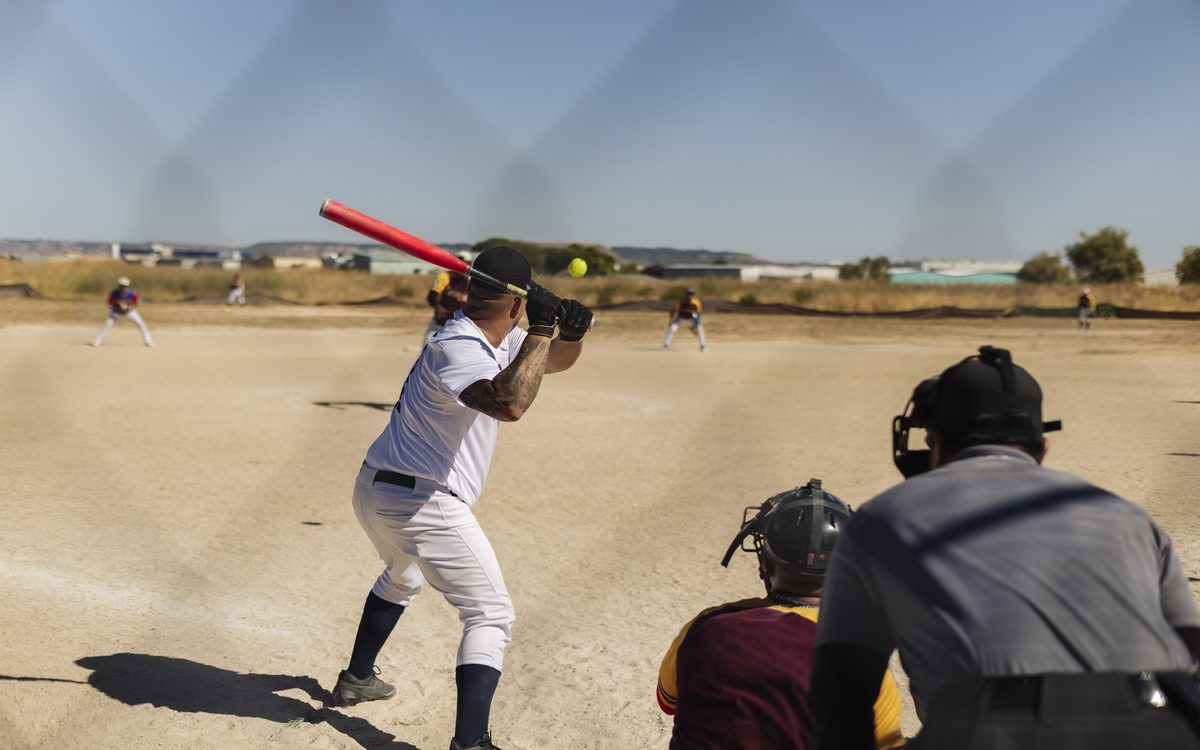
Friday morning after a doubleheader: the stairs are a negotiation, one hamstring feels tight, and you cannot tell if your shoulder is just sore or something more. Slow-pitch recovery is what you do between games, sleep, food and fluids, easy movement and honest load management, so that soreness fades and small problems do not turn into injuries. This page is about adult recreational players, and it is frank about where the evidence for popular recovery tools is thin.
Quick answer: For most slow-pitch players, recovery is sleep, a meal with fluids soon after the game, easy movement the next day and a day or two of real rest. Massage, compression and cold water have some support for easing soreness and tiredness in a large 2018 review, but that is not the same as proof they improve performance or prevent injury. Soreness is normal; sharp pain, swelling, a joint that gives way, or pain that gets worse is a reason to see a sports medicine doctor, physical therapist or athletic trainer.
General information, not medical advice. For how to lower injury risk see our injury-prevention page, and for rehab basics see the injuries page. The slow-pitch softball hub has the whole sport.
Sleep comes first
The CDC recommends that adults get at least 7 hours of sleep a night. A 2021 expert consensus on sleep and the athlete (Walsh and colleagues, British Journal of Sports Medicine) notes that athletes are prone to habitually short sleep (under 7 hours) and poor sleep quality, that sleeping less than 7 hours habitually raises the risk of respiratory infections in the general population, and that performance falls after a night or more without sleep. It also says a one-size-fits-all number, such as 7 to 9 hours, is unlikely to be ideal and recommends considering what the individual feels they need. Late-evening games add a wrinkle: lights, adrenaline and food can push bedtime back. A fixed bedtime and a wind-down routine are general advice, not a slow-pitch finding.
Fuel and fluids afterward
The American College of Sports Medicine’s position stand on exercise and fluid replacement says that after exercise the goal is to replace any fluid and electrolyte deficit, and that how quickly depends on how big the deficit is and when you next play or train. For slow-pitch, that mostly means drinking water and eating a normal meal with some protein and carbohydrate within a few hours. Our nutrition page goes deeper.
Load management for weekend players
Load management just means not stacking up more games and practice than your body is used to. For recreational slow-pitch that is usually about tournament weekends: three or four games in one day, then work on Monday. General coaching practice is to build toward a weekend, not jump into it, to keep the days before easy, and to eat and sleep deliberately between games. If you play in more than one league, remember that your body counts all of it. If you pitch, a tired arm that loses its arc or accuracy is a hint to rest.
Mobility and flexibility
OrthoInfo (AAOS) suggests gentle stretching of the back, hamstrings and shoulders in a warm-up and stretching after play, holding each stretch about 30 seconds, to reduce soreness and keep muscles flexible. That is guidance from an orthopaedic source rather than the result of a slow-pitch trial. A reasonable routine, as general practice: five to ten minutes after the game or the next day for the hips, hamstrings, calves, chest and shoulders, plus easy rotation through the trunk, which gets worked every swing. Pain on stretching, as opposed to a gentle pull, is a reason to stop.
What the evidence says about recovery tools
A 2018 systematic review and meta-analysis (Dupuy and colleagues, Frontiers in Physiology) pooled 99 studies of post-exercise recovery techniques and looked at soreness, perceived fatigue, muscle damage markers and inflammation. It reported that active recovery, massage, compression garments, immersion, contrast water therapy and cryotherapy produced small to large decreases in some measures, that massage looked the most effective for reducing soreness and perceived fatigue, and that massage and cold exposure were strongest for reducing inflammation markers. It also reports that compression, massage and water immersion can manage perceived fatigue.
Here is the honest caveat. Those outcomes are how people feel and what blood markers show, not how fast they hit, throw or stay injury-free. The review was not about softball players and mixed many different studies. So treat tools as comfort measures that some players like, not as performance boosters. If you buy one, check the maker’s claims against that standard; our general guides cover recovery tools and recovery shoes.
Soreness versus injury
- Likely soreness: a dull, achy, widespread tightness in the muscles the day after unfamiliar activity, which eases with gentle movement.
- Worth getting looked at: sharp or pinpoint pain, swelling, bruising, a joint that feels loose, pain at night or at rest, pain that returns every time you throw or sprint, or trouble putting weight on a foot. OrthoInfo says to see a doctor if swelling or pain persists for several weeks, or if you cannot put weight on a sprained ankle.
- Urgent: a head injury with danger signs (call 911, per CDC HEADS UP), or someone who is confused or collapses after playing in the heat (call 911 per NATA).
Slow-pitch softball recovery FAQs
How much sleep do I need after a game?
The CDC recommends at least 7 hours for adults. An expert consensus on athlete sleep cautions that one number does not fit everyone and suggests considering how much sleep you feel you need.
Do foam rollers, massage guns and compression boots work?
Evidence is mixed and mostly about soreness and perceived tiredness. A 2018 meta-analysis found massage and compression could reduce soreness and perceived fatigue, but it did not show these tools make athletes faster or prevent injury.
Should I do cold plunges after a tournament?
A 2018 review reported that cold exposure reduced some inflammation markers. We found no slow-pitch evidence, and cold water has its own safety issues, so ask a clinician if you have a heart or circulation condition.
Is it normal for my arm to be sore the day after?
Some muscle soreness after unaccustomed throwing is common. Sharp pain, swelling or pain that returns each time you throw should be checked by a sports medicine doctor, physical therapist or athletic trainer.
How many rest days should I take?
We found no slow-pitch-specific recommendation. A sensible rule of thumb in general coaching is at least one day a week without planned exercise, more when you are sore or sleeping badly. A clinician can tailor this to you.
Sources
- CDC, About sleep
- Walsh et al. 2021, Sleep and the athlete, expert consensus, Br J Sports Med (Europe PMC)
- Dupuy et al. 2018, post-exercise recovery techniques, Front Physiol (PubMed)
- ACSM position stand, Exercise and fluid replacement 2007 (Europe PMC)
- OrthoInfo (AAOS), Baseball injury prevention
- OrthoInfo (AAOS), Sprained ankle
- CDC HEADS UP, signs and symptoms
- NATA position statement, exertional heat illnesses (PubMed)
General information for education only, not medical advice. It does not replace a visit with a doctor, physical therapist or athletic trainer. See how we write and check our pages in our editorial policy.