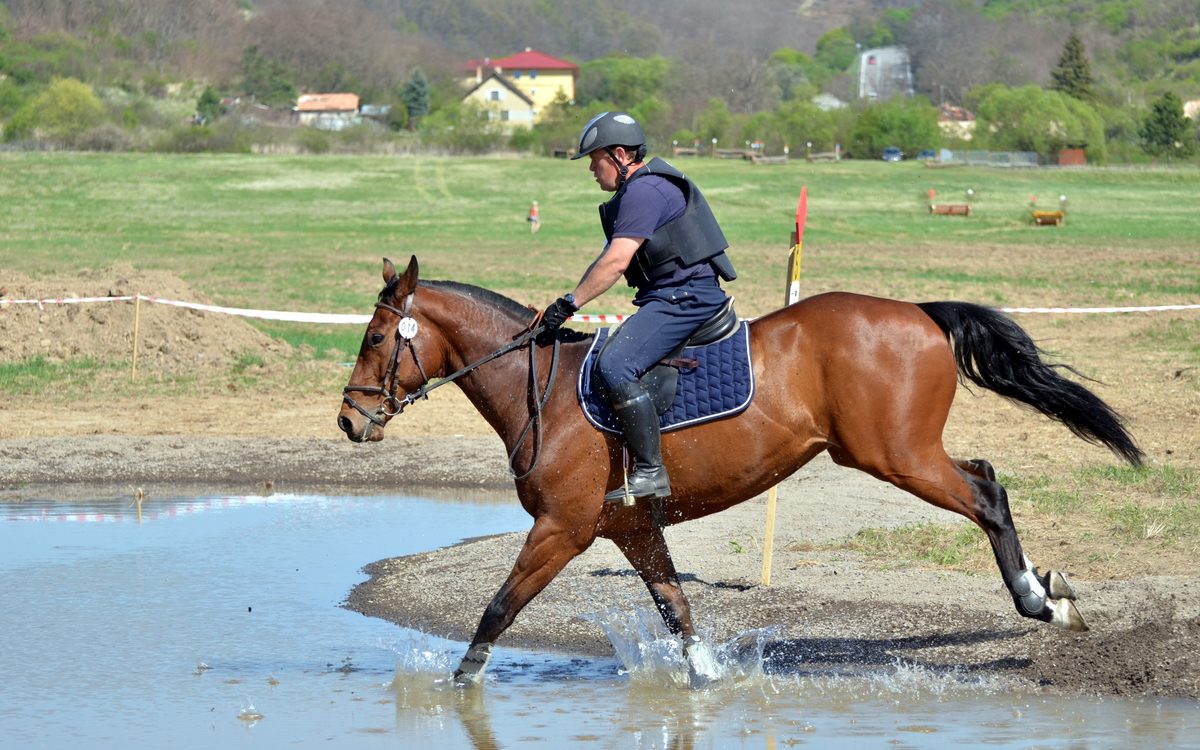
Sunday evening after a two-day horse trial: the horse is cooled out, the tack is clean, and the rider is sitting on a trailer ramp with legs that feel like wet sand. Tomorrow is a work day. Recovery in eventing means two things at once: the horse’s recovery, which your vet and coach lead, and your own. This page covers the rider’s side: sleep, load, mobility, the honest evidence for common recovery tools, and how to tell ordinary soreness from an injury.
Quick answer: For most riders, the basics work best: enough sleep, food and fluids soon after riding, easy movement, and planned rest days. Evidence for gadgets is mixed; a 2018 meta-analysis found massage the most effective of the methods studied for soreness and perceived fatigue, while other methods showed little or no benefit for some outcomes. Normal soreness fades within a few days. See a sports medicine doctor, physical therapist or athletic trainer for pain that is sharp, one-sided, getting worse or after a fall with a head or neck knock.
Sleep and daily recovery
Sleep is the foundation. The CDC advises adults to get at least seven hours a night, and many riders lose sleep on competition weekends: early starts, travel and late-night horse checks. General coaching practice includes keeping a consistent bedtime in the week before an event, limiting caffeine late in the day (see our nutrition and supplements page), and planning a short nap when you can. There are no eventing-specific sleep studies in what we found, so the advice is borrowed from sport and health guidance in general.
Managing load across the season
Rider workload is made up of lessons, schooling, fitness sessions, events, travel and the physical work of caring for horses. A 2025 review found that riders often neglect structured conditioning, which means fatigue from the barn chores can stack on top of riding. A few practices from general coaching:
- Plan rest days in the week, and an easier week every few weeks.
- Follow competition with easier days. After a cross-country day, a light hack or a walk is a common choice, and a hard jump session the next day is not.
- Watch trends. Trouble sleeping, nagging aches, low mood or a resting heart rate that stays high can suggest you are carrying too much. See a professional if it continues.
- Match riders to horses. If you ride several horses a day, your own workload is higher than a rider with one.
Training structure is on the eventing training page.
Refuelling after riding
The 2023 review by Best and colleagues suggests 1 to 2 grams of carbohydrate per kilogram of body weight within the three hours after exercise, sooner if you have another session, along with protein and fluids. It also gives general hydration guidance. See nutrition and supplements for more. After a hot day, watch for heat illness signs (heavy sweating, dizziness, nausea, confusion) in line with the CDC and get medical help if they appear.
Mobility and flexibility
Riders often tighten in the hips, hip flexors, thighs, lower back and shoulders. A 2025 review linked rider asymmetry to uneven loading and reduced performance, and found many riders unaware of their own imbalances, so a physical therapist or coach can help find what is yours. General coaching practice includes easy hip and thigh stretches after riding, thoracic (upper back) mobility, calf stretches for heels-down position and slow breathing. Stretching is not among the methods that the 2018 meta-analysis reported as reducing soreness. Do mobility work because it feels useful and helps you sit evenly, not as a guarantee.
What the evidence says about recovery methods
A 2018 meta-analysis of 99 studies by Dupuy and colleagues looked at techniques after exercise. It found that active recovery, massage, compression garments, immersion in water, contrast water therapy and cryotherapy produced small to large decreases in delayed-onset muscle soreness, while other methods did not change it. Massage came out as the most powerful for soreness and fatigue, and massage and cold exposure were most effective for inflammation markers. Those findings come from many kinds of exercise, mostly not riding, so how well they carry over to eventing is uncertain.
| Method | What the 2018 analysis found | A fair reading |
|---|---|---|
| Massage | Most effective for soreness and perceived fatigue | Can feel good and may help soreness; effects on performance are less clear |
| Cold or contrast water immersion | Small to large decrease in soreness | Some riders use it after a hot event; check with a doctor if you have a heart or circulation condition |
| Compression garments | Reduced soreness and perceived fatigue | Modest effect; fit matters |
| Active recovery | Reduced soreness | Easy movement is low risk |
| Stretching | Not among the methods reported to reduce soreness | Do it for comfort, not as a proven fix |
Recovery tools such as foam rollers and massage guns are consumer products, not medical treatment. Our recovery tools guide compares them, and the horseback riding recovery page covers the wider sport.
Soreness or injury?
- Usually soreness: a dull, spread-out ache in muscles you worked, peaking a day or two after unfamiliar work, easing with movement and improving over a few days.
- See a professional: sharp or pinpoint pain, pain that is one-sided or worse each day, swelling, numbness or tingling, pain at night or at rest, pain after a fall, or anything that changes how you ride.
- Head knock or neck pain after a fall: follow CDC HEADS UP and call emergency services for danger signs. See eventing injuries.
Recovery and the mind
Frustration, low mood or fear after a fall are normal, and recovery includes them. See mental training. If low mood or worry lasts or gets in the way of daily life, talk to a qualified health professional. Back to the eventing hub.
Eventing recovery FAQs
How much sleep do eventers need?
The CDC advises adults to get at least seven hours a night. Individual needs vary, and competition weekends often cut sleep short, so many riders plan ahead.
Does massage help after an event?
A 2018 meta-analysis found massage the most effective method for soreness and perceived fatigue, though most studies were not in riders.
Should I stretch after riding?
Stretching can feel good and helps some riders manage tightness, but it was not among the methods the 2018 analysis reported as reducing soreness. Treat it as comfort, not treatment.
Is an ice bath a good idea after cross-country?
Cold water immersion reduced soreness in the 2018 analysis. It is not for everyone; check with a doctor if you have heart or circulation problems.
How do I know if I am overtraining?
Persistent fatigue, poor sleep, nagging aches or a drop in mood can be signs. A coach, doctor or physical therapist can help sort it out.
Sources
- Dupuy O et al. 2018, evidence-based recovery techniques (PubMed)
- Best et al. 2023 (PubMed)
- Best et al. 2023, full text (PMC)
- Rider performance narrative review, 2025 (PubMed)
- CDC: About sleep
- CDC heat signs and symptoms
- CDC HEADS UP: respond
General information for education only, not medical advice. It does not replace a sports medicine doctor, physical therapist, athletic trainer or qualified coach. See our editorial policy for how we research and write.