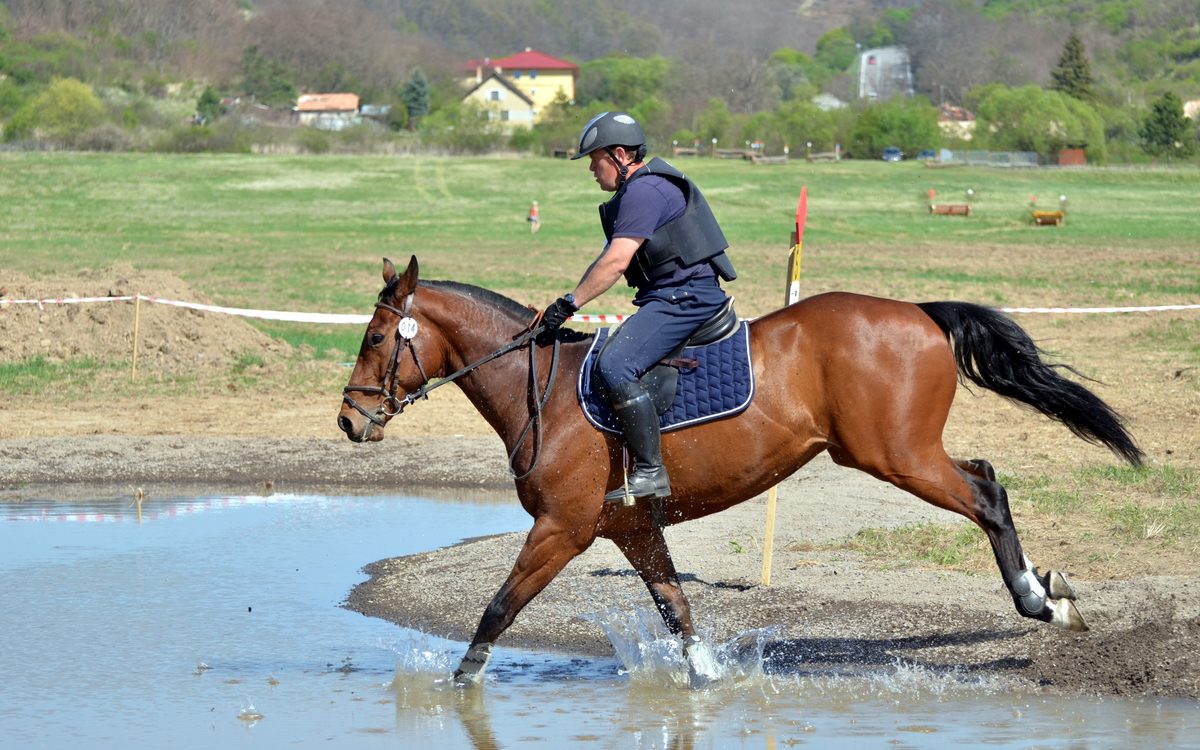
The cross-country start box is an hour away, and the rider has eaten nothing since a nervous half-banana at dawn. Dressage went well, show jumping is tomorrow, and her stomach is tight. Eventing days are long, hot and split between the horse’s needs and your own, so meals get skipped first. Eventing nutrition is about eating and drinking enough, at the right times, to ride well and stay healthy. This page covers fuel, hydration, energy-deficiency awareness and a short, careful look at supplements.
Quick answer: Riders need enough energy to fuel several hours of work across a competition day, steady fluids and a plan for hot weather. A 2023 review of equestrian nutrition gives carbohydrate and hydration ranges for riders, but individual needs vary, so a registered dietitian or sports dietitian is the best guide. Food comes first; most supplements have little evidence, and some carry banned-substance risk. Check with a doctor or dietitian before taking any.
Fuelling an eventing day
The most detailed rider-specific source is a 2023 review by Best, Williams and Pearce in Nutrients, which pulls together evidence from sport and veterinary science. Its example for the very heaviest competitive loads includes eventing, which matters on a three-phase weekend. Its main points, in plain words:
- Daily carbohydrate scales with workload. The review suggests about 3 to 5 grams per kilogram of body weight on low days, up to 10 or more on very heavy competitive days such as eventing, with multiple forms of carbohydrate better tolerated at higher intakes. Those are ranges for athletes riding a lot, not targets for a weekend rider.
- Before the event, 30 to 60 grams of carbohydrate per hour in the one to four hours before is suggested, as comfortable. Between phases, small, easy-to-digest carbohydrate, again 30 to 60 grams per hour, is suggested if tolerated.
- After riding, the review suggests 1 to 2 grams per kilogram of carbohydrate in the three hours after exercise, with protein spread through the day.
- Protein at 1.2 to 2.2 grams per kilogram per day in four to six doses, according to the review, with higher intakes during intensified training, lower energy intake or injury.
The authors also note anecdotal reports of riders feeling nauseated or intentionally restricting food before competition, so practising fuelling in training and discussing a plan with a dietitian is worthwhile. Try new foods in training, not on cross-country day. Our horseback riding nutrition page covers the wider sport.
Hydration and heat
Eventing is outdoors and the vest, boots and helmet trap heat. The Best review notes that heat raises heart rate and sweat rate and the perceived effort. For hydration it suggests about 5 to 10 millilitres per kilogram of body weight two to four hours before exercise, and says that during exercise, lower-sugar (hypotonic) drinks have good evidence for keeping body water balance. The CDC lists heavy sweating, dizziness, nausea and confusion among heat-illness signs: stop, cool down and get medical help. Heat also makes it harder to think and decide on a course, so hydration is part of safety. See eventing injury prevention.
The review also says alcohol may impair decision-making and reaction time and affect rehydration and recovery; plan accordingly after the event, not before cross-country.
Energy availability and RED-S awareness
Relative energy deficiency in sport (RED-S, also written REDs) happens when a body does not get enough energy for training plus basic health, and it can affect hormones, bones, mood and performance. The IOC published a consensus statement on it in 2023. The Best review reports a high prevalence of disordered eating behaviours and RED-S in equestrian sport and points to pressure to conform to a particular look as one factor, and it advises a general preventative approach with education and referral rather than self-diagnosis. A small study of male flat jockeys found low bone density that was not linked to their years of race riding or to low energy availability, and the authors suggested the lack of a bone-loading stimulus in riding could play a role. That is a different group (jockeys), so it should not be read as eventing data.
If you notice constant fatigue, repeated injuries, missed or irregular periods, restricting food or fear of eating, talk to a doctor, sports dietitian or other qualified professional. This is a health matter, not a mental-toughness one. There is no weight-class in eventing, but weight and appearance pressure exists in riding culture; see mental training for how that links to mental health.
Supplements: be cautious
Supplements are not required for most riders. The IOC consensus statement on dietary supplements says nutrition makes a small but potentially valuable contribution, that supplements are a minor part of that, that only a few (including caffeine, creatine, specific buffering agents and nitrate) have good evidence of benefit for performance, and that inadvertent ingestion of banned substances is a known risk. It advises expert professional help and trialling any supplement in training first.
- Banned-substance awareness. The FEI has anti-doping rules for human athletes in its events, with testing at FEI competitions (the USEA has explained these). Check the current rules and any therapeutic use exemption requirements before competing in FEI events.
- Third-party testing. If you use a supplement, prefer products tested by an independent programme such as NSF Certified for Sport or Informed Sport, and use the USADA Supplement Connect resource. Testing lowers the risk but does not remove it, and a label does not make a product safe for you.
- Stimulants and caffeine. Caffeine content varies, and it is not for everyone (heart conditions, pregnancy, sensitivity, anxiety). Follow the label and check with a doctor.
- Iron and vitamins. Do not self-prescribe; too much iron is harmful, and a test can show whether you need it.
We do not give dosages. See the NIH Office of Dietary Supplements for fact sheets, and talk to a doctor or dietitian first. Our electrolyte powder guide compares drink mixes for hot days; mixes are food products, not treatments.
Eventing nutrition and health FAQs
What should I eat on competition day?
A 2023 review suggests familiar, easily digested carbohydrate before and between phases and a recovery meal afterwards. Practise in training and consult a dietitian for a personal plan.
How much should I drink?
The same review suggests about 5 to 10 millilitres per kilogram of body weight two to four hours before riding, then regular sips. Heat, sweat rate and nerves change the need.
Do eventers need supplements?
Most do not. The IOC says only a few supplements have good evidence and that contamination is a risk. Talk to a doctor or dietitian first.
What is RED-S?
Relative energy deficiency in sport: not eating enough for training plus health. It can affect bones, hormones and mood. See a doctor or dietitian if you recognise the signs.
Can I use energy drinks before cross-country?
Caffeine is individual and not suitable for everyone. Try it in training, follow the label, and check with a doctor if you have a heart condition.
Sources
- Best R et al. 2023, Nutrients (PubMed)
- Best et al. 2023, full text (PMC)
- IOC consensus statement: dietary supplements and the high-performance athlete (PubMed)
- IOC consensus statement on RED-S, 2023 (BJSM)
- Male flat jockeys, bone density and RED-S (Liverpool John Moores University)
- USEA: increased human testing at FEI competitions
- FEI Clean Sport: human regulations
- USADA Supplement Connect
- NSF Certified for Sport
- NIH Office of Dietary Supplements: iron
- CDC heat signs and symptoms
General information for education only, not medical advice. It does not replace a sports medicine doctor, physical therapist, athletic trainer or qualified coach. See our editorial policy for how we research and write.