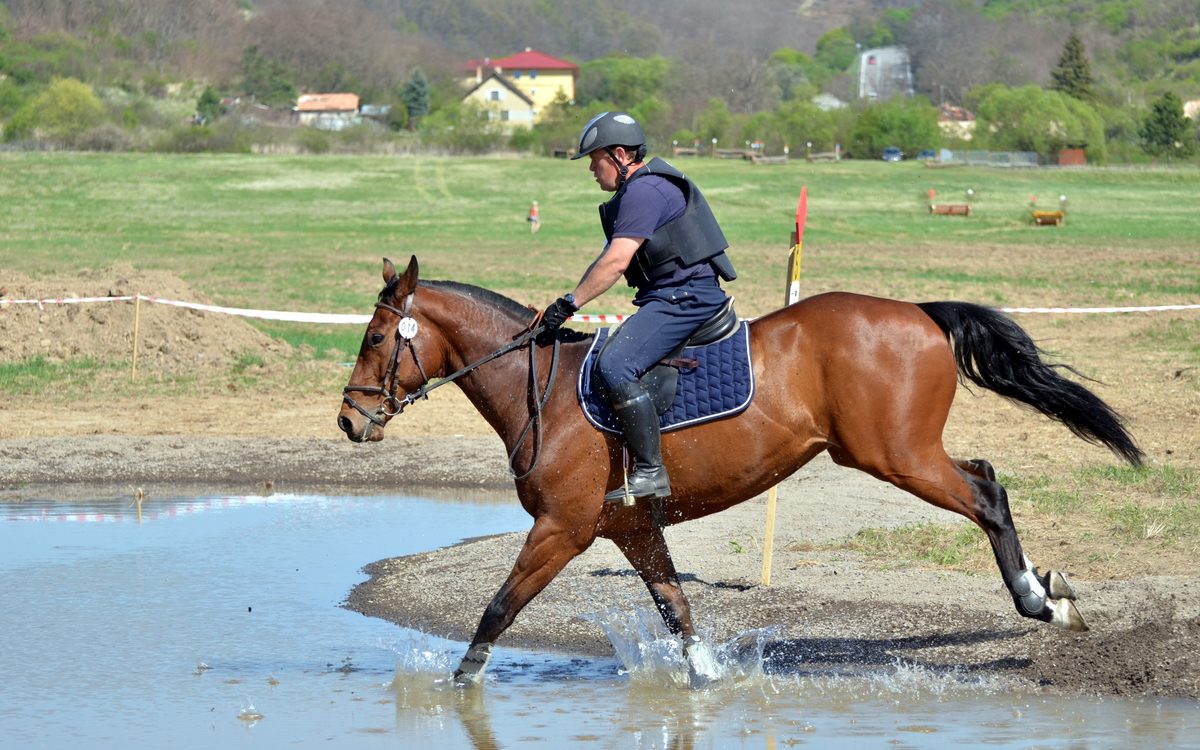
At the third fence on a Training-level course, a horse that had jumped everything cleanly all morning sees an oxer with a shadow across the landing side, and for half a stride the rider feels the horse hesitate. What she does in that half stride is trained, but so are the choices made weeks earlier: whether the horse was ready for the level, whether her helmet fit, whether she was fit enough to stay balanced. Eventing injury prevention is the set of habits that lower the chance and seriousness of injury. It cannot remove risk, because cross-country puts a galloping horse in front of fixed obstacles.
Quick answer: The best-supported steps are a certified, well-fitted helmet and body protector, careful progress up the levels, a horse and rider who are well prepared for the course, and a warm-up and fitness routine that suit the sport. Research shows the risk of a horse fall rises with level, and one UK study found that rider attitude to risk-taking predicted injury. Nothing prevents every injury. See a sports medicine doctor, physical therapist or athletic trainer if pain persists, and call emergency services for danger signs after a head injury.
General information, not medical advice. This page is about lowering risk. What each injury looks like is on our eventing injuries guide, so we do not repeat it here. For the sport itself, start at the eventing hub.
Choose the right level, at the right pace
Level is the biggest risk marker in the data. A study of 749,534 cross-country starts at British Eventing competitions (2005 to 2015) found higher odds of a horse fall as level rose: compared with the lowest level (BE90), the odds ratio was 3.58 at novice, 8.00 at intermediate and 12.49 at advanced. The same analysis found that every additional 10 dressage penalties, and a longer gap since the horse’s last start, were associated with a higher risk. The authors note horse falls are the leading cause of rider fatality in the sport, and that the study is UK only and had no data on training. This is observational research, so it shows patterns, not causes.
A Swedish study of 513 invited eventing athletes found that attitude to risk-taking was the only factor predicting injury, and that qualification level predicted further injuries among injured riders; the authors suggested care when riders are licensed into higher groups. Practical read: move up when you and your horse are consistently comfortable at the current level, ideally with a coach’s agreement, not when entries or friends push you.
Warm-up and fitness
No published eventing warm-up program has been tested the way FIFA 11+ has for soccer, so what follows is general coaching practice: five to ten minutes of easy movement before mounting (hip circles, leg swings, gentle squats, shoulder rolls), then a progressive warm-up on the horse before faster work. Riders’ off-horse fitness also matters. A 2025 review found that riders often neglect structured conditioning, and that targeted core training and cross-training improved balance and reduced back pain in the studies reviewed. See eventing training for the fitness side.
Technique, preparation and course skills
- Ride the course you walked. Walking cross-country on foot and noting the going, the ground lines and the plan for tricky fences is standard practice and is general coaching advice.
- Pace and rhythm. Many falls start with a poor approach. A coach can help with finding a balanced, forward canter to each fence.
- Know when to retire. USEF rules provide compulsory retirement at 20 or more jump penalties in show jumping at Training level and above. Riders may also choose to retire after a bad run.
- Match schooling to the horse. Giving a green horse time at each level is a common way to build confidence for both.
Frangible devices and course design
USEF rules require frangible devices at Training level and above on certain fences, such as open oxers and corners, designed to give way when hit hard. FEI committee papers reported by horse-sport media say rotational falls (the most dangerous kind) have fallen over the last decade, with FEI data cited as about one per 506 starters in 2014 and one per 851 in 2023. We could not open the FEI document ourselves, so treat the figures as reported and check the FEI risk management pages.
Protective equipment and fit
This section separates rules and standards from maker claims.
- Helmets. USEF rules require properly fitting protective headgear when mounted at licensed events, and the rider (or parent) is responsible for certification and fit. A 2018 matched-pairs analysis of equestrian traumatic brain injury (20 pairs) associated helmet use with lower risk of intracranial hemorrhage, and a 2025 review says helmets protect against skull fracture and traumatic brain injury.
- After a fall. Makers such as Troxel say a helmet is built for one impact and should be replaced after an accident or every five years. In a 2025 survey of 357 collegiate riders, 78% said they would not replace a helmet after every fall.
- Body protectors. A body-protecting vest must be worn during warm-up and cross-country under USEF rules, and the Federation recommends a vest meeting ASTM F1937 or certified by SEI. The 2025 review says vests have not been associated with fewer spinal cord injuries but may protect the thorax.
- Inflatable vests. They are allowed only in addition to a body protector on cross-country. One analysis of FEI fall reports (PMID 31160233) found wearers over-represented among serious injuries; this does not show cause, and the evidence is still developing.
- Medical armband. Riders wear a medical data carrier listing relevant conditions, including a recent head injury.
Gear details, fit checks and our picks are on the eventing gear page.
Environment: heat, footing and weather
Eventing happens outdoors in a vest and boots, often in summer. The CDC lists heavy sweating, dizziness, nausea and confusion among heat illness signs; stop, cool down and get medical help if they appear. A 2023 review notes that heat raises heart rate and sweat rate and increases the perceived effort. Plan hydration and shade between phases; see nutrition and hydration. Wet or deep ground changes how a horse moves and jumps, so talk with your coach about whether to run, ride more carefully or withdraw.
Youth riders
A 2025 scoping review of youth horse-related injuries (1,400 participants, 78.7% girls) found that studies mostly cover acute injuries and traumatic brain injury and that more research on young riders is needed. Beyond universal helmet and vest use and supervised, level-appropriate progress, we have no eventing-specific youth data to report.
What prevention cannot do
Equipment lowers the severity of some injuries but cannot stop a heavy fall. Fitness lowers fatigue but cannot read a horse. Careful progress lowers risk but does not remove it. The Swedish study also advises that prevention programs should address overuse injuries, which build slowly from repeated strain on the back, hips and knees.
When to see a professional
See a sports medicine doctor, physical therapist or athletic trainer for pain that persists, grows or changes your riding. After any suspected head injury, follow the CDC HEADS UP rule: recognize and remove, then a healthcare provider decides when to return. Call emergency services for danger signs such as repeated vomiting, a seizure or worsening headache, and never move someone with a possible neck or back injury.
Eventing injury prevention FAQs
Does wearing a helmet prevent concussion?
Helmets protect against skull fracture and traumatic brain injury, according to a 2025 review, but no helmet prevents every concussion. Wear one every ride and replace it as the maker advises.
Should I wear an inflatable vest?
Inflatable vests are allowed on cross-country only on top of a body protector under USEF rules. Evidence is still developing, so ask your coach and follow the maker’s instructions.
Is eventing riskier at higher levels?
In a large British study, horse falls were more likely at higher levels. Observational data show patterns, not guarantees.
Does a warm-up prevent injury?
No eventing-specific program has been tested. A gradual warm-up is general practice and helps prepare the body.
When should I replace my helmet?
Makers such as Troxel say after an accident or every five years. Follow the instructions for your own helmet.
Sources
- USEF Rules for Eventing
- USEF GR8, Conduct of Licensed Competitions
- British Eventing horse-fall risk factors (PubMed)
- Swedish eventing injury study (PubMed)
- CNS and thorax injury in equestrian sports, 2025 (PubMed)
- Helmet type and head injury in collegiate equestrians, 2025 (PubMed)
- Helmet use in equestrian TBI, matched pairs (PubMed)
- Air jacket analysis (PubMed)
- Youth horse-related injuries scoping review (PubMed)
- Rider performance narrative review, 2025 (PubMed)
- Best et al. 2023 (PubMed)
- Troxel helmet certifications
- CDC HEADS UP: respond
- CDC heat signs and symptoms
General information for education only, not medical advice. It does not replace a sports medicine doctor, physical therapist, athletic trainer or qualified coach. See our editorial policy for how we research and write.