Quick answer: Rugby league asks for repeated sprints, hard collisions and the ability to get up and go again. Forwards and backs train differently: a 2026 review found forwards stronger and heavier, and backs faster with better aerobic scores. A sensible week mixes two or three strength sessions, speed and repeated-effort conditioning, skills and tackle practice, and rest. Build load gradually. The week shape below is general coaching practice, not a prescription; a qualified coach or strength coach should tailor it.
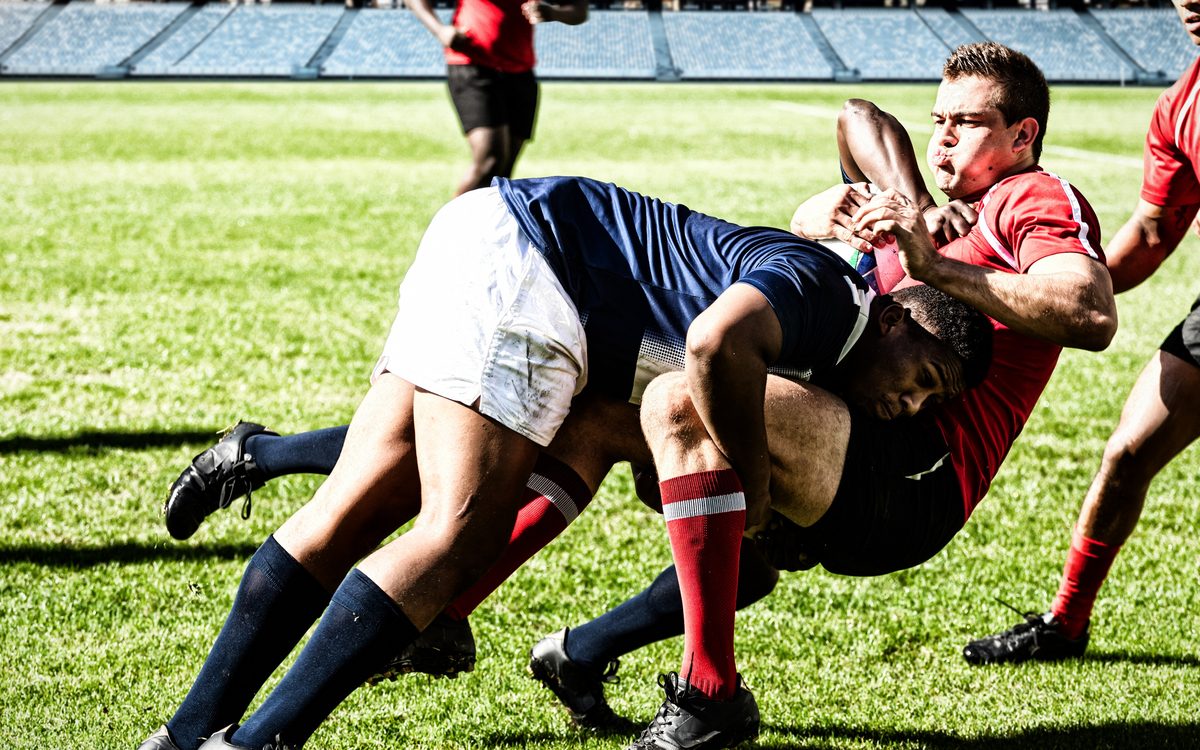
Late in the second half, a prop has just made his fourteenth tackle, jogs back ten metres, gets up from the play-the-ball and does it again. Rugby league training is built around that loop. This page covers what the sport demands, how a week might be shaped, and what the evidence says about strength, conditioning and building load safely. It sits within our rugby league hub.
What a match asks of the body
A 2019 meta-analysis of professional rugby league match play (Glassbrook and colleagues, Sports Medicine – Open) pooled 30 studies and found clear position differences. Forwards covered about 1,697 m less total distance than backs, about 229 m less high-speed distance (above 18 km/h) and had about 12.8 more collisions per match. Per minute, forwards had about 0.41 more collisions. The authors note very high variation between studies, so treat the figures as a rough guide to the shape of each role, not a target.
A 2026 systematic review of adult male rugby players (Czyz and colleagues, 37 studies, over 2,000 players, covering union and league) found forwards had higher absolute strength, power, body mass and sprint momentum, while backs did better in 10 to 50 m sprints, maximum speed, aerobic tests and jump height. Once results were adjusted for body mass, many strength differences shrank or reversed, and the authors suggest coaches compare positions using values relative to body mass.
The practical lesson is that league fitness is not one thing. A winger needs speed and repeat sprints, a prop needs strength, tackle toughness and short bursts, and all positions need to recover between efforts. League also has a longer match than many sports: 80 minutes with a ten-minute interval (Laws, Section 7).
A sensible weekly shape (general coaching practice)
There is no sourced “best week” for rugby league, so the table below is a general template used by many team-sport coaches. Adjust it with your coach for your position, age, season phase and match day.
| Day type | Focus | Notes |
|---|---|---|
| Match day | Match or main game | Everything else works around this day. |
| Day after | Recovery and light movement | Walk, mobility, sleep; see recovery. |
| Strength day (1 or 2) | Lower and upper body strength, power | Squat, hinge, press, pull and jump patterns; heavier early in the week. |
| Speed and conditioning day | Sprints, repeated efforts, change of direction | Short, quality sprint work first; repeated-effort runs after. |
| Skills and team session | Passing, defence, set plays, tackle practice | Controlled contact in training; most concussions happen in matches, not training (see below). |
| Rest day | Full rest | At least one a week for most players. |
Strength and power
Strength work serves two jobs: producing force for contact and sprinting, and protecting joints. Common choices in team-sport programmes are squats, hip hinges, presses, rows and pulls, jumps and sled work. Beginners and youth players should begin with technique and bodyweight versions under a qualified coach. Neck, shoulder and trunk strength are often included for contact sport; we did not find league-specific evidence on neck training, so treat that as general practice.
Speed, conditioning and repeated efforts
Because match play is made of bursts with short breaks, many programmes use interval-style running and small-sided games that copy the stop-start pattern. The published positional data above suggest wide players spend more time at high speed and forwards spend more of their effort in collisions, so their conditioning emphasis differs. Aerobic fitness helps recovery between efforts; backs in the 2026 review tested higher on aerobic measures. Pace conditioning against match demands and add volume gradually.
Periodisation basics
Periodisation simply means planning the year in phases. A typical shape, described here as general practice, is an off-season of rest and rebuild, a pre-season that builds strength and fitness, and an in-season that maintains both while matches take priority. In season, many players cut gym volume but keep some heavy lifting so strength does not fade. Plan the hardest sessions away from match day.
Building load safely
Gabbett’s 2016 paper in the British Journal of Sports Medicine, “The training-injury prevention paradox”, argues that athletes used to high training loads can have fewer injuries than those who train less, and that excessive and rapid jumps in load are the likelier culprit for non-contact soft-tissue injuries. It also warns that under-training can raise risk. The idea fits what coaches try to do: build steadily, and be careful after a layoff or when stepping up a level. Movement-control programmes such as World Rugby’s Activate are covered on the injury prevention page.
A 2026 meta-analysis of concussion in rugby (De Sousa-De Sousa and colleagues) found about 10.45 concussions per 1,000 player hours in league matches against 0.32 in training. That does not make training risk-free, but it supports the common approach of practising contact skills in controlled form.
When training needs a pause
Persistent pain, a head knock with symptoms, unusual fatigue, or a drop in performance that lasts is a reason to talk to a sports medicine doctor, physical therapist or athletic trainer before pushing on. See the injuries page for patterns and nutrition and athlete health for fuelling.
Frequently asked questions
How often should a rugby league player lift weights?
There is no single sourced answer. Many team-sport programmes use two or three strength sessions a week in pre-season and fewer in season, but your coach should set this around match days and your position.
Do forwards and backs train differently?
Usually yes. Published match data show forwards have more collisions and backs cover more distance, and fitness tests show forwards stronger in absolute terms and backs faster and fitter aerobically. Training emphases follow.
Is rugby league fitness more about running or strength?
Both. Match data show repeated sprints, jogging and collisions in the same game, so programmes combine strength, speed and repeated-effort conditioning.
How do I avoid doing too much too soon?
Raise training load gradually and be careful after time off. Gabbett (2016) links rapid load jumps to non-contact soft-tissue injury, though under-training can also raise risk.
Can a beginner train like a pro?
No. Pro programmes assume years of strength and conditioning background. Start with technique, general fitness and a qualified coach.
Sources
- Glassbrook et al. 2019, The Demands of Professional Rugby League Match-Play: a Meta-analysis, Sports Med Open
- Czyz et al. 2026, Position-specific differences in fitness among adult male rugby players, PMID 42647354
- Gabbett 2016, The training-injury prevention paradox, Br J Sports Med, PMID 26758673
- De Sousa-De Sousa et al. 2026, A decade of concussion in rugby, PMID 42128596
- International Rugby League, Laws of the Game 2026
General information for education only, not medical advice. It does not replace a visit with a sports medicine doctor, physical therapist or athletic trainer. See how we research and write our pages in our editorial policy. More: rules and getting started, the rugby league hub and the sports hub.