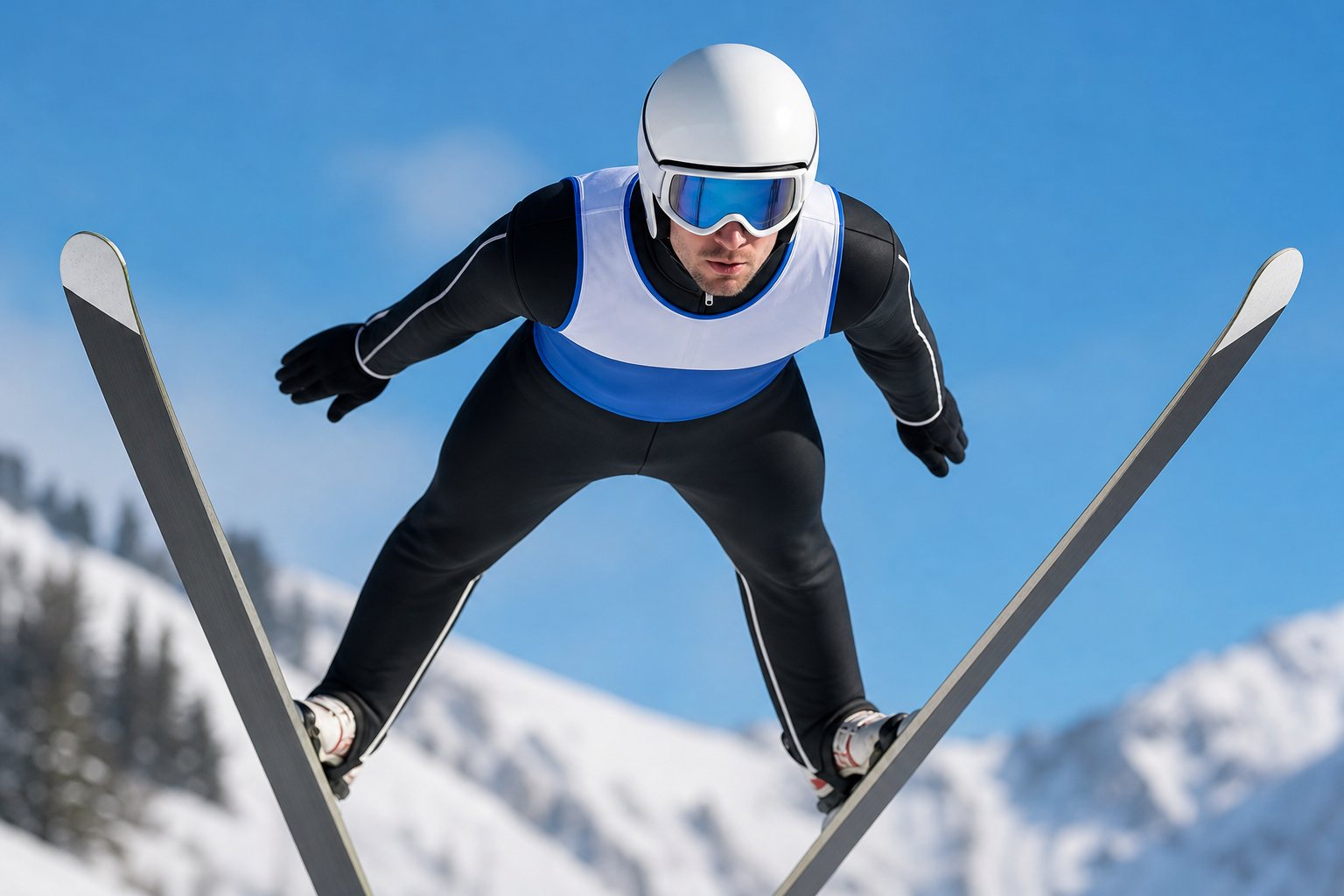
Snow is coming down sideways at the top of the hill and the wind flag keeps flipping. A jumper who has done this a hundred times waits a few extra minutes rather than push off into a bad gust. Ski jumping injury prevention is the set of habits around that choice: warm-up, landing technique, matching the hill to the athlete, equipment that fits, and honest reporting of pain. They lower the odds of getting hurt. They cannot promise anything.
Quick answer: The best-supported points come from injury studies in women’s World Cup jumping: most injuries came from crash landings, many in snowy, windy or cloudy conditions, and the knee was hit most often. So the practical steps are coached landings, careful decisions about weather and hill size, a proper helmet, and strong, mobile hips and legs. See a sports medicine doctor, physical therapist or athletic trainer for pain that persists, and call emergency services after a head injury with danger signs.
General information, not medical advice. What each injury looks like is on our ski jumping injuries page, so we do not repeat it. For the sport itself, see the ski jumping hub.
Warm up before the in-run
We did not find a published injury-prevention warm-up program tested in ski jumpers. General practice is a 10- to 15-minute routine of easy movement, dynamic leg and hip work and a few practice take-off movements before the first jump, and extra time in the cold. Standing at the top of a hill in winter chills the body, so warm layers between jumps matter (see our gear page).
Landings and technique
Stenseth and colleagues (British Journal of Sports Medicine, 2022) followed women’s World Cup jumpers over three seasons (205 athlete-seasons) and found crash landings caused 70% of injury events, and 46% of the acute events involved telemark landings. Landings are also under-researched: a 2026 biomechanics review (Funato and Sakurai) says landing research is insufficient, which limits prevention insight. The practical lesson is modest: landing technique is coached, practised in small steps and judged by a coach before moving up.
Match the hill and the weather to the athlete
In the same study 44% of acute ski jump events happened in snowy, windy or cloudy conditions, and the abstract also reports that 96% of jumps were shorter than the hill size. That does not prove a cause, but it supports a simple rule of thumb: jump on hills your coach has cleared you for, and treat wind and visibility as real decisions. USA Ski Jumping says jumpers progress to larger hills at their own pace, with safety the main priority and coach guidance.
Strength, hips and knees
The knee was the most common injury site in the women’s World Cup study (33%) and 78% of the severe injuries involved the knee. At the 2023 Nordic World Ski Championships, researchers (Kastner and colleagues) recorded 4.0 injuries per 100 athletes, with the lower limb accounting for 58.3% and half of those at the knee. A 2025 survey of 22 elite jumpers and Nordic combined athletes linked hip pain with knee and ankle pain, and the authors suggested hip strength and conditioning. General practice is regular leg, hip and trunk strength work; see our training page.
Helmets and protective equipment
FIS requires helmets in competition. AAOS OrthoInfo recommends a helmet made for skiing and says skis, boots and bindings should be set and tested by a shop following ASTM standards. A helmet standard that exists for recreational snow sports is ASTM F2040; whether a ski helmet meets a jumping club’s own rule is a question for the club, which is why we say ask. Standards are one thing; marketing is another. Check the standard on the label, not the box slogan. More on our gear page.
Concussion
Three concussions were recorded at the 2023 Planica championships (12.5% of injuries), all in ski jumping (Kastner and colleagues); the authors named concussion in ski jumping a priority. The CDC’s HEADS UP program lists signs such as looking dazed, trouble concentrating, balance problems, headache and vomiting. Remove anyone with a suspected concussion from jumping; a healthcare provider decides when to return. Call 911 for danger signs such as repeated vomiting, seizures, one pupil larger than the other or worsening confusion.
Weight, fuelling and health
Under-fuelling raises injury risk in many sports; the IOC consensus statement on Relative Energy Deficiency in Sport (REDs, 2023) is the reference. See our nutrition and athlete health page.
What prevention cannot do
No program removes the risk. Nothing here is proven to prevent a specific injury in ski jumpers, and the studies are small and observational. See a professional if pain lasts more than a few days, appears at rest or changes your jump.
Ski jumping FAQs
What is the most common ski jumping injury?
In the women’s World Cup study, the knee was the most common site (33%). See our injuries page.
Do ski jumpers wear helmets?
FIS requires them in competition, and clubs set their own rules. Ask your club which helmet it requires.
Does bad weather raise injury risk?
In the women’s World Cup study 44% of acute ski jump events happened in snowy, windy or cloudy conditions. Coaches and officials make the call on conditions.
Can strength training prevent injuries?
We found no ski-jumper-specific trial. A 2025 survey suggested hip strength and conditioning might help, but it was small.
When should I see a doctor?
If pain lasts, appears at rest, causes swelling or the knee gives way, see a sports medicine doctor, physical therapist or athletic trainer.
Sources
- Stenseth et al., injuries in elite women’s ski jumping, Br J Sports Med 2022
- Kastner et al., injuries and illnesses at the Nordic World Ski Championships 2023
- Vasavada et al., hip, knee and ankle outcomes in elite Nordic jumping athletes, 2025
- Funato and Sakurai, biomechanics of jump distance by hill size, review, 2026
- AAOS OrthoInfo, skiing injury prevention
- ASTM F2040, helmets for recreational snow sports
- CDC HEADS UP, concussion signs and symptoms
- USA Ski Jumping, Ski Jumping 101
- Mountjoy et al., IOC consensus statement on REDs, 2023
- FIS, facts and figures
General information for education only, not medical advice. It does not replace a visit with a sports medicine doctor, physical therapist or athletic trainer. See how we write and check our pages in our editorial policy.