This article contains affiliate links: if you buy through them we may earn a commission, at no extra cost to you. Read our affiliate disclosure.
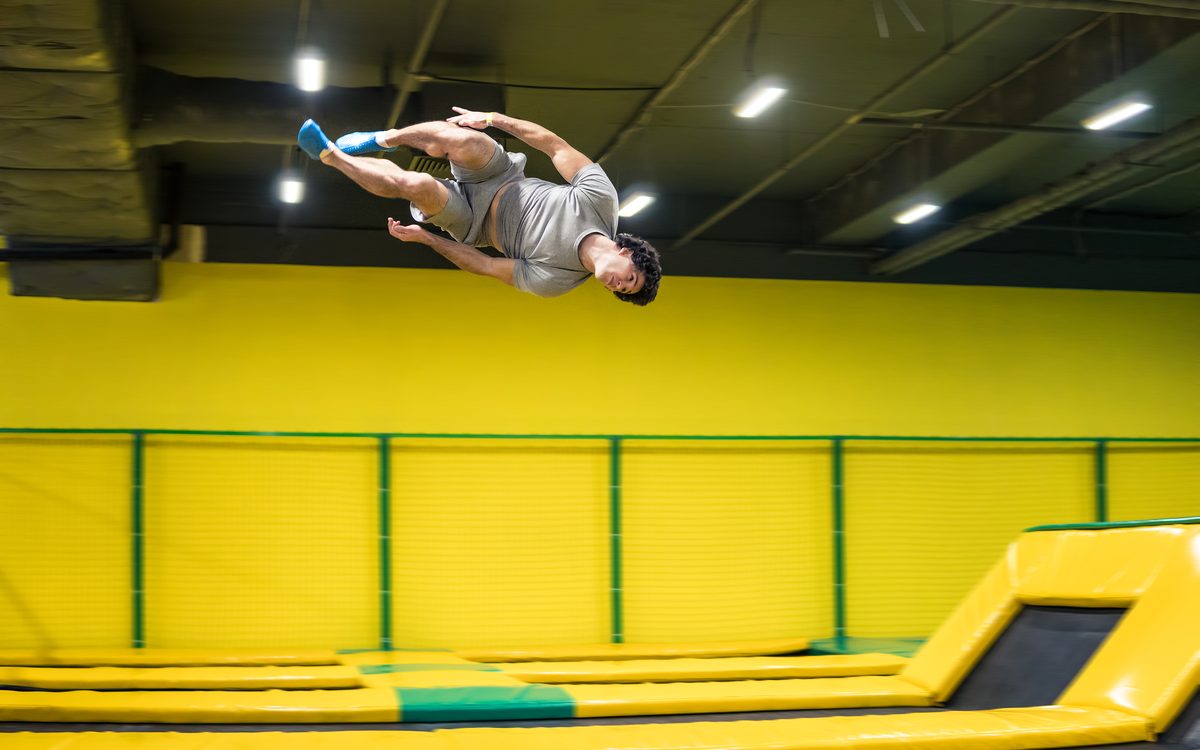
A new trampolinist arrives with a leotard, a pair of grippy socks and a question: what else do I need? The honest answer is not much, because the most important equipment in this sport belongs to the gym. Trampoline gymnastics gear splits into two groups: the apparatus (the trampoline, frame pads, platforms, mats and spotting equipment) that a club provides and maintains, and the personal items an athlete brings. This page explains both, what the rules and standards say, and where a maker’s claim is only a claim. The rules are on our rules page and the sport overview is on the trampoline gymnastics page.
Quick answer: The big-ticket equipment in trampoline gymnastics is the gym’s: the competition trampoline with padded frame, safety platforms and mats, and the spotting equipment. Athletes bring a leotard or shorts, trampoline shoes or socks, and sometimes an ankle support. A gym’s equipment should be checked for padding, wear and damage, and unsupervised use of a home trampoline for flips is discouraged by the American Academy of Pediatrics. Ask a club how it inspects its equipment, and check with a clinician before using a brace for an injury.
What the gym provides
The FIG Code of Points says equipment must meet the FIG Apparatus Norms, which we did not read directly. A Gymnastics BC equipment document for sanctioned events, based on the FIG norms, says trampoline beds, springs and end decks must meet FIG specifications, the area beneath the bed must be free of obstructions, the frame and springs must be entirely covered by shock-absorbing padding that does not touch the bed, safety platforms must sit at both ends of the trampoline, and safety mats of at least 20 centimeters in height must be placed on the ground around and between the trampolines. For synchronized events, the trampolines must be parallel, 2 meters apart. The same document lists an electronic time-of-flight device and an electronic device for horizontal displacement among competition requirements.
A developing program does not need all of this. USA Gymnastics’ own Q&A for clubs starting a program says a standard black-bed trampoline and skill cushions can suffice for the developmental levels, and that competition trampolines matter from Level 8 on. The same Q&A says hall height should be at least 23 feet for above-ground trampolines at Levels 1 to 7 and 26.25 feet for Levels 8 to Elite. Those are federation statements, so a club’s compliance is a question to ask the club.
- Overhead spotting rig. The American Academy of Orthopaedic Surgeons says somersaults and similar stunts should be tried only with supervision, instruction and protective equipment such as a harness. Ask who operates the rig, how it is maintained and what training the coaches have.
- Padding and mats. The AAOS advises keeping padding in position, checking for tears and wear, and replacing or discarding damaged equipment.
- Ground level. The AAOS advises setting trampolines at ground level, because falls from higher surfaces raise injury risk.
What athletes wear
The FIG dress rules give the minimum for competition. Men wear a sleeveless or short-sleeved leotard with gym shorts or trousers; women wear a skin-tight leotard or unitard, which may have sleeves, with optional skin-tight tights, shorts or head covering. Both wear trampoline shoes or foot coverings, and the Code requires hair to be secured close to the head. Jewelry, piercings and watches are not permitted in competition, and rings without gemstones may be worn if taped. Breaking the dress rules can cost 0.2 points. Bandages or supports must not create big contrast with the skin color. Spotters and coaches wear a track suit or shorts with a T-shirt and sport shoes, and coaches may not wear hats or caps.
In training, clubs set their own rules. General practice is close-fitting clothing without zippers or hard decorations, secure hair and either trampoline shoes or clean socks with grip. Ask your coach what is acceptable.
Ankle supports and bands
Ankle sprains were the most common single diagnosis across gymnastics disciplines at three Olympic Games (Edouard and colleagues, British Journal of Sports Medicine, 2017). Some athletes use a lace-up ankle support or tape after an injury, with a clinician’s advice. We found no trial of braces in trampolining, and a brace does not replace strength and landing practice. Fit matters: it should be snug but not numbing, and it should not change how the foot sits in the shoe. Resistance bands are used by many athletes for warm-ups and for ankle, hip and shoulder strength work, but a coach or physical therapist should set the exercises.

ASO EVO Ankle Stabilizer
- Low-profile lace-up
- Stirrup and figure-8 straps
- Fits inside most shoes

THERABAND Resistance Band Beginner Kit
- Yellow, red and green flat bands
- Clinic color system
- Packs into a gym bag
$11.99 at Amazon, as of Nov 17, 2026 02:07 UTC
Check price on AmazonNeither product is claimed to prevent injury. The ASO EVO is a lace-up ankle brace listed on Amazon as fitting inside most shoes, and the TheraBand kit is a set of flat resistance bands; both specs are the makers’ descriptions.
Recovery gear
Recovery items are optional. The best-supported recovery methods in a large review (Dupuy and colleagues, Frontiers in Physiology, 2018) were massage, with compression and water immersion helping perceived fatigue, and effects were modest. A foam roller is one self-massage option, and a cushioned slide is a comfortable thing to wear after practice, with no performance claim. See recovery for the evidence.

TriggerPoint GRID 1.0 Foam Roller
- 13-inch roller
- Multi-density foam
- Fits a gym bag
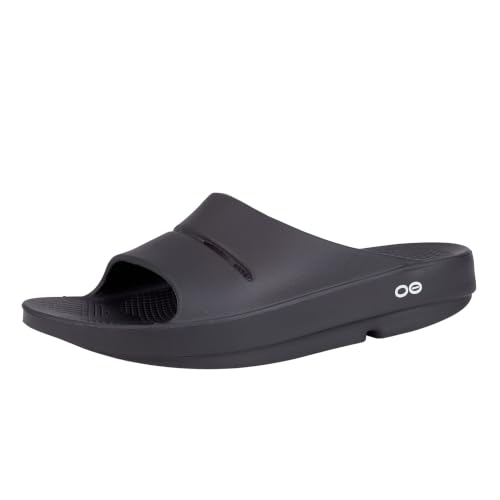
OOFOS OOahh Slide
- OOfoam slide
- APMA Seal of Acceptance
- Machine washable
$59.95 at Amazon, as of Nov 17, 2026 02:07 UTC
Check price on AmazonStandards versus maker claims
A verified standard comes from a federation or a recognized standards body, such as the FIG Apparatus Norms and the national-federation rules above. A maker claim is a description on a product page. Makers of trampolines advertise terms such as “FIG approved” or “FIG certified,” and we have not checked any maker’s claim against a published FIG list. We did not find an equipment standard for trampoline shoes. The APMA Seal of Acceptance on the slide above and the specs on every card on this page are the maker’s statements as listed, not our tests, and we have no ratings or test results of our own.
How to choose and check
- Start with the club. Ask to see the trampolines, pads, platforms and mats, and how and when they are inspected.
- Buy personal gear last. A leotard or shorts and shoes or socks cover most beginners. Add a support only on a clinician’s advice.
- Check fit. Anything on the feet or ankles should not slide, bunch or restrict circulation.
- Skip the home trampoline for flips. The American Academy of Pediatrics (2012) strongly discourages home trampoline use.
Trampoline gear FAQs
Do I need trampoline shoes?
The FIG Code says men wear white trampoline shoes, socks or a foot covering, and women wear trampoline shoes or a white foot covering for competition. Training rules vary by club.
Who provides the trampoline?
The gym or club does. A developing program can use a standard trampoline and skill cushions, according to a USA Gymnastics Q&A.
Should I wear an ankle brace?
Only on a clinician’s advice. We found no trampoline-specific trial. Ask a sports medicine doctor, physical therapist or athletic trainer.
Is a backyard trampoline with a net safe for learning flips?
The AAOS says not to rely on a net alone, and the AAP strongly discourages home use. Learning flips belongs in a coached club setting.
What jewelry is allowed?
None in competition, apart from taped rings without gemstones, under the FIG Code. Clubs usually apply the same rule in training.
Sources
- FIG Trampoline Gymnastics Code of Points 2025-2028 (copy hosted by London Youth Games): PDF
- Gymnastics BC, TG Equipment Norms for Gymnastics BC Sanctioned Events (refers to the FIG Apparatus Norms): PDF
- USA Gymnastics, Trampoline & Tumbling Q&A on starting a program: PDF
- American Academy of Orthopaedic Surgeons, Trampoline Injury Prevention: OrthoInfo
- American Academy of Pediatrics, Trampoline Safety in Childhood and Adolescence (2012): PubMed
- Edouard P et al., Gymnastics injury incidence at the 2008, 2012 and 2016 Olympic Games, Br J Sports Med 2018: PubMed
- Dupuy O et al., recovery techniques systematic review, Front Physiol 2018: PMC
- Product specs: maker and Amazon listings as recorded in our earlier gymnastics pages and sports/BRIEF.md.
Keep going: injury prevention, training, the trampoline hub, the gymnastics hub and the sports hub.
General information for education only, not medical advice. It does not replace a sports medicine doctor, physical therapist, athletic trainer or your coach. How we research and write these pages is in our editorial policy.