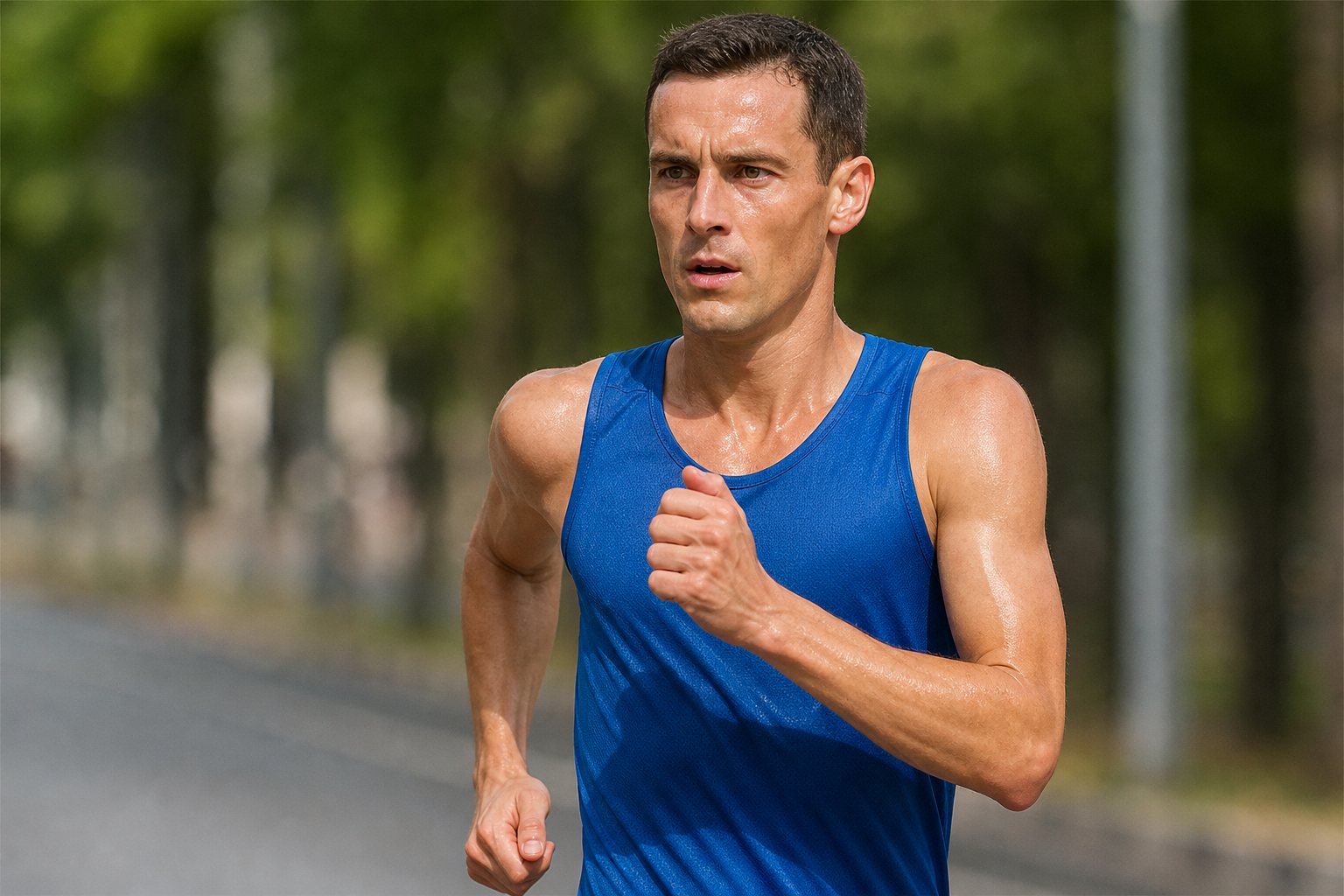
The long walk is done, the shoes are by the door and the legs feel like wet sand. What happens in the next 24 hours decides how the next session goes. For a sport with training volume this high, recovery is the part where the work sinks in. This page covers sleep, load management, mobility, what the evidence says about recovery tools, and telling soreness from injury.
Quick answer: Sleep and sensible load matter most. The 2021 expert consensus on athlete sleep says elite athletes often sleep under 7 hours and recommends an individual approach, and AAOS advises at least 7 hours, a weekly rest day and breaks between seasons. Foam rolling shows small effects on muscle pain in a meta-analysis. Pain that is sharp, localised or lasting is not ordinary soreness: see a professional.
General information, not medical advice. Part of the race walking hub. For injuries see injuries.
Sleep
A 2021 expert consensus on sleep and the athlete (Walsh and colleagues, British Journal of Sports Medicine) says elite athletes are prone to habitual short sleep, under 7 hours a night, and to poor sleep quality, and that a one-size-fits-all target such as 7 to 9 hours is unlikely to be ideal. It recommends an individual approach that takes the athlete’s own sleep needs into account, and it lists training, travel and competition as sport-specific risk factors. Race walkers who train early before work or school are an obvious example. Practical steps (general practice): a regular bedtime, a dark cool room, and a plan for extra rest after long sessions or travel. AAOS also lists at least 7 hours of sleep among its stress-fracture prevention tips.
Load management
Recovery starts in the plan. In the 2026 Olympic champion case study, about 82% of walking was at low intensity, and long sessions of 25 to 30 km and same-day double sessions were part of a structured plan (Jiang and colleagues). Hanley’s survey found elite men trained about nine times a week and women about seven, with running, strength work and swimming as common cross-training. For most walkers that suggests the same shape on a smaller scale: hard days kept few, easy days truly easy, and an easier week every few weeks (general practice). AAOS recommends one rest day a week and a break of 1 to 2 weeks between seasons as stress-fracture prevention. Heat adds load: the IOC heat consensus covers acclimation and cooling, and a hot day is a bigger day than the same walk in cool air. See training and performance.
Mobility and flexibility
The stride asks for hip rotation, ankle movement and a straight knee at landing, so many coaches include hip, calf and hamstring mobility work. That is general coaching practice. We did not find race-walk-specific trials showing that mobility work improves performance or reduces injury. AAOS lists stretching of the lower-leg muscles within shin splint care, and lists daily stretching among the factors for hamstring injuries. The sensible reading is that mobility work is low-risk and worth doing if it feels good, but it is not a replacement for rest or strength work.
What the evidence says about recovery methods
- Foam rolling. A meta-analysis of 21 studies (Wiewelhove and colleagues, 2019) found that rolling before exercise gave a small gain in flexibility (+4.0%) and sprint (+0.7%), while rolling after exercise slightly reduced the loss in sprint (+3.1%) and strength (+3.9%) and reduced the perception of muscle pain (+6.0%). Effects are small, and the studies were not on race walkers. See our foam rollers guide.
- Cold water, compression, massage guns and similar tools. We did not review the evidence in detail for this page, so we make no claim either way. Many athletes use them; ask a clinician if you have a medical condition. Our recovery tools guide describes products without health claims.
- Food and fluid. Refuelling and rehydrating after long sessions are covered in nutrition and athlete health.
A simple recovery day
General practice, not a prescription: after a long or fast session, eat and drink soon, keep the next day easy, and spend a few minutes on hip, calf and hamstring mobility. Check in with how you feel in the morning: heavy legs that loosen in the first kilometre are normal, while a sharp pain that gets worse with each step is a reason to stop. A short log of sleep, mood and legs can show you when load is building up too fast. If sleep stays poor, mood drops or you feel flat for weeks, bring it up with a doctor or coach, because persistent fatigue can have causes beyond training.
Soreness or injury?
Muscle soreness after a hard or long session is usually widespread and eases within a few days. Warning signs are different. AAOS describes shin splints as pain along the inner shin, and bone stress injuries as pain at a specific spot on the bone that is first felt with activity, may ache at night, and gets worse if you keep going. Sharp pain at the back of the thigh, swelling or bruising, or pain that changes your stride deserves an assessment. If in doubt, take an easy day and ask a sports medicine doctor, physical therapist or athletic trainer.
Race walking recovery FAQs
How much sleep do race walkers need?
There is no single figure. The 2021 consensus recommends an individual approach and flags habitual sleep under 7 hours as a risk for inadequate sleep.
How many rest days should I take?
AAOS suggests at least one rest day a week and a break of 1 to 2 weeks between seasons as bone stress injury prevention.
Does foam rolling speed recovery?
A 2019 meta-analysis found small reductions in muscle pain perception after rolling and small effects on performance.
Should I stretch after a long walk?
Evidence specific to race walkers is lacking. If stretching hurts or an area stays tender, ask a professional.
When is soreness actually an injury?
Pain at one spot on a bone, pain at night, swelling, or pain that worsens as you continue. See a professional.
Sources
- Walsh et al., Sleep and the athlete: narrative review and 2021 expert consensus recommendations, BJSM (PubMed 33144349)
- Wiewelhove et al. 2019, meta-analysis of foam rolling on performance and recovery (PubMed 31024339)
- Jiang et al. 2026, periodization in a female Olympic champion 20 km race walker (PubMed 42614459)
- Athletics Weekly, Injury study: Walk this way (Hanley and colleagues, Leeds Beckett, New Studies in Athletics)
- AAOS OrthoInfo, Stress fractures
- AAOS OrthoInfo, Shin splints
- AAOS OrthoInfo, Hamstring muscle injuries
- IOC consensus statement on sport events in the heat, Racinais et al. 2023 (PubMed 36150754)
General information for education only, not medical advice. It does not replace a visit with a sports medicine doctor, physical therapist or athletic trainer. See how we write and check our pages in our editorial policy.