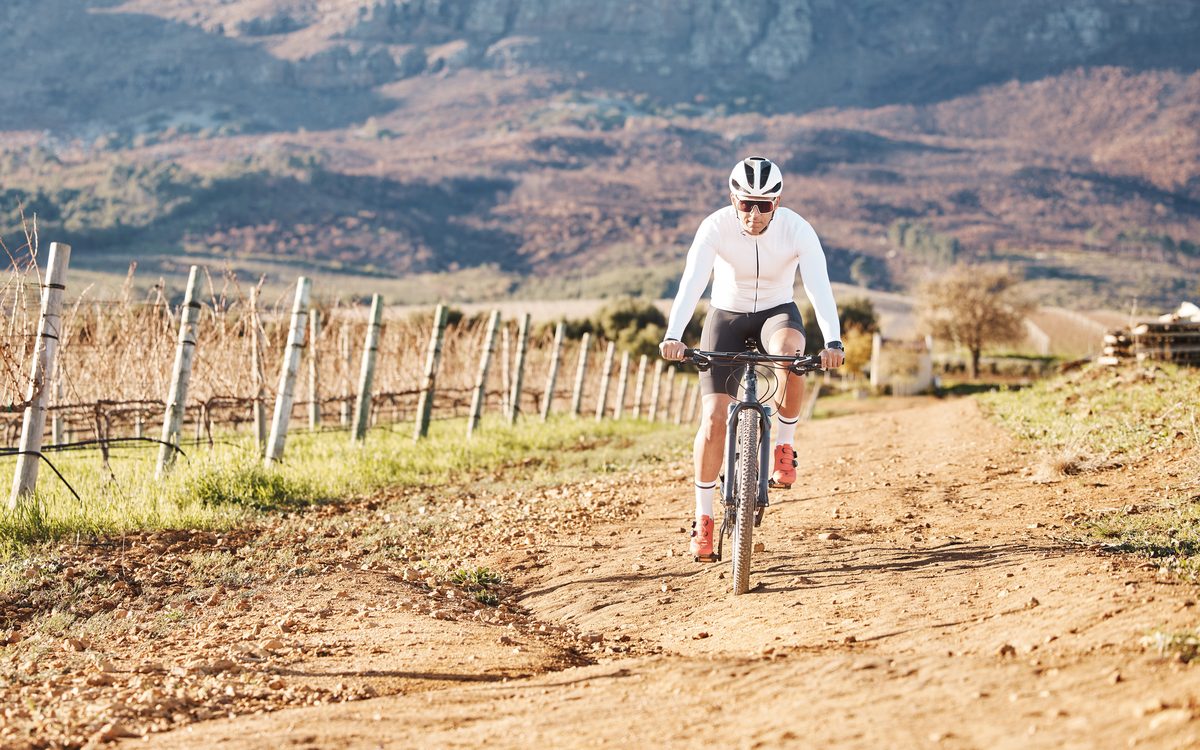
The first gravel event most people enter has no start gate and no official in sight of the back of the field. Someone reads a few announcements, a few hundred riders roll out together, and by the first long climb the field has sorted itself by effort and bike choice. Gravel cycling (also called gravel riding or gravel racing) is long-distance riding and racing on unpaved roads, usually on drop-bar bikes with wide tires. This page covers how it is scored, the basic skills, how a beginner starts and where the rules come from, which is not always where road riders expect.
Quick answer: Gravel is a mass-start, mostly unpaved, long-distance discipline. Many events are run by private organizers who write their own rules, while the UCI runs a Gravel World Series and a world championship with age-group qualification. Start with a local group ride or a short event, read that event’s rules in full, and wear a helmet. If you get hurt, see a sports medicine doctor, physical therapist or athletic trainer.
General information, not medical advice. For the whole discipline see the gravel cycling hub; for the wider sport see the cycling hub.
How gravel racing is won and scored
Most gravel races are simple on paper: first across the line wins each category. Beyond that, formats vary more than in road racing. The UCI Gravel World Series, a set of qualifying events, qualifies the top 25% of riders in every age group for the world championships, and amateurs and professionals share the course (UCI, 2026). For 2026 the UCI lists 47 qualifying events in 32 countries. The world championship courses in Nannup, Western Australia, run from 89 to 140.7 kilometres depending on category, with at least 80% of each course unpaved (UCI Gravel World Series, 2026).
Outside the UCI series, many popular events have no winner in the usual sense. Some are chip-timed races with categories, some are “rides” with a time cutoff, and some are checkpoint events where finishing is the goal. Unbound Gravel in Emporia, Kansas, returned in 2026 for its 20th anniversary edition and is built around a 200-mile route (SoCal Cycling, 2026).
Who writes the rules
This is the part that surprises people. Road racing in the United States runs on the USA Cycling rulebook, which covers general, road and track racing. Gravel is looser. An Outside feature reported that the most popular American gravel events, including Unbound Gravel, were not sanctioned by USA Cycling or the UCI and that organizers made their own rules, with some norms left unwritten. That article is older, so check the current status of any event you enter. USA Cycling’s first-time racer guide does list gravel among its event types.
The practical lesson is the same everywhere: read the event’s rules page before you pay. Look for the helmet requirement, whether outside help or support vehicles are allowed, the time cutoffs, what you must carry, and how aid stations work. Race previews of the UCI world championships have reported a minimum bike weight, drop handlebars and a ban on triathlon-style extensions, but those details came from race-level documents rather than the rulebook, so confirm them in the current UCI regulations if you plan to qualify.
Self-support, aid and etiquette
Many gravel events expect riders to be largely self-sufficient between checkpoints. At the UCI championships, reports say that unless a rider pre-selects a bottle service, feed zones are self-service and outside help is prohibited, but that is an organizer document, not a confirmed rulebook line. As general gravel practice, not a sourced rule, expect to carry your own spares and tools, to stop and help a rider who is hurt, and to follow the event’s own rule on attacking near aid stations. Public roads are usually open to traffic, so the League of American Bicyclists’ rules of the road still apply: ride predictably, obey traffic law and signal.
Basic skills a beginner needs
- Holding a line on loose surfaces. Look where you want to go, keep your weight centered and avoid sudden braking on loose corners. This is general coaching practice rather than a sourced rule.
- Braking and descending. Brake earlier and more gently than on pavement, and keep your hands on the drops on rough descents. General practice.
- Group riding on gravel. Dust, washboard and loose rock mean wider gaps between riders. Point out hazards and call “car back” or “car up” as in road group rides (League of American Bicyclists).
- Basic repairs. Fixing a flat and reattaching a chain are the skills that most often decide whether a rural ride finishes. Practice at home first.
- Pacing and fueling. Gravel events are long, so starting too hard and forgetting to eat are the common mistakes. See our training and nutrition pages.
Levels and how to start
| Level | What it looks like |
|---|---|
| First rides | A club or shop group ride on a nearby gravel road, at a pace you can talk at. |
| First event | A short or “ride” format event with a generous cutoff. Read the rules page and the cutoffs first. |
| Age-group racing | UCI qualifier events, which qualify the top 25% of each age group; amateurs and professionals share the course (UCI). |
| Elite | The UCI Gravel World Championships, first held in 2022; the fifth edition was scheduled for 10 and 11 October 2026 in Nannup (UCI). |
To find a club, check USA Cycling’s club and event listings, ask at a local bike shop, or look at an event’s own site, since many organizers list group rides and training camps. Gravel is not an Olympic or Paralympic sport. The UCI lists five Olympic cycling disciplines (road, track, mountain bike, BMX racing and BMX freestyle) and two Paralympic ones (road and track); check the official programme for the current Games. For sibling disciplines see road cycling, cyclocross and mountain biking.
Official rulebooks and where to read them
- UCI Gravel World Series and world championship regulations: published by the UCI at uci.org and ucigravelworldseries.com.
- USA Cycling Rulebook (general, road and track rules; no gravel section found): usacycling.org.
- Each private event’s own rules page, which is the rulebook that counts on the day.
Gravel rules and getting started FAQs
Is gravel cycling an Olympic sport?
No. The UCI lists road, track, mountain bike, BMX racing and BMX freestyle as Olympic disciplines. Gravel has its own UCI world series and world championships. Check the official programme for the current Games.
Who makes the rules in gravel racing?
It depends on the event. The UCI runs a world series and championship, while many popular events are privately run and set their own rules, according to an Outside feature. Always read the event’s rules page.
How do I qualify for the gravel world championships?
Race a UCI Gravel World Series event. Each one qualifies the top 25% of riders in every age group.
Do I need a special bike to start?
Not necessarily. A bike with enough tire clearance and good brakes works for many events, but check each event’s rules, because some UCI-level events reportedly require drop handlebars.
Is gravel racing safe for a beginner?
It carries the usual cycling risks: falls on loose surfaces and long rides far from help. A helmet, a repair kit and telling someone your route are sensible steps. See our injury prevention page.
Sources
- UCI: 2026 Gravelking UCI Gravel World Series
- UCI Gravel World Series: 2026 world championship courses, Nannup
- UCI: about the UCI and its disciplines
- USA Cycling: first-time racer guide
- USA Cycling Rulebook 2025 (general, road and track rules)
- Outside: everything you wanted to know about gravel cycling
- Cyclingnews: UCI Gravel World Championships, a comprehensive tech preview
- SoCal Cycling: Unbound Gravel 2026
- League of American Bicyclists: rules of the road
General information for education only, not medical advice. It does not replace a sports medicine doctor, physical therapist, athletic trainer or registered dietitian. See our editorial policy for how we write and update pages.